


Hey there! As a supplier of fire water supply pumps, I often get questions about the performance curve of these pumps. So, I thought I'd take a moment to break it down for you and explain what it all means.
First off, let's talk about what a performance curve is. In simple terms, a performance curve is a graph that shows how a pump performs under different conditions. It typically plots the pump's flow rate (usually in gallons per minute or liters per second) on the horizontal axis and the pump's head (which is basically the pressure the pump can generate) on the vertical axis.
The performance curve of a fire water supply pump is super important because it helps us understand how the pump will work in real - world situations. For example, when fighting a fire, we need to know how much water the pump can deliver at a certain pressure. Different fire scenarios may require different flow rates and pressures, and the performance curve gives us a clear picture of what the pump is capable of.
Let's start with the basic shape of the performance curve. Generally, as the flow rate of the pump increases, the head (pressure) it can generate decreases. This is because as more water is flowing through the pump, there's more resistance, and the pump has to work harder to push the water. So, at low flow rates, the pump can generate a relatively high head. But as we increase the flow, the head will start to drop.
Now, there are a few key points on the performance curve that we need to pay attention to. The first one is the shut - off head. This is the maximum head that the pump can generate when there's no flow (i.e., the outlet of the pump is completely blocked). It's like the pump is just building up pressure but not actually moving any water. This value is important because it gives us an idea of the maximum pressure the pump can handle.
The next important point is the best efficiency point (BEP). This is the point on the curve where the pump operates most efficiently. At the BEP, the pump uses the least amount of energy to deliver a certain flow rate and head. Operating the pump close to the BEP is ideal because it saves energy and reduces wear and tear on the pump. If we operate the pump too far from the BEP, say at very low or very high flow rates, the pump's efficiency will drop, and it may also cause problems like cavitation.
Cavitation is a big no - no when it comes to pumps. It happens when the pressure inside the pump drops so low that the water starts to vaporize, forming bubbles. When these bubbles collapse, they can cause damage to the pump's impeller and other components. The performance curve can help us avoid cavitation by showing us the range of flow rates and heads where the pump can operate safely.
Another factor that can affect the performance curve is the speed of the pump. Most fire water supply pumps can be operated at different speeds. When we increase the speed of the pump, the performance curve shifts upwards and to the right. This means that at a higher speed, the pump can deliver a higher flow rate and head. However, increasing the speed also increases the power consumption of the pump.
Now, let's talk about how this all relates to our real - world products. We offer a range of fire water supply pumps, each with its own unique performance curve. Whether you're dealing with a small building fire or a large industrial fire, we have a pump that can meet your needs.

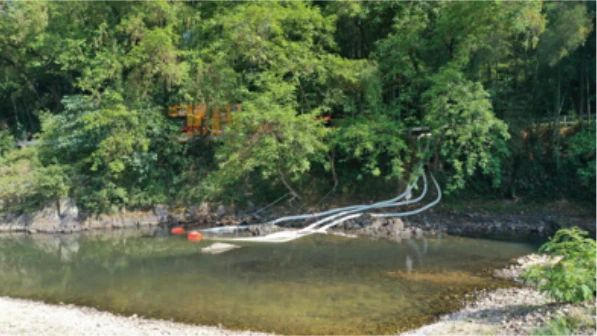
For example, if you're looking for a pump for Underground Narrow Space Drainage, we have pumps with performance curves that are optimized for low - flow, high - head applications. These pumps can work well in tight spaces where you need to move water against a relatively high resistance.
If you're in the agricultural sector and need an Agricultural Emergency Water Supply Pump, our pumps are designed to provide a good balance between flow rate and head. They can quickly supply water to fields during emergencies, and their performance curves are tailored to meet the specific requirements of agricultural applications.
And for those situations where you need Uninterrupted Emergency Drainage Pump, our pumps are built to operate continuously at a stable flow rate and head. Their performance curves ensure that they can handle large volumes of water over long periods without losing efficiency.
So, how do you choose the right fire water supply pump based on the performance curve? Well, it all depends on your specific needs. First, you need to determine the required flow rate and head for your application. For a fire - fighting scenario, this may depend on the size of the building, the type of fire, and the layout of the fire - suppression system.
Once you have an idea of the flow rate and head you need, you can look at the performance curves of our pumps and find the one that comes closest to meeting those requirements. It's also a good idea to consider the efficiency of the pump and its operating range to ensure that it will work well in your specific situation.
If you're not sure how to read the performance curve or which pump is right for you, don't worry! Our team of experts is here to help. We can analyze your requirements and recommend the best fire water supply pump for you.
In conclusion, understanding the performance curve of a fire water supply pump is crucial for choosing the right pump for your needs. It gives you a clear picture of what the pump can do and helps you operate it efficiently and safely. Whether you're in the fire - fighting industry, agriculture, or any other field that requires water pumping, we have the right pump for you.
If you're interested in purchasing a fire water supply pump or have any questions about our products, feel free to reach out to us. We're always happy to have a chat about your needs and help you find the perfect pump.
References
- Pump Handbook, Karassik et al.
- Hydraulic Machinery: Performance and Design, John T. Blackburn