


What is the vibration level of a dewatering pump trailer?
As a supplier of dewatering pump trailers, understanding the vibration level of these crucial pieces of equipment is essential. Vibration in dewatering pump trailers can have significant implications for their performance, reliability, and the overall efficiency of dewatering operations. In this blog post, we will delve into the concept of vibration levels in dewatering pump trailers, exploring what they are, why they matter, and how to manage them effectively.
Understanding Vibration in Dewatering Pump Trailers
Vibration in a dewatering pump trailer is the mechanical oscillation or movement that occurs during its operation. This vibration can be caused by various factors, including the rotation of the pump impeller, the imbalance of rotating parts, the flow of water through the pump, and the interaction between the pump and the trailer structure. While some level of vibration is normal and expected in any mechanical system, excessive vibration can lead to a range of problems.
The vibration level of a dewatering pump trailer is typically measured in terms of amplitude and frequency. Amplitude refers to the maximum displacement of the vibrating object from its equilibrium position, while frequency is the number of oscillations per unit of time. These measurements are usually expressed in units such as millimeters (mm) for amplitude and hertz (Hz) for frequency.
Why Vibration Levels Matter
Excessive vibration in a dewatering pump trailer can have several negative consequences. Firstly, it can cause premature wear and tear on the pump components, such as the bearings, seals, and impeller. This can lead to increased maintenance costs, reduced equipment lifespan, and unexpected breakdowns, which can disrupt dewatering operations and result in significant downtime.
Secondly, high vibration levels can also affect the performance of the pump. Vibration can cause misalignment of the pump shaft, which can lead to reduced efficiency, increased energy consumption, and decreased flow rates. In extreme cases, excessive vibration can even cause the pump to cavitate, which is a phenomenon where vapor bubbles form in the liquid due to low pressure, leading to further damage to the pump and reduced performance.
In addition to the impact on the pump itself, vibration can also have implications for the trailer and its surrounding environment. High vibration levels can cause structural damage to the trailer, loosen bolts and connections, and even pose a safety risk to operators and nearby personnel. Moreover, the noise generated by excessive vibration can be a nuisance and may also violate noise regulations in some areas.
Factors Affecting Vibration Levels
Several factors can influence the vibration level of a dewatering pump trailer. One of the primary factors is the design and quality of the pump itself. A well-designed pump with balanced rotating parts and proper alignment is less likely to generate excessive vibration. Additionally, the type of pump, such as centrifugal or positive displacement, can also affect the vibration characteristics.
The operating conditions of the pump also play a significant role in determining the vibration level. Factors such as the flow rate, pressure, and temperature of the water being pumped can all impact the vibration. For example, operating the pump at a flow rate that is too high or too low for its design specifications can cause increased vibration. Similarly, changes in the water temperature can affect the density and viscosity of the fluid, which can in turn affect the pump's performance and vibration levels.
The installation and mounting of the pump on the trailer are also critical factors. A proper installation ensures that the pump is securely mounted and aligned, which helps to minimize vibration. Incorrect installation, such as improper leveling or loose mounting bolts, can lead to increased vibration and potential damage to the pump and trailer.
Measuring and Monitoring Vibration Levels
To ensure that the vibration levels of a dewatering pump trailer are within acceptable limits, it is important to measure and monitor them regularly. There are several methods and tools available for measuring vibration, including accelerometers, vibration meters, and laser alignment systems.
Accelerometers are the most commonly used devices for measuring vibration. These sensors can detect the acceleration of the vibrating object and convert it into an electrical signal, which can then be analyzed to determine the amplitude and frequency of the vibration. Vibration meters are handheld devices that can provide a quick and easy way to measure the vibration level at a specific point on the pump or trailer. Laser alignment systems, on the other hand, are used to ensure that the pump shaft is properly aligned, which can help to reduce vibration.
Regular monitoring of vibration levels can help to detect any changes or trends over time, which can indicate potential problems with the pump or trailer. By identifying these issues early, appropriate maintenance and corrective actions can be taken to prevent further damage and ensure the continued safe and efficient operation of the dewatering pump trailer.
Managing Vibration Levels
If excessive vibration is detected in a dewatering pump trailer, there are several steps that can be taken to manage and reduce it. One of the first steps is to check the installation and mounting of the pump to ensure that it is properly aligned and securely fastened. Tightening loose bolts, adjusting the leveling of the pump, and ensuring proper alignment of the shaft can often help to reduce vibration.
Balancing the rotating parts of the pump is another important step in reducing vibration. This can be done by adding or removing weight from the impeller or other rotating components to ensure that they are evenly balanced. Professional balancing services can be used to ensure that the balancing is done accurately.
In some cases, it may also be necessary to adjust the operating conditions of the pump to reduce vibration. This could involve changing the flow rate, pressure, or temperature of the water being pumped to bring it within the pump's design specifications. Additionally, using vibration isolation mounts or dampers can help to absorb and reduce the vibration transmitted from the pump to the trailer.
Related Products
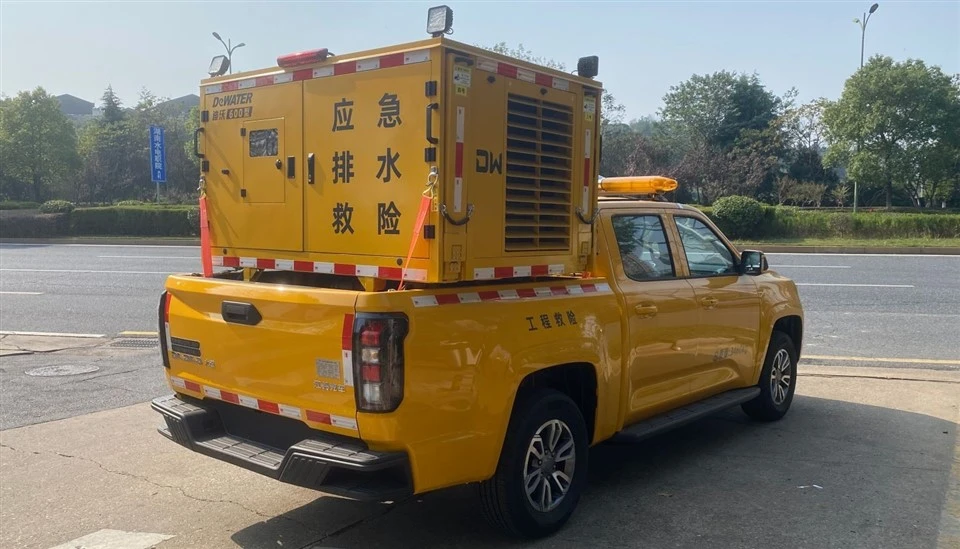
If you are interested in other dewatering solutions, we also offer a range of related products, including Dewatering Pump Truck, Mobile Pump Station, and Flooding Control Pickup. These products are designed to provide efficient and reliable dewatering solutions for various applications.
Conclusion
In conclusion, understanding and managing the vibration level of a dewatering pump trailer is crucial for ensuring its performance, reliability, and longevity. Excessive vibration can lead to a range of problems, including premature wear and tear, reduced efficiency, and safety risks. By measuring and monitoring vibration levels regularly, and taking appropriate steps to manage and reduce it, you can ensure the continued safe and efficient operation of your dewatering pump trailer.
If you are in the market for a dewatering pump trailer or have any questions about vibration levels or other aspects of dewatering equipment, please feel free to contact us. Our team of experts is ready to assist you in finding the right solution for your specific needs.
References
- "Pump Handbook" by Igor J. Karassik et al.
- "Mechanical Vibration: Analysis, Uncertainties, and Control" by Daniel J. Inman.
- Industry standards and guidelines related to pump vibration, such as ISO 10816.