


Can a dewatering pump truck be used in saltwater environments? This is a question that many customers often ask us, as a leading dewatering pump truck supplier. In this blog post, we will delve into the technical aspects, advantages, challenges, and solutions related to using dewatering pump trucks in saltwater environments.
Technical Feasibility
Dewatering pump trucks are designed to remove water from various locations, including construction sites, mines, and flood - affected areas. The basic principle of a dewatering pump truck involves using a powerful pump mounted on a truck or trailer to transfer water from one place to another. But when it comes to saltwater, several factors need to be considered.
The main concern with saltwater is its corrosive nature. Saltwater contains a high concentration of dissolved salts, primarily sodium chloride. These salts can react with the metal components of the pump and the truck, leading to corrosion over time. However, modern dewatering pump trucks can be equipped with corrosion - resistant materials. For example, stainless steel is commonly used for pump impellers, casings, and other critical parts. This material has excellent resistance to saltwater corrosion, ensuring the long - term performance of the pump in saltwater environments.
In addition, the seals and gaskets of the pump also need to be made of materials that can withstand saltwater. Neoprene and Viton are two types of elastomers that are often used in salt - water applications due to their good chemical resistance.
Advantages of Using Dewatering Pump Trucks in Saltwater Environments
There are several advantages to using dewatering pump trucks in saltwater environments. First of all, in coastal areas or areas near saltwater bodies, such as ports and shipyards, dewatering pump trucks can quickly remove floodwater or excess water. For example, during a storm surge, a dewatering pump truck can be deployed to drain the flooded areas and prevent further damage to infrastructure.
Secondly, the mobility of dewatering pump trucks is a significant advantage. They can be easily transported to different locations where saltwater dewatering is required. Whether it is a small - scale project like draining a saltwater - filled pit or a large - scale operation such as dewatering a coastal construction site, a dewatering pump truck can be quickly on the scene and start working.
Moreover, dewatering pump trucks are highly efficient. They can handle large volumes of water at a relatively high flow rate. This is crucial in saltwater environments where large amounts of water may need to be removed in a short period.
Challenges in Saltwater Applications
Despite the advantages, there are also some challenges when using dewatering pump trucks in saltwater environments. As mentioned earlier, corrosion is the most significant challenge. Even with corrosion - resistant materials, continuous exposure to saltwater can still cause some degree of wear and tear. Regular maintenance and inspection are essential to ensure the proper functioning of the pump truck.
Another challenge is the presence of sediment and debris in saltwater. Saltwater often contains sand, silt, and other particles, which can cause abrasion to the pump components. This can reduce the efficiency of the pump and even lead to premature failure. To address this issue, filters can be installed at the intake of the pump to prevent large particles from entering the pump.
The electrical components of the dewatering pump truck also need special attention in saltwater environments. Saltwater can cause electrical short - circuits and damage to the control systems. Therefore, the electrical components should be properly sealed and protected to prevent saltwater ingress.
Our Solutions as a Supplier
As a dewatering pump truck supplier, we have developed a series of solutions to address the challenges in saltwater applications.
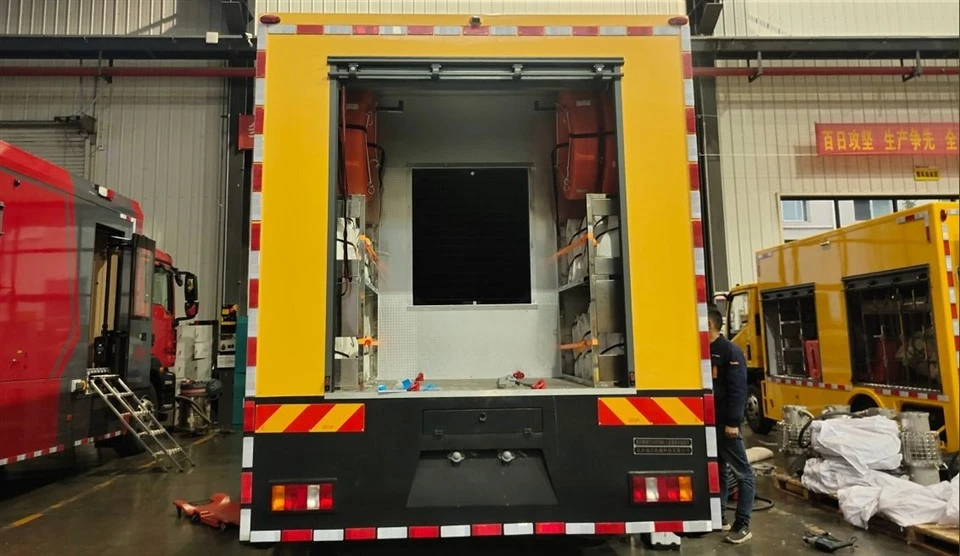

For corrosion prevention, we use high - quality stainless steel and other corrosion - resistant materials in the manufacturing of our pump trucks. Our pumps are also coated with special anti - corrosion paints to provide an extra layer of protection.
To deal with sediment and debris, we offer pumps with advanced impeller designs that can handle solids more effectively. We also provide a range of filters that can be customized according to the specific requirements of the saltwater environment.
In terms of electrical protection, our dewatering pump trucks are equipped with sealed electrical enclosures and waterproof connectors. We also conduct strict quality control tests to ensure the reliability of the electrical systems in saltwater environments.
Product Recommendations
We have a wide range of dewatering pump trucks suitable for saltwater environments. Our Mobile Pump Drainage Rescue Trucks are highly mobile and can be quickly deployed to salt - water flood areas. They are equipped with powerful pumps and corrosion - resistant components, making them ideal for emergency dewatering operations.
Our Mobile Flood Pump Trailer is another excellent option for salt - water applications. It is easy to tow and can be used in various locations, including coastal areas and salt - water marshes.
For large - scale dewatering projects in saltwater environments, our Flooding and Dainage Pump Truck is a reliable choice. It has a high - capacity pump and a robust chassis, ensuring efficient and long - term operation in salt - water conditions.
Conclusion
In conclusion, dewatering pump trucks can be used in saltwater environments with the right design and materials. Although there are challenges such as corrosion, sediment, and electrical issues, these can be effectively addressed through proper selection of materials, regular maintenance, and the use of advanced technologies.
If you are looking for a dewatering pump truck for salt - water applications, we are here to help. Our team of experts can provide you with professional advice and customized solutions based on your specific needs. Contact us today to start the procurement negotiation process and find the perfect dewatering pump truck for your project.
References
- Corrosion Handbook, Second Edition, by L. L. Shreir, R. A. Jarman, and G. T. Burstein
- Pump Handbook, Fourth Edition, by Igor J. Karassik, Joseph P. Messina, Paul Cooper, and Charles C. Heald