


What is the suction lift of a Drought Relief Drainage Pump?
As a supplier of drought relief drainage pumps, I often encounter questions from customers regarding various technical aspects of these pumps, and one of the most frequently asked questions is about the suction lift. Understanding the suction lift of a drought relief drainage pump is crucial for its proper operation and efficient performance in different scenarios.
Definition of Suction Lift
The suction lift of a pump refers to the vertical distance from the water source to the centerline of the pump inlet. It represents the ability of the pump to draw water from a lower level to the pump itself. In the context of drought relief drainage pumps, this is a vital parameter as they are often required to lift water from wells, rivers, or other water bodies that may be located at a lower elevation compared to the pump installation point.
Factors Affecting Suction Lift
Several factors influence the suction lift of a drought relief drainage pump. One of the primary factors is atmospheric pressure. At sea level, the standard atmospheric pressure can support a column of water up to approximately 10.3 meters (33.8 feet). However, in reality, due to factors such as friction losses in the suction pipe, vapor pressure of the water, and the efficiency of the pump itself, the practical suction lift is usually much less than this theoretical value.
The friction losses in the suction pipe are caused by the resistance encountered by the water as it flows through the pipe. These losses depend on the length, diameter, and roughness of the pipe. A longer or narrower pipe with a rough interior surface will result in higher friction losses, reducing the effective suction lift of the pump.
The vapor pressure of water also plays a significant role. As the water is lifted by the pump, the pressure at the pump inlet decreases. If the pressure drops below the vapor pressure of the water at the given temperature, the water will start to vaporize, forming bubbles. This phenomenon is known as cavitation, which can cause damage to the pump impeller and reduce its performance. Therefore, the suction lift must be limited to prevent cavitation from occurring.
The type and design of the pump also affect its suction lift capability. Centrifugal pumps, which are commonly used in drought relief drainage applications, have a limited suction lift. Positive displacement pumps, on the other hand, can typically achieve higher suction lifts as they work by physically displacing the fluid.
Importance of Suction Lift in Drought Relief
In drought - relief situations, the ability of a drainage pump to lift water from a significant depth can be a determining factor in its effectiveness. For example, if a well is the only available water source and it has a relatively low water level, a pump with a high suction lift will be required to draw water from it. This water can then be used for irrigation, drinking water supply, or other essential purposes.
In addition, in flood - prone areas during drought periods, the pumps may need to be used for dewatering operations. They may be required to lift water from basements, trenches, or other low - lying areas. A pump with an appropriate suction lift can ensure that the water is effectively removed, preventing damage to property and infrastructure.
Applications of Different Suction Lift Pumps
For applications where the water source is relatively close to the pump and the suction lift requirement is low, a standard centrifugal pump may be sufficient. These pumps are relatively inexpensive, easy to operate, and can provide a high flow rate. However, for situations where a higher suction lift is needed, more specialized pumps may be required.
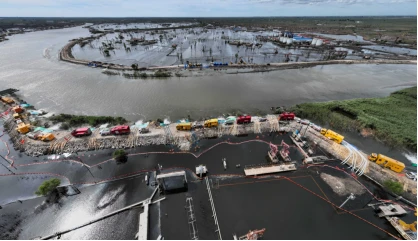
The Dam Lake Drainage Emergency Pump is designed to handle large - scale drainage operations. It can be used to lower the water level in dams or lakes during drought - related emergencies. This pump is engineered to have a relatively high suction lift, allowing it to draw water from deeper parts of the water body.
The Municipal Emergency Rescue Pump is another option for drought - relief applications. It is suitable for use in urban areas for dewatering flooded streets, basements, and other municipal facilities. These pumps are often portable and can be quickly deployed to the affected areas. They are designed to have a good balance between suction lift and flow rate to meet the diverse needs of municipal emergency response.
The Mobile Fire Water Pump Trailer can also be utilized in drought - relief scenarios. In addition to its primary function of providing water for firefighting, it can be used to lift water from various sources for other purposes such as irrigation or filling water storage tanks. The mobility of this pump trailer allows it to be easily transported to different locations where water is needed.
Measuring and Calculating Suction Lift
To determine the actual suction lift of a pump in a specific installation, several measurements and calculations need to be made. First, the vertical distance from the water level in the source to the centerline of the pump inlet should be measured. Then, the friction losses in the suction pipe need to be calculated based on the pipe characteristics and the flow rate of the water.
The vapor pressure of the water at the operating temperature should also be considered. By subtracting the friction losses and accounting for the vapor pressure, the effective suction lift of the pump can be estimated. It is important to note that these calculations are often approximate, and actual field testing may be required to ensure the pump operates within its designed suction lift limits.
Maintaining Suction Lift Performance
To maintain the suction lift performance of a drought relief drainage pump, regular maintenance is essential. The suction pipe should be inspected for any blockages, leaks, or damage. A blocked pipe can significantly increase the friction losses and reduce the suction lift. Leaks in the pipe can also cause air to enter the system, leading to a loss of prime and reduced pump performance.
The pump itself should be regularly serviced, including checking the impeller for wear and damage, and ensuring that the seals are in good condition. A worn - out impeller or a faulty seal can affect the pump's ability to create the necessary suction to lift the water.
Conclusion
The suction lift of a drought relief drainage pump is a critical parameter that affects its performance and suitability for different applications. Understanding the factors that influence suction lift, such as atmospheric pressure, friction losses, vapor pressure, and pump design, is essential for selecting the right pump for a specific drought - relief scenario.
As a supplier of drought relief drainage pumps, we offer a range of pumps with different suction lift capabilities to meet the diverse needs of our customers. Whether you are dealing with a small - scale irrigation project or a large - scale emergency water supply operation, we can provide you with the appropriate pump solution.
If you are interested in our products and would like to discuss your specific requirements, please feel free to contact us for procurement and further technical consultations. We are committed to providing high - quality pumps and excellent customer service to help you overcome drought - related challenges.
References
- Pump Handbook, Karassik et al.
- Fluid Mechanics, Frank M. White.
- Drought Management and Water Resources, Various Authors.