


Hey there! I'm a supplier of Emergency Water Rescue Pickup, and I've seen firsthand how crucial these vehicles are in emergency situations. Today, I want to talk about the role of radios in emergency water rescue pickup operations.
Communication is Key
In any emergency situation, communication is the linchpin that holds everything together. When it comes to water rescue pickup, radios are the primary means of communication between the rescue team members, the command center, and other relevant parties. They allow for real - time information sharing, which is essential for making quick and informed decisions.
Let's say there's a flash flood in a particular area. The rescue team on the ground needs to communicate with the command center to get updated information about the flood situation, such as the water level, the affected areas, and the number of people in need of rescue. At the same time, the command center can use the radio to direct the rescue team to the areas where they are most needed.
Coordinating the Rescue Effort
Radios are also vital for coordinating the rescue effort. In a water rescue operation, there are usually multiple teams involved, including divers, boat operators, and ground support staff. Each team needs to know what the others are doing to avoid conflicts and ensure that the rescue operation runs smoothly.
For example, the boat operators need to know the location of the divers in the water to avoid running over them. The ground support staff need to be aware of the boat's position so that they can be ready to receive the rescued people. Radios enable this kind of coordination by allowing team members to share their positions, status, and any other relevant information.
Safety First
Safety is always the top priority in any rescue operation. Radios play a crucial role in ensuring the safety of the rescue team members. In a water rescue situation, conditions can change rapidly, and there are many potential hazards, such as strong currents, submerged objects, and electrical hazards.
If a team member encounters a dangerous situation, they can use the radio to alert the rest of the team. For instance, if a diver gets caught in a strong current or a boat hits a submerged object, they can quickly call for help. The other team members can then take appropriate action, such as sending a rescue boat or providing medical assistance.
Overcoming Communication Challenges
In a water rescue environment, there are often communication challenges. The noise of the water, the distance between team members, and the interference from other electronic devices can all make it difficult to communicate effectively.
However, modern radios are designed to overcome these challenges. They are equipped with features such as noise - cancellation technology, high - power transmitters, and long - range antennas. These features ensure that the communication between team members remains clear and reliable, even in difficult conditions.
Integrating with Other Equipment
Radios can also be integrated with other equipment used in water rescue operations. For example, they can be connected to GPS devices to provide real - time location information. This allows the command center to track the movement of the rescue teams and make better decisions about resource allocation.
In addition, radios can be linked to other communication systems, such as satellite phones and land - line phones. This provides an additional layer of redundancy in case the radio communication fails. For instance, if there is a problem with the radio signal, the team can still use the satellite phone to communicate with the command center.
Our Emergency Water Rescue Pickup Vehicles
As a supplier of Emergency Water Rescue Pickup, we understand the importance of radios in water rescue operations. That's why our vehicles are equipped with high - quality radios that meet the highest standards of performance and reliability.
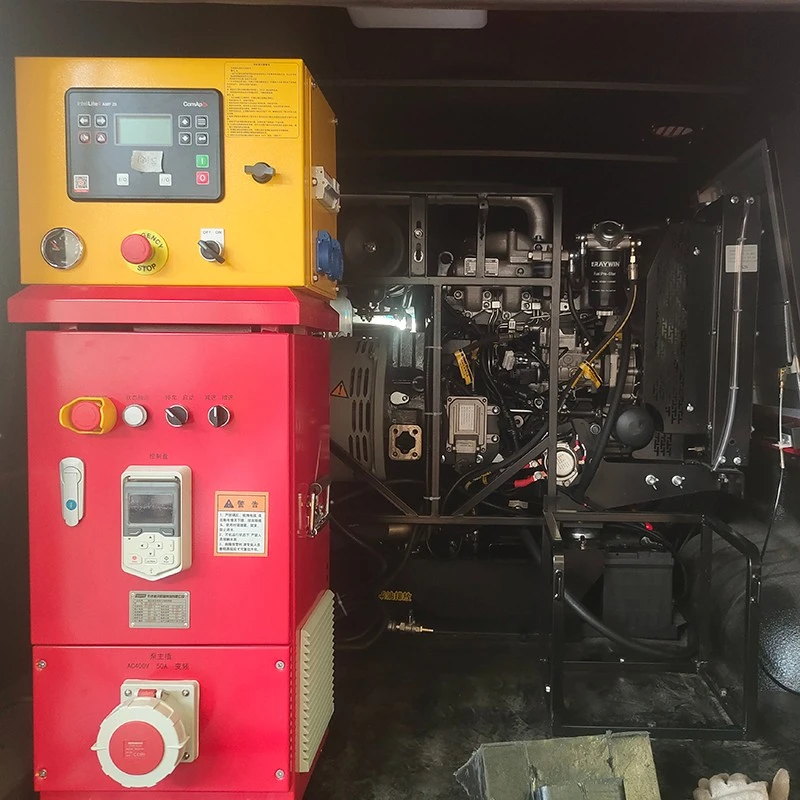
Our Mobile Drainage Pump Trailer and Mobile Pumping Station also come with integrated radio systems. These systems are designed to work seamlessly with the other equipment on the vehicle, providing a comprehensive communication solution for water rescue operations.

Conclusion
In conclusion, radios play a critical role in emergency water rescue pickup operations. They are essential for communication, coordination, safety, and overcoming communication challenges. If you're involved in water rescue operations, having a reliable radio system is a must.
If you're interested in our Emergency Water Rescue Pickup vehicles or have any questions about the role of radios in water rescue operations, don't hesitate to reach out. We're here to help you ensure that your water rescue operations are as effective and safe as possible.
References
- National Fire Protection Association. (2019). NFPA 1670: Standard on Operations and Training for Technical Search and Rescue Incidents.
- International Life Saving Federation. (2020). Guidelines for Water Rescue Operations.
- Federal Emergency Management Agency. (2021). Emergency Response Guidebook.