


What is the maximum pressure a mobile pumping station can generate?
As a supplier of mobile pumping stations, I often get asked about the maximum pressure these remarkable machines can generate. Understanding this aspect is crucial for various applications, from flood control to industrial dewatering. In this blog post, I'll delve into the factors that determine the maximum pressure of a mobile pumping station and explore its real - world implications.
Factors Affecting the Maximum Pressure
Pump Design
The design of the pump is one of the most significant factors influencing the maximum pressure. There are different types of pumps used in mobile pumping stations, such as centrifugal pumps and positive displacement pumps.
Centrifugal pumps work by converting rotational kinetic energy into hydrodynamic energy. They are known for their high flow rates but relatively lower pressures compared to positive displacement pumps. The impeller design, number of stages, and the speed at which it rotates all play a role in determining the pressure. A multi - stage centrifugal pump, for example, can generate higher pressures than a single - stage one. Each additional stage adds to the pressure head, allowing the pump to push the fluid to greater heights or through more resistance.
Positive displacement pumps, on the other hand, trap a fixed amount of fluid and then force it into the discharge pipe. These pumps can generate very high pressures because they are not limited by the same principles as centrifugal pumps. Reciprocating pumps, a type of positive displacement pump, use a piston or diaphragm to move the fluid. They can achieve extremely high pressures, making them suitable for applications where high - pressure delivery is required, such as in some industrial processes.
Motor Power
The power of the motor driving the pump is directly related to the pressure it can generate. A more powerful motor can drive the pump at a higher speed or provide more force to move the fluid. When the motor has sufficient power, it can overcome the resistance in the system, whether it's due to the height the fluid needs to be pumped, the length of the pipeline, or the viscosity of the fluid. For instance, in a mobile pumping station used for deep - well dewatering, a high - power motor is necessary to generate enough pressure to lift the water from a great depth.
Pipeline Characteristics
The characteristics of the pipeline through which the fluid is pumped also affect the maximum pressure. The diameter of the pipeline, its length, and the number of bends and fittings all contribute to the resistance in the system. A smaller - diameter pipeline will have higher frictional losses, which means more pressure is required to maintain the flow. Similarly, a longer pipeline or one with many bends and fittings will increase the resistance, and the pump needs to generate more pressure to overcome it.
Typical Maximum Pressures in Different Applications
Flood Control
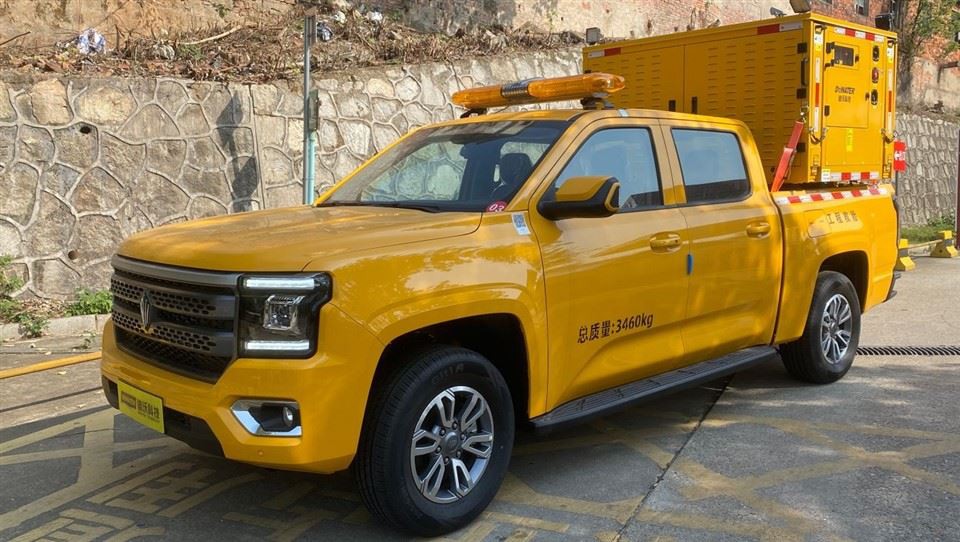
In flood control applications, mobile pumping stations are often used to move large volumes of water quickly. The pressure requirements are usually not extremely high, as the goal is to transfer water from low - lying areas to higher - elevation areas or into drainage systems. A typical centrifugal pump in a flood - control mobile pumping station might generate pressures in the range of 10 - 50 psi (pounds per square inch). This is sufficient to move the water over short distances and small elevation differences. For example, our Light Duty Rescue Pump Trucks are well - suited for such applications, providing a good balance between flow rate and pressure.
Industrial Dewatering
Industrial dewatering can have more demanding pressure requirements. In mines or construction sites, water may need to be pumped from deep underground or through long pipelines. Positive displacement pumps are often used in these situations, and they can generate pressures well over 100 psi. For example, in some deep - mine dewatering operations, pressures of 200 - 500 psi may be required to lift the water to the surface. Our Dewatering Pump Trailer is designed to handle such high - pressure dewatering tasks efficiently.
Firefighting
Firefighting mobile pumping stations need to generate high pressures to deliver water to the fire source, especially in high - rise buildings. The pressure requirements can be very high, often in the range of 100 - 300 psi or more, depending on the height of the building and the distance from the pump to the fire. Specialized pumps are used in firefighting applications to ensure that enough water can be delivered at the required pressure.
Real - World Examples
Let's take a look at a real - world example of a flood - control project. A coastal city was facing a severe flood due to a storm surge. Our mobile pumping stations were deployed to remove the water from the flooded streets. The pumps were centrifugal pumps with a maximum pressure of around 30 psi. This was sufficient to move the water into the nearby drainage channels and prevent further flooding. The high flow rate of the pumps allowed a large volume of water to be removed quickly, helping to reduce the impact of the flood on the city.
In an industrial construction site, water had accumulated in a deep excavation. A Mobile Drainage Pump Trailer with a positive displacement pump was used. The pump was able to generate a pressure of 250 psi, which was necessary to lift the water from the bottom of the excavation to the surface and then into a nearby water treatment facility.

Importance of Understanding Maximum Pressure
Understanding the maximum pressure a mobile pumping station can generate is crucial for proper selection and operation. If the pressure is too low, the pump may not be able to move the fluid effectively, leading to inefficient operation or even failure to complete the task. On the other hand, if a pump with excessive pressure is selected, it can be more expensive to purchase and operate, and it may also cause damage to the pipeline or other components of the system.
Conclusion
The maximum pressure a mobile pumping station can generate depends on several factors, including pump design, motor power, and pipeline characteristics. Different applications have different pressure requirements, from the relatively low pressures needed for flood control to the high pressures required for industrial dewatering and firefighting. As a supplier of mobile pumping stations, we offer a range of products, such as Light Duty Rescue Pump Trucks, Mobile Drainage Pump Trailer, and Dewatering Pump Trailer, to meet the diverse needs of our customers.
If you are in need of a mobile pumping station for your specific application, we encourage you to contact us for a detailed consultation. Our team of experts can help you select the right pump with the appropriate maximum pressure to ensure efficient and reliable operation.
References
- Pump Handbook, Karassik, I. J., Messina, J. P., Cooper, P. E., & Heald, C. C. (2008).
- Fluid Mechanics, Frank M. White (2016).