


What is the Capacity of a Typical Water Drainage Pump Truck?
As a supplier of Water Drainage Pump Trucks, I often encounter inquiries regarding the capacity of these essential vehicles. Understanding the capacity of a water drainage pump truck is crucial for various applications, including flood control, emergency rescue, and industrial water management. In this blog post, I will delve into the factors that determine the capacity of a typical water drainage pump truck and explore its significance in different scenarios.
Factors Affecting the Capacity of a Water Drainage Pump Truck
The capacity of a water drainage pump truck is primarily determined by several key factors, including the pump's flow rate, head, and power. Let's take a closer look at each of these factors:
- Flow Rate: The flow rate, measured in cubic meters per hour (m³/h) or gallons per minute (GPM), indicates the volume of water that the pump can move within a specific time frame. A higher flow rate means that the pump can drain a larger volume of water more quickly. For instance, a pump with a flow rate of 500 m³/h can drain 500 cubic meters of water in one hour.
- Head: The head, measured in meters (m) or feet (ft), represents the vertical distance that the pump can lift water. It accounts for the resistance encountered by the water as it moves through the pipes and fittings. A higher head indicates that the pump can overcome greater resistance and lift water to a greater height. For example, a pump with a head of 20 meters can lift water to a height of 20 meters above the pump's intake.
- Power: The power of the pump, measured in kilowatts (kW) or horsepower (HP), determines the pump's ability to generate the necessary force to move water. A more powerful pump can typically achieve a higher flow rate and head. However, it's important to note that the power requirements of a pump depend on various factors, such as the flow rate, head, and efficiency of the pump.
In addition to these factors, the capacity of a water drainage pump truck can also be influenced by the type of pump, the size and design of the truck, and the specific application requirements. For example, a submersible pump may have a different capacity compared to a centrifugal pump, and a larger truck may be able to accommodate a more powerful pump and carry a greater volume of water.
Typical Capacity Ranges of Water Drainage Pump Trucks
The capacity of a typical water drainage pump truck can vary widely depending on its intended use and design. Here are some common capacity ranges for different types of water drainage pump trucks:

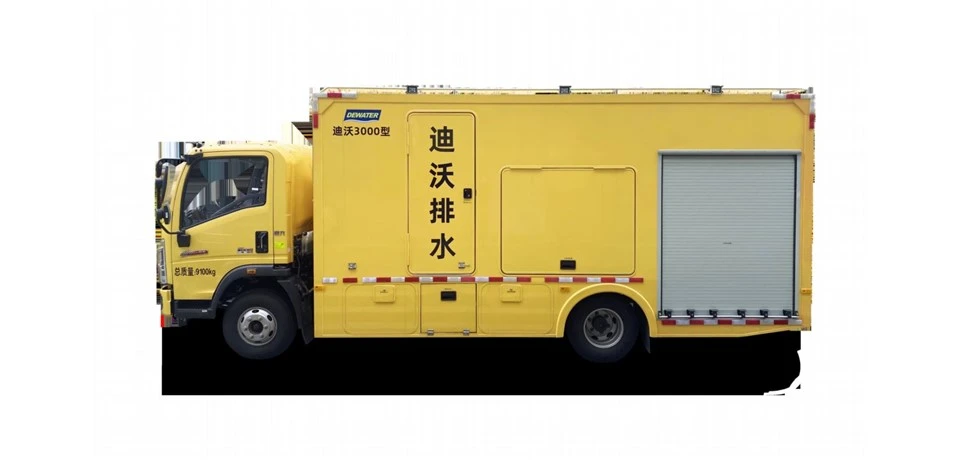
- Small to Medium-Sized Trucks: These trucks are often used for light-duty applications, such as draining small floods, dewatering construction sites, or providing emergency water supply. They typically have a flow rate ranging from 50 to 200 m³/h and a head of 10 to 30 meters. The power of the pump on these trucks usually ranges from 10 to 50 kW.
- Medium to Large-Sized Trucks: These trucks are suitable for more demanding applications, such as flood control in urban areas, industrial water management, and large-scale emergency rescue operations. They typically have a flow rate ranging from 200 to 1000 m³/h and a head of 20 to 50 meters. The power of the pump on these trucks can range from 50 to 200 kW.
- High-Capacity Trucks: These trucks are designed for extreme situations, such as major floods or large-scale industrial water drainage. They can have a flow rate of over 1000 m³/h and a head of up to 100 meters or more. The power of the pump on these trucks can exceed 200 kW.
It's important to note that these are just general capacity ranges, and the actual capacity of a water drainage pump truck may vary depending on the specific model and manufacturer. When selecting a water drainage pump truck, it's crucial to consider the specific requirements of your application, such as the volume of water to be drained, the distance and height the water needs to be lifted, and the operating conditions.
Significance of Capacity in Different Applications
The capacity of a water drainage pump truck plays a vital role in determining its effectiveness and suitability for various applications. Here are some examples of how capacity impacts different scenarios:
- Flood Control: In flood-prone areas, water drainage pump trucks are essential for quickly removing excess water and preventing further damage. A pump truck with a high capacity can drain large volumes of water in a short period, helping to reduce the impact of floods on communities and infrastructure. For example, during a major flood, a high-capacity pump truck can be used to drain water from flooded streets, basements, and industrial areas, allowing for a faster recovery process.
- Emergency Rescue: In emergency situations, such as natural disasters or industrial accidents, water drainage pump trucks are often used to provide immediate relief and support. A pump truck with a sufficient capacity can quickly remove water from affected areas, creating a safer environment for rescue operations and preventing further damage. For instance, in the aftermath of an earthquake or a hurricane, a water drainage pump truck can be used to drain water from collapsed buildings, flooded roads, and other hazardous areas.
- Industrial Water Management: In industrial settings, water drainage pump trucks are used for various purposes, such as dewatering mines, draining wastewater from factories, and providing water for industrial processes. A pump truck with the appropriate capacity can ensure efficient water management and prevent disruptions to industrial operations. For example, in a mining operation, a high-capacity pump truck can be used to remove water from underground mines, allowing for safe and continuous extraction of minerals.
Conclusion
The capacity of a typical water drainage pump truck is determined by several factors, including the pump's flow rate, head, and power. The capacity of a pump truck plays a crucial role in determining its effectiveness and suitability for various applications, such as flood control, emergency rescue, and industrial water management. When selecting a water drainage pump truck, it's important to consider the specific requirements of your application and choose a truck with the appropriate capacity.
At our company, we offer a wide range of Water Drainage Pump Trucks with different capacities to meet the diverse needs of our customers. Our Emergency Rescue Drainage Pump Trucks are designed to provide rapid response and efficient water drainage in emergency situations, while our Mobile Flood Pump Trailer offers a flexible and portable solution for flood control and dewatering.
If you're interested in learning more about our water drainage pump trucks or have specific requirements for your application, please don't hesitate to contact us. Our team of experts is ready to assist you in selecting the right pump truck and providing you with the necessary support and guidance.
References
- Pump Handbook, Karassik, I. J., Messina, J. P., Cooper, P. E., & Heald, C. C. (Eds.). (2008). McGraw-Hill.
- Hydraulic Institute Standards, Hydraulic Institute. (2012). Hydraulic Institute.