


As a supplier of dewatering pump trailers, I've had the privilege of witnessing firsthand the crucial role these machines play in various industries, from construction sites to flood - prone areas. A dewatering pump trailer is not just a standalone unit; it can be enhanced and customized with a wide range of accessories to improve its performance, efficiency, and versatility. In this blog, I'll explore the different accessories available for dewatering pump trailers.
1. Hoses and Fittings
Hoses are the arteries of a dewatering system. They carry water from the source to the pump and then from the pump to the discharge point. There are different types of hoses available, each designed for specific applications.
- Suction Hoses: These are used to draw water into the pump. They need to be flexible enough to be easily maneuvered around the work area. Suction hoses are often made of materials like PVC or rubber, which can withstand the negative pressure created by the pump. For example, a reinforced rubber suction hose can handle rough handling and resist abrasion on construction sites. Fittings such as cam - lock couplings are commonly used to connect the suction hose to the pump inlet. These couplings are easy to install and remove, allowing for quick setup and breakdown of the dewatering system.
- Discharge Hoses: Once the water is pumped, it needs to be transported to a suitable discharge location. Discharge hoses are typically larger in diameter than suction hoses to accommodate the higher flow rate. They are also made of durable materials to withstand the positive pressure of the pumped water. Some discharge hoses come with special features like anti - kink designs, which prevent the hose from bending and restricting the water flow.
2. Strainers
Strainers are essential accessories for dewatering pump trailers, especially when pumping water from sources that may contain debris. A strainer is installed at the end of the suction hose to prevent large objects such as rocks, leaves, and twigs from entering the pump. This protects the pump impeller and other internal components from damage, reducing the risk of breakdowns and extending the pump's lifespan.
There are different types of strainers available, including basket strainers and screen strainers. Basket strainers have a basket - like structure that can collect a large amount of debris. Screen strainers, on the other hand, have a fine mesh screen that can trap smaller particles. The choice of strainer depends on the nature of the debris in the water source.
3. Float Switches
Float switches are used to automate the operation of the dewatering pump. They are designed to turn the pump on and off based on the water level. When the water level rises to a certain point, the float switch activates the pump, and when the water level drops below a set level, the switch turns the pump off.
This automation is particularly useful in situations where continuous monitoring of the water level is not practical. For example, in a construction site basement that may flood during heavy rain, a float switch - controlled dewatering pump can ensure that the water is automatically removed as it accumulates, preventing damage to the structure and equipment.
4. Pressure Gauges
Pressure gauges are used to measure the pressure in the pump and the hoses. They provide valuable information about the performance of the dewatering system. By monitoring the pressure, operators can detect potential problems such as blockages in the hoses or a malfunctioning pump.
For example, if the pressure reading is too high, it may indicate a blockage in the discharge hose. Conversely, a low pressure reading could suggest a problem with the pump impeller or a leak in the suction hose. Regularly checking the pressure gauges can help prevent costly breakdowns and ensure the efficient operation of the dewatering system.
5. Sound Enclosures
In some applications, noise can be a significant issue. For example, in residential areas or hospitals, the loud noise generated by a dewatering pump can be a nuisance. Sound enclosures are designed to reduce the noise level of the pump.

These enclosures are typically made of sound - absorbing materials and are custom - designed to fit around the pump. They can reduce the noise level by a significant amount, making the dewatering operation more acceptable in noise - sensitive environments.
6. Remote Monitoring Systems
With the advancement of technology, remote monitoring systems have become an increasingly popular accessory for dewatering pump trailers. These systems allow operators to monitor the performance of the pump and the dewatering system from a remote location.
Using sensors and wireless communication technology, the remote monitoring system can collect data such as water level, pump pressure, and flow rate. This data is then transmitted to a central server or a mobile device, allowing operators to access real - time information and make informed decisions. For example, if the water level in a flood - prone area suddenly rises, the operator can be alerted immediately and take appropriate action, such as increasing the pump speed or sending additional equipment to the site.
7. Power Options
Dewatering pump trailers can be powered by different sources, and various accessories are available to ensure reliable power supply.
- Generators: For sites where there is no access to grid power, a generator can be used to power the pump. Generators come in different sizes and power ratings, allowing for selection based on the pump's power requirements. Some generators are designed to be portable and can be easily transported to different job sites.
- Battery Packs: In some applications, battery - powered pumps are preferred for their quiet operation and portability. Battery packs can be recharged, and additional battery packs can be carried on - site for extended operation.
Applications and Related Products
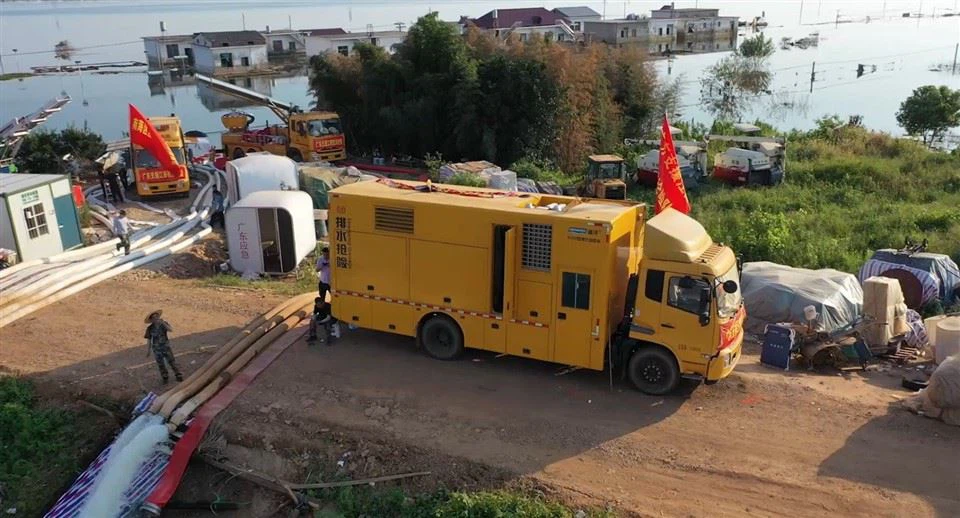
The dewatering pump trailers and their accessories are used in a wide range of applications. For flood control, Flood Control Pump Truck can be equipped with high - capacity dewatering pump trailers to quickly remove water from flooded areas. In emergency situations, Emergency Water Rescue Pickup and Mobile Pump Drainage Rescue Trucks rely on well - equipped dewatering pump trailers to save lives and property.
If you're in need of a dewatering pump trailer or any of the accessories mentioned above, don't hesitate to contact us for a detailed discussion about your requirements. We can provide you with customized solutions based on your specific application and budget. Whether you're dealing with a small - scale construction project or a large - scale flood control operation, our team of experts is ready to assist you.
References
- Pump Handbook, Karassik, I. J., Messina, R. S., Cooper, P. E., & Heald, C. C. (2008).
- Dewatering: Principles and Practices, Cedergren, H. R. (1989).