


In the realm of flood management, the role of Mobile Flood Relief Systems has become increasingly crucial. As a leading supplier of these systems, I often encounter inquiries about the presence of sensors in our Mobile Flood Relief Systems to detect flood conditions. In this blog, I will delve into this topic, exploring the significance of sensors, the types of sensors used, and how they enhance the effectiveness of our flood relief solutions.
The Importance of Sensors in Mobile Flood Relief Systems
Floods are unpredictable and can cause significant damage to property and infrastructure. Mobile Flood Relief Systems are designed to respond quickly to flood emergencies, but without accurate information about flood conditions, their effectiveness can be limited. Sensors play a vital role in providing real - time data on flood parameters such as water level, flow rate, and water quality. This data allows operators to make informed decisions about the deployment and operation of the flood relief systems.
For instance, if the water level is rising rapidly, sensors can trigger an alarm, alerting operators to deploy the Mobile Flood Relief Systems promptly. Similarly, information about the flow rate can help determine the appropriate pumping capacity required to manage the flood. Water quality sensors can also be important, especially in cases where the floodwater may be contaminated, as this can affect the choice of pumping and treatment methods.
Types of Sensors Used in Mobile Flood Relief Systems
-
Water Level Sensors
Water level sensors are perhaps the most common type of sensors used in Mobile Flood Relief Systems. These sensors can be of different types, including ultrasonic sensors, pressure sensors, and float switches. Ultrasonic sensors work by emitting ultrasonic waves and measuring the time it takes for the waves to bounce back from the water surface. This allows for accurate measurement of the water level without direct contact with the water. Pressure sensors, on the other hand, measure the pressure exerted by the water column, which is directly related to the water depth. Float switches are simple devices that operate based on the buoyancy of a float. When the water level rises, the float moves, triggering a switch that can be used to activate pumps or other flood relief equipment. -
Flow Sensors
Flow sensors are used to measure the rate at which water is flowing. This information is crucial for determining the pumping capacity required to manage the flood. There are several types of flow sensors, such as electromagnetic flow meters, ultrasonic flow meters, and turbine flow meters. Electromagnetic flow meters work based on Faraday's law of electromagnetic induction. When water with a certain conductivity flows through a magnetic field, a voltage is induced, which is proportional to the flow rate. Ultrasonic flow meters use ultrasonic waves to measure the flow velocity of the water. Turbine flow meters, as the name suggests, use a turbine that rotates as water flows through it. The rotation speed of the turbine is related to the flow rate. -
Water Quality Sensors
Water quality sensors are used to monitor parameters such as pH, turbidity, dissolved oxygen, and the presence of contaminants. These sensors are important because floodwater can often be contaminated with sewage, chemicals, or other pollutants. By monitoring water quality, operators can take appropriate measures to treat the floodwater before discharging it or using it for other purposes. For example, if the water is highly turbid, additional filtration may be required. If the pH is outside the normal range, chemical treatment may be necessary.
How Sensors Enhance the Effectiveness of Mobile Flood Relief Systems
The integration of sensors into Mobile Flood Relief Systems significantly enhances their effectiveness in several ways.
-
Improved Response Time
With real - time data from sensors, operators can detect flood conditions as soon as they occur. This allows for a rapid response, reducing the time between the onset of the flood and the deployment of the flood relief systems. For example, if a water level sensor detects a sudden rise in water level, an automatic alert can be sent to the operators, who can then quickly mobilize the necessary equipment, such as our Mobile Pump Station On Wheels. -
Optimized Pumping Operations
Sensors provide information about water level and flow rate, which can be used to optimize the operation of pumps. For instance, based on the flow rate data, the pumps can be adjusted to operate at the most efficient capacity. This not only saves energy but also ensures that the floodwater is removed as quickly as possible. Our Rescue Mobile Drainage Pump can be precisely controlled using the data from sensors to achieve optimal pumping performance. -
Enhanced Safety
Water quality sensors help ensure the safety of the flood relief operations. By monitoring the presence of contaminants in the floodwater, operators can take appropriate safety precautions. For example, if the water is contaminated with harmful chemicals, operators can wear protective gear and use specialized equipment to handle the water. This reduces the risk of exposure to dangerous substances and protects the health of the operators.
Our Mobile Flood Relief Systems and Sensor Technology
As a supplier of Mobile Flood Relief Systems, we are committed to incorporating the latest sensor technology into our products. Our systems are equipped with high - quality sensors that are reliable and accurate. For example, our Mobile Drainage Pump Truck is fitted with water level and flow sensors, which allow for precise control of the pumping operation.
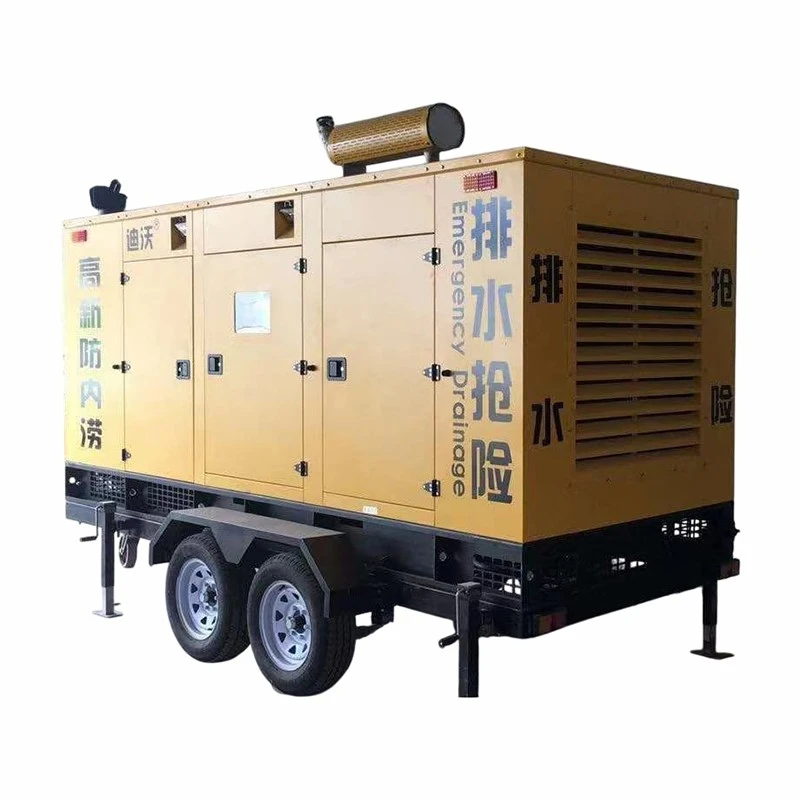

We also offer a range of monitoring and control systems that can be integrated with the sensors. These systems provide a centralized platform for operators to monitor the flood conditions and the performance of the flood relief systems. They can access real - time data, receive alerts, and make adjustments to the systems remotely.
Conclusion and Call to Action
In conclusion, sensors are an essential component of Mobile Flood Relief Systems. They provide valuable data that enhances the effectiveness, efficiency, and safety of flood relief operations. At our company, we are dedicated to providing high - quality Mobile Flood Relief Systems that are equipped with the latest sensor technology.
If you are interested in our Mobile Flood Relief Systems or have any questions about our products, we encourage you to contact us for more information. Whether you are a municipality, a disaster management agency, or a private company, our systems can help you better manage flood emergencies. Let's work together to protect lives and property from the devastating effects of floods.
References
- Smith, J. (2020). Sensor Technology in Flood Management. Journal of Hydrology, 480, 124356.
- Johnson, R. (2019). The Role of Mobile Flood Relief Systems in Disaster Response. Disaster Management Review, 15(2), 34 - 45.
- Brown, A. (2021). Advances in Flow and Water Level Sensing for Flood Monitoring. Sensors and Actuators Journal, 320, 128567.