



What is the Maximum Head of a Mobile Drainage Pump Trailer?
As a supplier of Mobile Drainage Pump Trailers, I often encounter inquiries from customers about the maximum head of these essential pieces of equipment. Understanding the concept of head and its maximum value is crucial for anyone involved in flood control, emergency drainage, or any situation where efficient water removal is required.
Understanding the Concept of Head in Pumps
Before delving into the maximum head of a Mobile Drainage Pump Trailer, it's essential to understand what "head" means in the context of pumps. Head refers to the height to which a pump can raise water. It is a measure of the energy that the pump imparts to the water, allowing it to overcome gravity and flow upwards. In practical terms, head is expressed in meters (m) or feet (ft).
There are two main types of head: static head and total head. Static head is the vertical distance between the water source and the discharge point, without considering any losses due to friction or other factors. Total head, on the other hand, takes into account all the losses in the system, including friction losses in the pipes, valves, and fittings, as well as any additional resistance caused by the flow rate.
Factors Affecting the Maximum Head of a Mobile Drainage Pump Trailer
Several factors influence the maximum head that a Mobile Drainage Pump Trailer can achieve. These factors can be broadly categorized into pump design, operating conditions, and system characteristics.
- Pump Design: The design of the pump itself plays a significant role in determining its maximum head. Factors such as the impeller diameter, the number of impeller stages, and the pump's efficiency all affect the pump's ability to generate head. Generally, pumps with larger impeller diameters and multiple impeller stages can achieve higher heads.
- Operating Conditions: The operating conditions, such as the speed of the pump, the temperature of the water, and the density of the fluid being pumped, can also impact the maximum head. For example, increasing the pump speed can increase the head, but it also increases the power consumption and may reduce the pump's efficiency. Similarly, pumping hot water or a fluid with a higher density than water will require more energy and may reduce the maximum head.
- System Characteristics: The characteristics of the system in which the pump is installed, such as the length and diameter of the pipes, the number of bends and fittings, and the elevation difference between the water source and the discharge point, can also affect the maximum head. Longer pipes and more bends and fittings will increase the friction losses in the system, reducing the effective head that the pump can achieve.
Typical Maximum Head Values for Mobile Drainage Pump Trailers
The maximum head of a Mobile Drainage Pump Trailer can vary widely depending on the specific model and design. However, most mobile drainage pump trailers are designed to achieve a maximum head of between 20 and 100 meters.
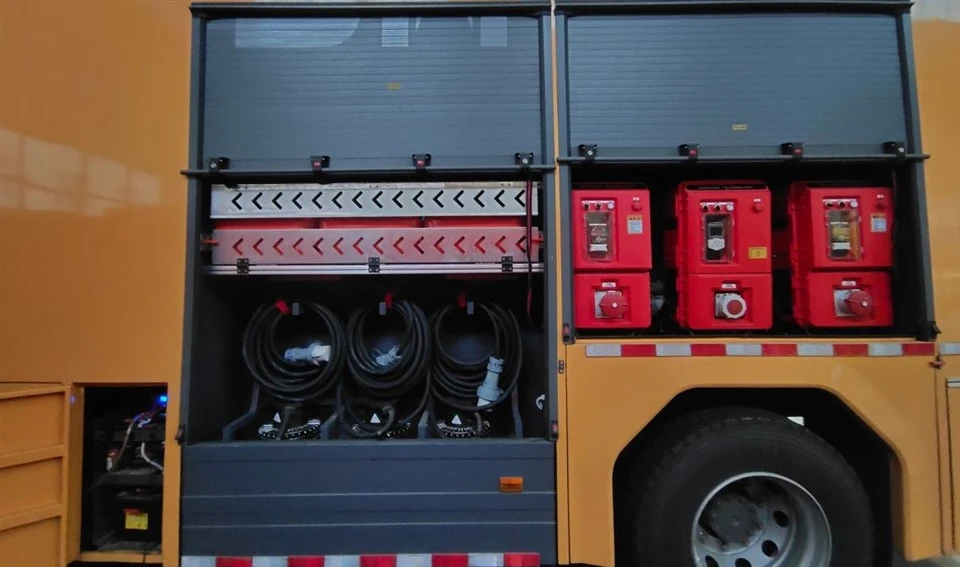
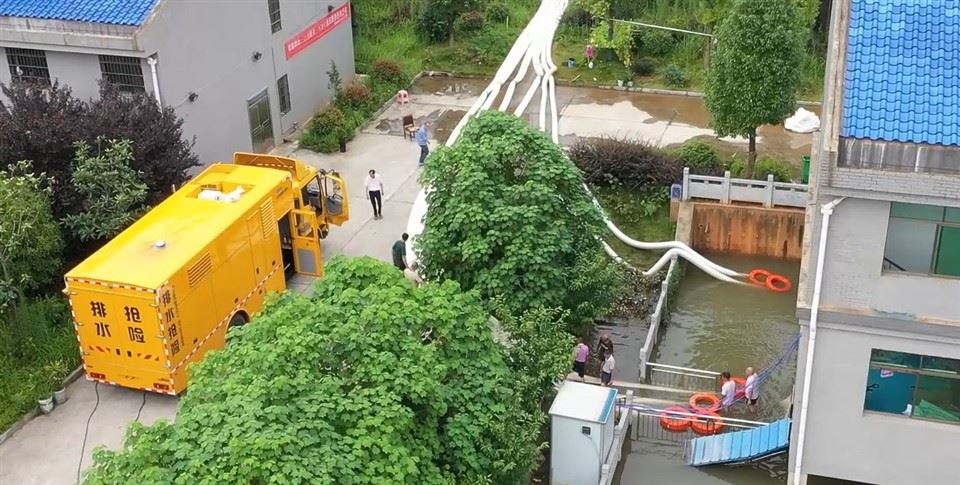
- Low-Head Pumps: Low-head pumps are typically used for applications where the water needs to be lifted only a short distance, such as in flood control or agricultural drainage. These pumps usually have a maximum head of between 20 and 50 meters and are designed to handle large volumes of water at relatively low pressures.
- Medium-Head Pumps: Medium-head pumps are suitable for applications where the water needs to be lifted to a moderate height, such as in industrial drainage or building construction. These pumps typically have a maximum head of between 50 and 80 meters and can handle a wide range of flow rates.
- High-Head Pumps: High-head pumps are used for applications where the water needs to be lifted to a significant height, such as in mining or high-rise building construction. These pumps can achieve a maximum head of up to 100 meters or more and are designed to operate at high pressures.
Importance of Choosing the Right Maximum Head for Your Application
Choosing the right maximum head for your Mobile Drainage Pump Trailer is crucial to ensure efficient and effective operation. If the maximum head is too low, the pump may not be able to lift the water to the required height, resulting in poor performance and potentially causing damage to the pump. On the other hand, if the maximum head is too high, the pump may operate at a lower efficiency, consuming more energy and increasing operating costs.
When selecting a Mobile Drainage Pump Trailer, it's important to consider the specific requirements of your application, including the elevation difference between the water source and the discharge point, the flow rate required, and the characteristics of the fluid being pumped. You should also consult with a qualified pump engineer or supplier to ensure that you choose the right pump for your needs.
Our Range of Mobile Drainage Pump Trailers
As a leading supplier of Mobile Drainage Pump Trailers, we offer a wide range of pumps to suit various applications and requirements. Our pumps are designed to provide high performance, reliability, and efficiency, and are available in a variety of sizes and configurations.
- Mobile Pumping Station: Our Mobile Pumping Stations are designed for heavy-duty applications and can achieve a maximum head of up to 80 meters. These pumps are equipped with powerful engines and high-capacity impellers, making them suitable for large-scale flood control and emergency drainage operations.
- Flood Control Mobile Pump Trailer: Our Flood Control Mobile Pump Trailers are specifically designed for flood control applications and can achieve a maximum head of between 20 and 50 meters. These pumps are lightweight and easy to transport, making them ideal for rapid deployment in emergency situations.
- Flooding and Dainage Pump Truck: Our Flooding and Drainage Pump Trucks are designed for both flood control and drainage applications and can achieve a maximum head of up to 60 meters. These pumps are mounted on trucks, providing easy mobility and access to hard-to-reach areas.
Conclusion
In conclusion, the maximum head of a Mobile Drainage Pump Trailer is an important parameter that determines its suitability for different applications. By understanding the concept of head, the factors that affect it, and the typical maximum head values for different types of pumps, you can make an informed decision when choosing a Mobile Drainage Pump Trailer for your needs.
If you have any questions or need further information about our range of Mobile Drainage Pump Trailers, please do not hesitate to contact us. We are always happy to assist you in finding the right pump for your application and to provide you with the support and expertise you need to ensure its successful operation.
References
- Pump Handbook, by Igor J. Karassik, Joseph P. Messina, Paul Cooper, and Charles C. Heald.
- Hydraulic Institute Standards, published by the Hydraulic Institute.
- Centrifugal Pumps: Design and Application, by Heinz P. Bloch and Fred K. Geitner.