


As a supplier of Emergency Dewatering Pumps, I often get asked about the efficiency curve of these pumps. It's a crucial aspect that can significantly impact the performance and cost - effectiveness of any dewatering operation. So, let's dive into what the efficiency curve of an Emergency Dewatering Pump is all about.
Understanding the Basics of Pump Efficiency
First off, pump efficiency is a measure of how well a pump converts the input power (usually electrical or diesel power) into useful hydraulic power. In simple terms, it tells us how much energy the pump is wasting and how much it's actually using to move water. The efficiency curve of a pump shows the relationship between the pump's efficiency and its flow rate.
For an Emergency Dewatering Pump, this curve is super important. During an emergency dewatering situation, time is of the essence, and you want a pump that can move water as quickly and efficiently as possible. If a pump is operating at a low - efficiency point on its curve, it will consume more energy, cost more to run, and might not be able to handle the water volume effectively.
Components of the Efficiency Curve
The efficiency curve typically has a bell - shaped appearance. At the left - hand side of the curve, when the flow rate is very low, the pump efficiency is also low. This is because the pump has to work hard against the system's resistance, and a large portion of the input power is used up in overcoming this resistance rather than moving water.
As the flow rate increases, the pump efficiency starts to rise. There is a point on the curve called the Best Efficiency Point (BEP). This is the sweet spot where the pump operates most efficiently. At the BEP, the pump uses the least amount of energy to move the maximum amount of water.
Beyond the BEP, as the flow rate continues to increase, the efficiency starts to decline again. This is because the pump has to work harder to push the increased volume of water, and there are more losses due to factors like friction in the pipes and impeller inefficiencies.
Factors Affecting the Efficiency Curve
Several factors can affect the efficiency curve of an Emergency Dewatering Pump. One of the main factors is the pump design. Different pump designs, such as centrifugal pumps or positive displacement pumps, have different efficiency curves. Centrifugal pumps are often used in emergency dewatering because they can handle large volumes of water at relatively low pressures. Their efficiency curves are usually broader, meaning they can operate at a decent efficiency over a wider range of flow rates.
The size of the pump also matters. A pump that is too large for the dewatering job will operate at a low - flow rate, far from its BEP, resulting in poor efficiency. On the other hand, a pump that is too small won't be able to handle the required water volume, even if it's operating at its BEP.
The condition of the pump is another crucial factor. Over time, pumps can wear out, and parts like the impeller can get damaged. This can shift the efficiency curve and reduce the overall efficiency of the pump. Regular maintenance is essential to keep the pump operating at peak efficiency.
Importance of the Efficiency Curve in Emergency Situations
In emergency dewatering scenarios, the efficiency curve can make or break the operation. For example, in a flood situation, you need to remove water as quickly as possible. If you choose a pump that is not operating near its BEP, it will take longer to dewater the area, and you'll end up using more fuel or electricity.
Let's say you're dealing with a basement flood. You have a choice between two pumps. Pump A has a high - efficiency curve but is a bit more expensive, and Pump B is cheaper but has a lower - efficiency curve. In the short term, Pump B might seem like the better option because of the lower upfront cost. However, during the dewatering process, Pump A will use less energy and get the job done faster. So, in the long run, it will save you money and time.
Related Products and Their Efficiency Considerations
We also offer other related products like Mobile Water Supply Pump, Mobile Water Transport Pump, and Trailer Mounted Drainage Pump Station. These products also have their own efficiency curves, and understanding them is just as important.
Mobile Water Supply Pumps are often used to provide water for various purposes during emergency situations. Their efficiency curves need to be considered based on the specific water flow requirements of the application. For example, if you need to supply water to a large - scale firefighting operation, you'll want a pump that can operate at high flow rates with good efficiency.
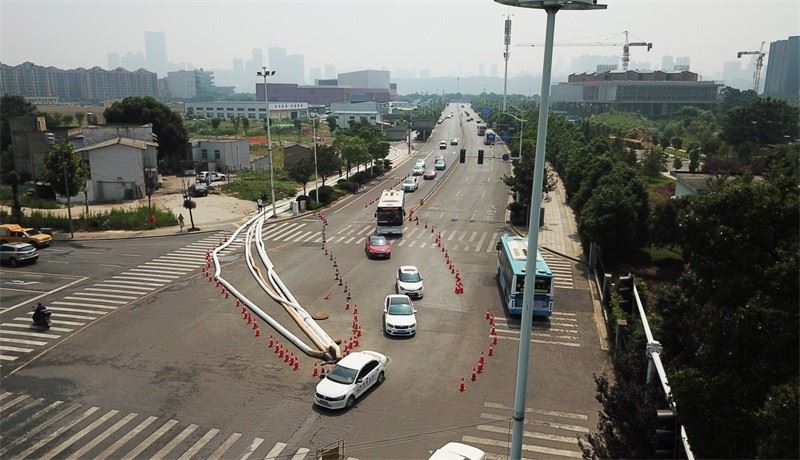
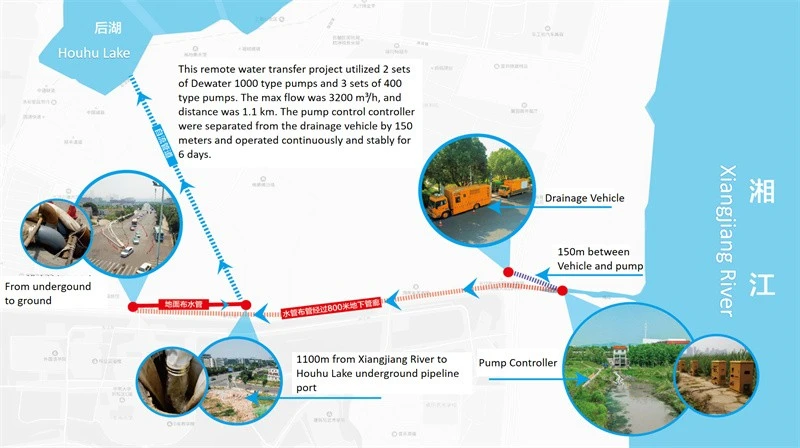
Mobile Water Transport Pumps are used to move water from one location to another. The efficiency of these pumps is crucial, especially when transporting water over long distances. A pump with a high - efficiency curve will consume less energy during the transport process, reducing the overall cost.
Trailer Mounted Drainage Pump Stations are designed to handle large - scale dewatering tasks. These stations usually consist of multiple pumps, and their combined efficiency curve is an important factor. By carefully selecting the pumps and operating them at or near their BEPs, you can achieve maximum efficiency in large - scale dewatering operations.
How to Use the Efficiency Curve for Pump Selection
When selecting an Emergency Dewatering Pump, it's essential to look at the efficiency curve. First, determine the required flow rate and head (pressure) for your dewatering job. Then, look for a pump whose BEP is close to these values.
You can also use the efficiency curve to estimate the operating costs of the pump. By knowing the efficiency at different flow rates, you can calculate how much energy the pump will consume over a given period. This will help you compare different pumps and choose the one that is most cost - effective in the long run.
Conclusion
In conclusion, the efficiency curve of an Emergency Dewatering Pump is a vital tool for understanding the pump's performance and cost - effectiveness. Whether you're dealing with a small - scale basement flood or a large - scale industrial dewatering project, knowing how to read and use the efficiency curve can save you time, money, and energy.
If you're in the market for an Emergency Dewatering Pump or any of our related products like Mobile Water Supply Pump, Mobile Water Transport Pump, or Trailer Mounted Drainage Pump Station, don't hesitate to get in touch. We're here to help you select the right pump for your needs and ensure that you get the best possible performance and value for your money.
References
- "Pump Handbook" by Igor J. Karassik
- Various pump manufacturer technical manuals for detailed efficiency curve information.