


As a supplier of drainage pump vehicles, I've had the privilege of witnessing firsthand the diverse needs of our customers and the crucial role that these vehicles play in various scenarios. In this blog, I'll delve into the differences between different models of drainage pump vehicles, helping you understand which one is best suited for your specific requirements.
1. Flood Control Mobile Pump Trailer
The Flood Control Mobile Pump Trailer is a highly versatile and portable solution designed specifically for flood control operations. This model is typically mounted on a trailer, which allows for easy transportation to the flood - affected areas.
One of the key advantages of the flood control mobile pump trailer is its mobility. It can be quickly deployed to different locations, making it ideal for emergency flood response. Whether it's a small urban flood or a large - scale natural disaster, these trailers can be on the scene in a short time.
In terms of performance, flood control mobile pump trailers are often equipped with high - capacity pumps. These pumps can handle large volumes of water, enabling rapid drainage of flooded areas. They are also designed to work efficiently in various water conditions, including water with debris. The trailers usually come with a debris - handling system, such as a strainer or a cutter, to prevent clogging and ensure continuous operation.
Another important feature is the power source. Most flood control mobile pump trailers are powered by diesel engines, which provide reliable and independent power. This is crucial in situations where the power grid may be down due to the flood. Diesel engines also offer high torque, which is necessary for driving the high - capacity pumps.
2. Emergency Drainage Rescue Vehicle
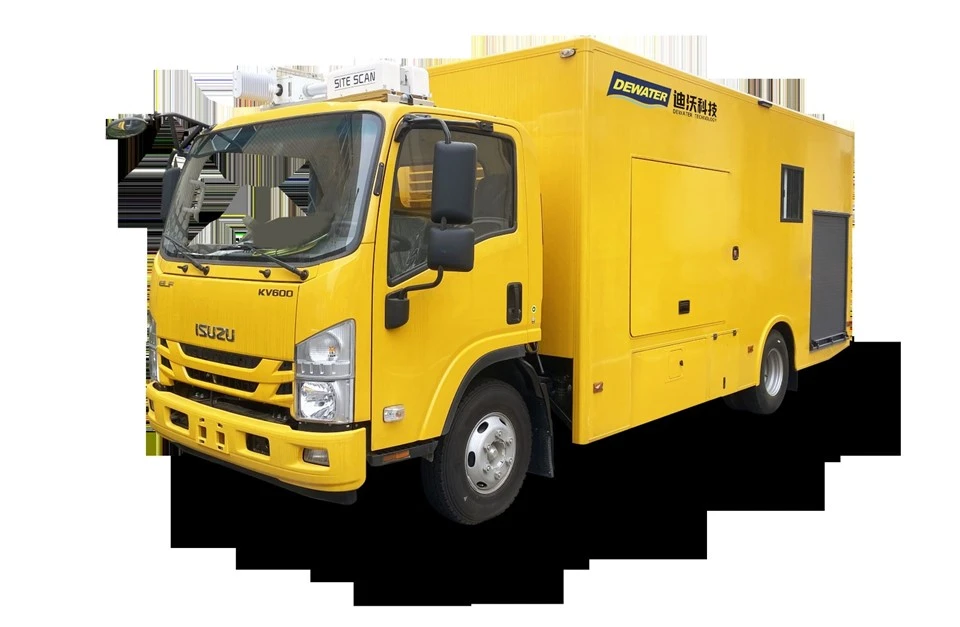
The Emergency Drainage Rescue Vehicle is a more comprehensive and integrated solution for emergency drainage and rescue operations. Unlike the mobile pump trailer, this vehicle is self - contained and built on a truck chassis.
The emergency drainage rescue vehicle offers greater mobility and flexibility on the road. It can quickly reach the disaster area, even in difficult terrain. The vehicle is equipped with advanced navigation and communication systems, which allow the operators to coordinate with other rescue teams effectively.
In terms of pumping capacity, emergency drainage rescue vehicles are often designed to handle extremely large volumes of water. They are equipped with multiple pumps, which can be used in combination to achieve high - speed drainage. These pumps are also designed to be more powerful and efficient, with advanced hydraulic systems that optimize the flow of water.
One of the unique features of the emergency drainage rescue vehicle is its multi - functionality. In addition to drainage, it can also be used for other rescue operations. For example, it can be equipped with a water - jet system for cutting through debris or a winch for lifting heavy objects. Some models also have a water - storage tank, which can be used for firefighting or providing water for other emergency needs.
The emergency drainage rescue vehicle also has a more comfortable and functional cabin for the operators. It is equipped with air - conditioning, heating, and other amenities to ensure the well - being of the operators during long - term operations.
3. Drought Relief Drainage Pump Truck
The Drought Relief Drainage Pump Truck is designed for a different purpose compared to the previous two models. As the name suggests, it is mainly used for drought relief operations.
This type of pump truck is focused on water transfer rather than just drainage. It is used to move water from water sources, such as rivers, lakes, or reservoirs, to areas that are suffering from drought. The pumps on the drought relief drainage pump truck are designed to handle large - distance water transfer. They have high - pressure capabilities to pump water over long distances and through pipelines.
In terms of performance, the drought relief drainage pump truck is optimized for continuous operation. It is equipped with reliable engines and pumps that can run for long periods without breakdown. The truck also has a large fuel tank to ensure that it can operate for an extended time without refueling.
Another important aspect of the drought relief drainage pump truck is its adaptability to different water sources. The pumps are designed to work with various water qualities, including muddy or dirty water. They are also equipped with filters and other water - treatment systems to ensure that the water being transferred is suitable for the intended use, such as irrigation or drinking water supply.
Comparison of the Three Models
- Mobility: The flood control mobile pump trailer offers the highest degree of mobility in terms of quick deployment to different locations, especially in areas with limited access. The emergency drainage rescue vehicle also has good mobility on the road but may be restricted in extremely rough terrain. The drought relief drainage pump truck is mainly focused on long - distance water transfer and may not be as flexible in terms of rapid deployment to different flood or rescue sites.
- Pumping Capacity: The emergency drainage rescue vehicle generally has the highest pumping capacity, with multiple high - power pumps. The flood control mobile pump trailer also has a relatively high capacity but may be limited by the size of the single pump on the trailer. The drought relief drainage pump truck has a high - pressure pumping capacity for long - distance transfer but may not handle as large a volume of water per unit time as the emergency drainage rescue vehicle.
- Functionality: The emergency drainage rescue vehicle is the most multi - functional, with additional features for rescue operations. The flood control mobile pump trailer is mainly focused on flood control and drainage. The drought relief drainage pump truck is specialized in water transfer for drought relief.
- Power Source: All three models commonly use diesel engines for power. However, the emergency drainage rescue vehicle may also have additional power - management systems to support other on - board equipment.
Conclusion
In conclusion, each model of drainage pump vehicle has its own unique features and advantages, and the choice depends on your specific needs. If you are mainly dealing with flood control and need a quickly deployable solution, the flood control mobile pump trailer may be the best choice. For comprehensive emergency drainage and rescue operations, the emergency drainage rescue vehicle is more suitable. And if you are facing a drought situation and need to transfer water over long distances, the drought relief drainage pump truck is the way to go.
If you are interested in any of our drainage pump vehicles or have specific requirements for your project, I encourage you to reach out to us for a detailed discussion. We have a team of experts who can provide you with professional advice and customized solutions. Let's work together to find the perfect drainage pump vehicle for your needs.

References
- Engineering textbooks on fluid mechanics and pump design
- Industry reports on flood control and drought relief equipment
- Technical specifications provided by pump and vehicle manufacturers