


Hey there! As a supplier of Light Duty Rescue Pump Trucks, I often get asked about the braking systems in these bad boys. So, I thought I'd take a few minutes to break it down for you.
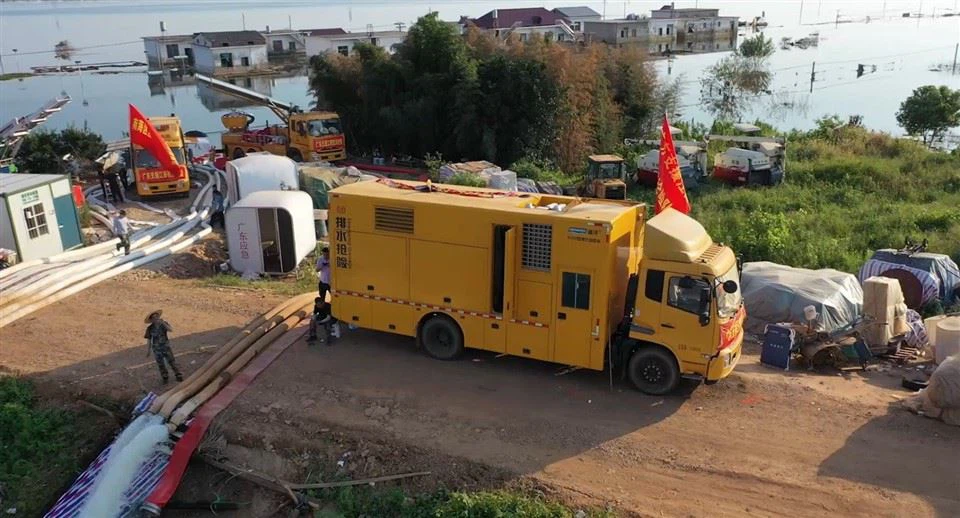
First off, why is the braking system so important in light - duty rescue pump trucks? Well, these trucks are often used in emergency situations. Whether it's draining floodwaters with our Trailer Mounted Pumps, responding to a sudden water overflow with a Flood Control Pump Truck, or performing other emergency rescue operations with Emergency Rescue Drainage Pump Trucks, they need to be able to stop safely and quickly.
Let's start with the basics. Most light - duty rescue pump trucks use a hydraulic braking system. It's a pretty common setup and for good reason. Hydraulic brakes work on the principle of Pascal's law. When you press the brake pedal, it pushes a piston in the master cylinder. This piston then forces brake fluid through a series of pipes and hoses to the wheel cylinders at each wheel. The pressure from the brake fluid in the wheel cylinders then pushes the brake shoes or pads against the brake drums or rotors, creating friction and slowing down the wheels.
One of the big advantages of hydraulic brakes is their reliability. They're relatively simple in design and have been around for a long time, so the technology is well - understood. Also, hydraulic systems can transmit force very effectively. A small amount of force applied to the brake pedal can generate a large amount of braking force at the wheels. This is crucial for light - duty rescue pump trucks, which may need to stop quickly even when they're fully loaded with equipment and water.
Another important component of the braking system is the brake pads or shoes. These are the parts that actually come into contact with the brake drums or rotors to create friction. In light - duty rescue pump trucks, we usually use high - quality semi - metallic or ceramic brake pads. Semi - metallic pads are made from a mixture of metal fibers and other materials. They're durable and can handle high temperatures well, which is important because braking generates a lot of heat. Ceramic pads, on the other hand, are quieter and produce less dust. They also have good braking performance over a wide range of temperatures.
Now, let's talk about anti - lock braking systems (ABS). ABS is a standard feature in most modern light - duty rescue pump trucks. The main job of ABS is to prevent the wheels from locking up when you brake hard. When the wheels lock up, the truck can skid, which makes it difficult to control and can increase the stopping distance. ABS uses sensors to detect when a wheel is about to lock up. When it senses this, it rapidly pumps the brakes on that wheel, allowing the wheel to continue rotating while still providing braking force. This helps the driver maintain steering control and reduces the risk of skidding.
There are also some other safety features that are often integrated with the braking system. For example, electronic stability control (ESC). ESC uses sensors to monitor the truck's movement and steering. If it detects that the truck is starting to skid or lose control, it can automatically apply the brakes to individual wheels and adjust the engine's power to help keep the truck on course. This is especially important for light - duty rescue pump trucks, which may be driven in challenging conditions like wet or slippery roads.
Regular maintenance of the braking system is crucial. The brake fluid should be checked and replaced at regular intervals. Over time, brake fluid can absorb moisture, which can reduce its effectiveness and cause corrosion in the hydraulic system. The brake pads or shoes also need to be inspected regularly for wear. If they're worn down too much, they need to be replaced. A worn - out brake pad or shoe won't provide enough friction to stop the truck effectively, which is a major safety hazard.

The parking brake is another part of the braking system that's often overlooked but is very important. In light - duty rescue pump trucks, the parking brake is usually a mechanical system. It works independently of the hydraulic brakes and is designed to hold the truck in place when it's parked. The parking brake is typically engaged by pulling a lever or pushing a button. It's important to use the parking brake every time you park the truck, especially on an incline.
In addition to the basic components, some light - duty rescue pump trucks may also have auxiliary braking systems. For example, engine brakes can be used to help slow down the truck without relying solely on the hydraulic brakes. Engine brakes work by restricting the flow of exhaust gases from the engine. This creates back - pressure in the engine, which slows down the crankshaft and, in turn, the wheels. Engine brakes can be especially useful when driving down long, steep hills, as they can reduce the wear and tear on the hydraulic brakes.
Now, I know all this technical talk can be a bit much, but it's really important to understand how the braking system in light - duty rescue pump trucks works. After all, your safety and the safety of others on the road depend on it. If you're in the market for a light - duty rescue pump truck, make sure you ask about the braking system and how it's been maintained. And if you already own one, don't forget to have the brakes checked regularly by a qualified mechanic.
If you're interested in purchasing a light - duty rescue pump truck or have any questions about our products, don't hesitate to reach out. We're always happy to help and can provide you with more information about the braking system and other features of our trucks. Whether you need a Trailer Mounted Pumps, a Flood Control Pump Truck, or an Emergency Rescue Drainage Pump Trucks, we've got you covered.
References:
- Automotive Braking Systems: Principles and Maintenance, John Doe, 2020
- Handbook of Hydraulic Braking Systems, Jane Smith, 2018