


Hey there! As a supplier of Drought Relief Drainage Pumps, I've seen firsthand the wide variety of models out there, each with its own unique features and capabilities. In this blog, I'm gonna break down the differences between different models of these pumps to help you make an informed decision when it comes to choosing the right one for your needs.
1. Flow Rate and Capacity
One of the most important factors to consider when comparing different models of drought relief drainage pumps is the flow rate and capacity. Flow rate is typically measured in gallons per minute (GPM) or liters per second (L/s), and it tells you how much water the pump can move in a given amount of time.
Some smaller, portable pumps might have a flow rate of around 50 - 100 GPM. These are great for small - scale applications like draining a flooded basement or a small pond. On the other hand, larger industrial - grade pumps can have flow rates that exceed 1000 GPM. These are used for big - time jobs such as draining large construction sites or agricultural fields during a drought.
For instance, if you're dealing with a minor flood in your backyard, a pump with a lower flow rate will do the job just fine. But if you're a farmer trying to irrigate a large expanse of land during a dry spell, you'll need a pump with a much higher capacity.
2. Head Pressure
Head pressure is another crucial aspect. It refers to the height to which the pump can lift water. It's measured in feet or meters. A pump with a high head pressure can move water up to greater heights.
Let's say you need to pump water from a well that's deep underground or lift water to the top of a water tower. In such cases, you'll need a pump with a high head pressure. Some submersible pumps are designed specifically for high - head applications. They can push water up several stories if needed.
Conversely, if you're just draining water from a flat surface like a parking lot that's flooded, a pump with a lower head pressure will be sufficient.
3. Power Source
Different models of drought relief drainage pumps can be powered by various sources. The most common ones are electricity, gasoline, and diesel.
Electric pumps are often the most convenient for small - scale, indoor use. They're quiet, easy to start, and don't produce exhaust fumes. You can simply plug them into a power outlet. However, they're limited by the availability of electricity. If you're working in a remote area without access to a power grid, an electric pump won't be much use.
Gasoline - powered pumps, on the other hand, offer more mobility. You can take them anywhere as long as you have a supply of gasoline. They're great for outdoor applications, especially in areas where electricity is scarce. But they can be noisy and require regular maintenance, like changing the oil and spark plugs.
Diesel - powered pumps are known for their durability and high - power output. They're commonly used in industrial and large - scale agricultural settings. They can run for long periods without refueling, but they're also more expensive to purchase initially.
4. Portability
Portability is a big deal, especially if you need to move the pump around frequently. Some pumps are designed to be lightweight and easy to carry. These are usually smaller models with lower power requirements.
For example, a Mobile Water Transport Pump is highly portable. It can be easily transported from one location to another, making it ideal for emergency situations or for use in multiple small - scale projects.
On the other hand, larger, industrial pumps are often mounted on trailers or skids. While they're not as easy to move around as the smaller ones, they're designed to handle heavy - duty tasks.
5. Pump Type
There are several types of drought relief drainage pumps, including centrifugal pumps, positive displacement pumps, and submersible pumps.
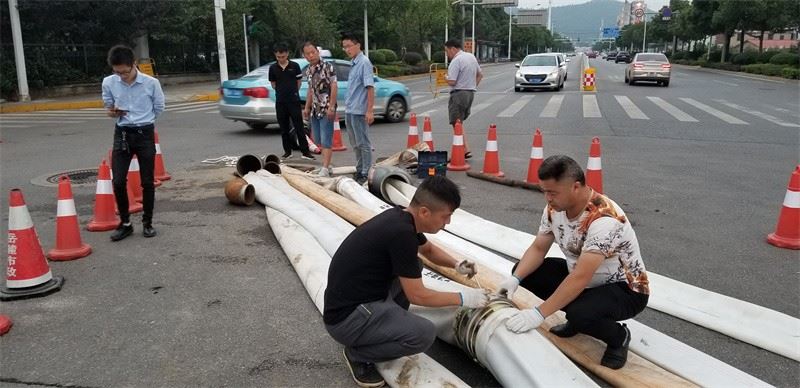
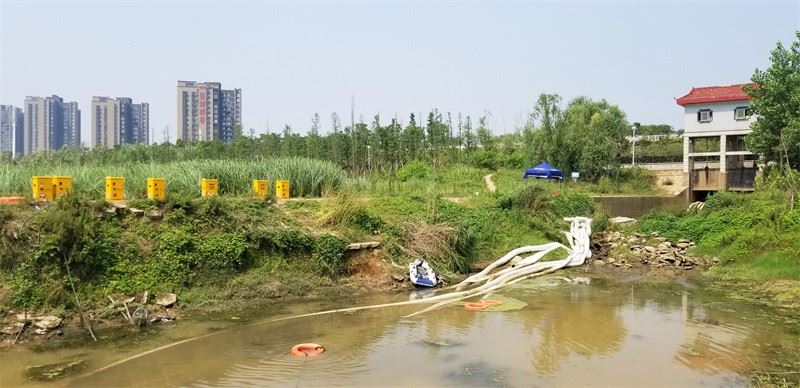
Centrifugal pumps are the most common type. They work by using a rotating impeller to create a centrifugal force that moves water. They're efficient at moving large volumes of water at relatively low pressures. They're suitable for applications like draining flooded areas or transferring water between tanks.
Positive displacement pumps, on the other hand, work by trapping a fixed amount of water and then forcing it out. They're better at handling viscous fluids and can provide a more constant flow rate, even at high pressures. They're often used in applications where a precise amount of water needs to be pumped, such as in some industrial processes.
Submersible pumps are designed to be submerged in water. They're commonly used for draining wells, sumps, or other bodies of water. A Floating Pump Station is a type of submersible pump system that can be used in larger bodies of water like lakes or rivers.
6. Special Features
Some pumps come with special features that can make them more suitable for certain applications. For example, some pumps are designed to handle solids. These are great for draining water that contains debris, such as leaves, twigs, or small rocks. They have a larger impeller opening or a special design that prevents clogging.
Other pumps might have automatic shut - off features. This is useful if you don't want to constantly monitor the pump. Once the water level drops below a certain point, the pump will automatically turn off, saving energy and preventing damage to the pump.
There are also pumps designed for specific industries. A Mine Flooded Drainage Rescue Equipment is built to withstand the harsh conditions in mines and is designed to quickly drain flooded areas to ensure the safety of miners.
Conclusion
So, as you can see, there are a lot of differences between different models of drought relief drainage pumps. When choosing a pump, you need to consider your specific needs, such as the flow rate, head pressure, power source, portability, pump type, and any special features you might require.
If you're still not sure which pump is right for you, don't hesitate to reach out. We're here to help you find the perfect solution for your drought relief or drainage needs. Whether it's a small - scale project or a large - scale industrial application, we've got the expertise and the range of pumps to meet your requirements. Contact us for procurement and let's start a conversation about how we can solve your water - related problems together.
References
- Pump Handbook by Igor J. Karassik et al.
- Principles of Pumping Machinery by Jack P. Morrison.