


Hey there! As a supplier of portable mobile drainage pumps, I've got a bunch of insights to share on how to measure the performance of these nifty machines. Let's dive right in!
First off, let's talk about the basics. When you're looking at a portable mobile drainage pump, there are several key factors that determine its performance. One of the most important ones is the flow rate. Flow rate, simply put, is how much water the pump can move in a given amount of time. It's usually measured in gallons per minute (GPM) or cubic meters per hour (m³/h). A higher flow rate means the pump can handle larger volumes of water quickly, which is super useful in situations like flood control or draining large areas.
To measure the flow rate, you can use a flow meter. There are different types of flow meters available, such as electromagnetic flow meters, ultrasonic flow meters, and turbine flow meters. Each type has its own pros and cons, but they all serve the same purpose of accurately measuring the amount of water flowing through the pump. You can install the flow meter in the discharge pipe of the pump to get an accurate reading.
Another crucial factor is the head. Head refers to the height that the pump can lift the water. It's measured in feet or meters. The head is important because it determines how far the pump can push the water vertically. For example, if you need to pump water from a basement to the ground level, you'll need a pump with a sufficient head to overcome the vertical distance.
To calculate the head, you need to consider the static head (the vertical distance between the water source and the discharge point) and the friction head (the resistance caused by the pipes and fittings). The total head is the sum of the static head and the friction head. You can use formulas or online calculators to determine the head based on the specific conditions of your application.
Efficiency is also a big deal when it comes to measuring the performance of a portable mobile drainage pump. Efficiency refers to how well the pump converts the input power (usually electricity or fuel) into useful work (pumping water). A more efficient pump will use less energy to achieve the same flow rate and head, which means lower operating costs in the long run.
To measure the efficiency of the pump, you need to know the input power and the output power. The input power can be measured using a power meter, and the output power can be calculated based on the flow rate and head. The efficiency is then calculated by dividing the output power by the input power and multiplying by 100 to get a percentage.
Now, let's talk about some real-world examples of portable mobile drainage pumps and how their performance can be measured. Take the BQS400 - 300 Mining Explosion - Proof Submersible Drainage Pump. This pump is designed for use in mining applications where there's a risk of explosion. To measure its performance, you'd focus on the flow rate to ensure it can handle the large volumes of water that are often present in mines. You'd also check the head to make sure it can lift the water to the required height, and the efficiency to keep the operating costs down.

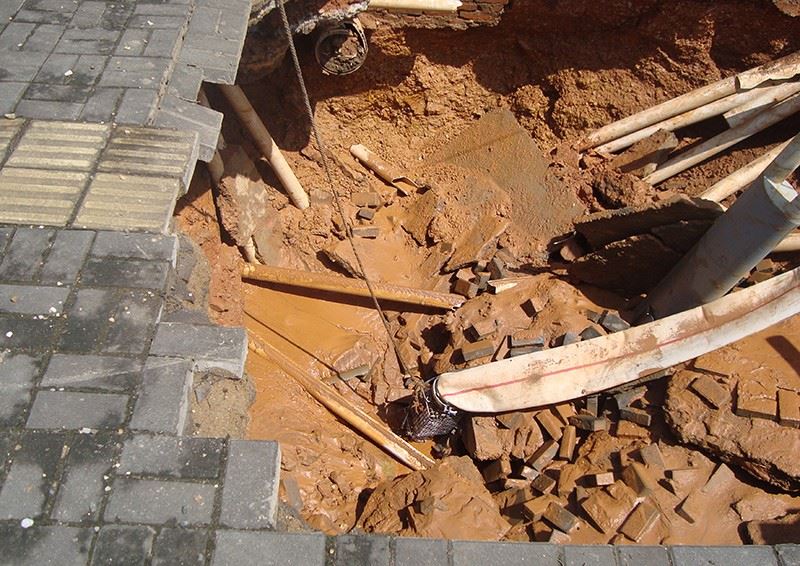
The Mobile Drain Pump Truck for Flood Control is another great example. In flood control situations, time is of the essence. So, you'd want to measure the flow rate to see how quickly it can remove the floodwater. The head is also important to ensure that the water can be pumped to a safe location, such as a nearby river or drainage system. And, of course, efficiency is crucial to keep the fuel consumption in check during long - term flood control operations.
The Seawater Backfilling Drainage Pump is designed for use in applications where seawater needs to be pumped. When measuring its performance, you need to consider the corrosive nature of seawater. This means that the pump's materials and construction play a big role in its long - term performance. You'd still measure the flow rate, head, and efficiency, but you'd also need to keep an eye on the pump's durability and resistance to corrosion.
In addition to these technical measurements, it's also important to consider the reliability and ease of maintenance of the pump. A reliable pump will operate without frequent breakdowns, which is essential in critical applications. Ease of maintenance means that you can quickly and easily perform routine maintenance tasks, such as changing the oil, filters, and seals.
When it comes to choosing a portable mobile drainage pump, you need to match the pump's performance to your specific application. If you're dealing with a small - scale residential drainage problem, you might not need a high - flow, high - head pump. On the other hand, if you're involved in large - scale industrial or flood control projects, you'll need a pump with robust performance capabilities.
So, there you have it! Measuring the performance of a portable mobile drainage pump involves looking at factors like flow rate, head, efficiency, reliability, and ease of maintenance. By understanding these factors and using the right measurement tools, you can make an informed decision when choosing a pump for your needs.
If you're in the market for a portable mobile drainage pump and want to learn more about our products, feel free to reach out for a procurement discussion. We're here to help you find the perfect pump for your application.
References
- Pump Handbook, by Igor J. Karassik, Joseph P. Messina, Paul Cooper, Charles C. Heald
- Principles of Pumping Machinery, by John D. Christie