


Hey there! As a supplier of Emergency Dewatering Pumps, I often get asked about how to measure the flow rate of these pumps. It's a crucial aspect, especially when you're dealing with emergency situations where every drop of water matters. So, let's dive right in and explore the different ways to measure the flow rate of an Emergency Dewatering Pump.
Why Measuring Flow Rate is Important
First off, why do we even need to measure the flow rate? Well, in emergency dewatering scenarios, knowing the flow rate helps you understand how quickly the pump can remove water. This is essential for assessing if the pump is suitable for the job at hand. For instance, if you're dealing with a large - scale flood, you need a pump with a high flow rate to get the water out fast. On the other hand, for a smaller basement flood, a lower flow rate pump might be sufficient.
Methods of Measuring Flow Rate
1. Volumetric Method
The volumetric method is one of the simplest ways to measure the flow rate. All you need is a container with a known volume and a stopwatch. Here's how it works:
- Place the outlet of the pump into the container.
- Start the stopwatch as soon as the water starts flowing into the container.
- Let the water fill the container until it's full.
- Stop the stopwatch and note the time it took to fill the container.
The flow rate (Q) can be calculated using the formula: (Q=\frac{V}{t}), where (V) is the volume of the container and (t) is the time taken to fill it. For example, if your container has a volume of 1 cubic meter ((V = 1m^{3})) and it takes 60 seconds ((t = 60s)) to fill it, the flow rate (Q=\frac{1}{60}m^{3}/s), which is equivalent to (1000L/min) (since (1m^{3}=1000L)).
However, this method has its limitations. It's not very practical for large - scale operations or when you need continuous flow rate measurements. Also, it can be quite time - consuming and may not be accurate if there are any fluctuations in the pump's performance during the measurement.
2. Flow Meters
Flow meters are a more advanced and accurate way to measure the flow rate of a pump. There are several types of flow meters available, each with its own advantages and disadvantages.
a. Turbine Flow Meters
Turbine flow meters work on the principle that the rotation speed of a turbine is proportional to the flow rate of the fluid passing through it. When water flows through the turbine flow meter, it causes the turbine to rotate. The rotation is then detected by a sensor, which converts it into an electrical signal that can be used to calculate the flow rate.
These meters are relatively inexpensive and offer good accuracy. However, they can be affected by the viscosity of the fluid and may require regular maintenance to ensure accurate readings.
b. Ultrasonic Flow Meters
Ultrasonic flow meters use ultrasonic waves to measure the flow rate. There are two main types: transit - time and Doppler. Transit - time ultrasonic flow meters measure the difference in the time it takes for ultrasonic waves to travel upstream and downstream in the fluid. Doppler ultrasonic flow meters, on the other hand, measure the frequency shift of the ultrasonic waves reflected from particles or bubbles in the fluid.
Ultrasonic flow meters are non - intrusive, which means they don't need to be installed directly in the flow path. This makes them easy to install and use, especially in existing systems. They also have a wide range of applications and can measure the flow rate of both clean and dirty fluids. However, they can be more expensive than turbine flow meters and may not work well in fluids with very low or very high flow velocities.
Factors Affecting Flow Rate
Before we wrap up, it's important to understand that several factors can affect the flow rate of an Emergency Dewatering Pump.
1. Pump Design
The design of the pump, including the impeller size, shape, and number of blades, can have a significant impact on the flow rate. A larger impeller or one with more blades can generally move more water, resulting in a higher flow rate.
2. Head Pressure
Head pressure refers to the resistance that the pump has to overcome to move the water. The higher the head pressure, the lower the flow rate. For example, if you're pumping water from a deep well, the pump has to work harder to lift the water to the surface, which can reduce the flow rate.
3. Fluid Viscosity
The viscosity of the fluid being pumped also affects the flow rate. More viscous fluids, such as sludge or thick oil, are harder to pump than less viscous fluids like water. As a result, the flow rate will be lower when pumping viscous fluids.
Our Emergency Dewatering Pumps
At our company, we offer a range of high - quality Emergency Dewatering Pumps to meet your needs. Whether you're dealing with a small - scale flood or a large - scale emergency, we've got you covered.
We have the Diesel Drainage Pump Truck, which is perfect for mobile and on - the - go dewatering operations. It's powered by a diesel engine, which provides reliable and continuous power, even in remote locations.
Our Uninterrupted Emergency Drainage Pump is designed to provide continuous dewatering without any interruptions. It's equipped with advanced technology to ensure stable and efficient performance, even under extreme conditions.
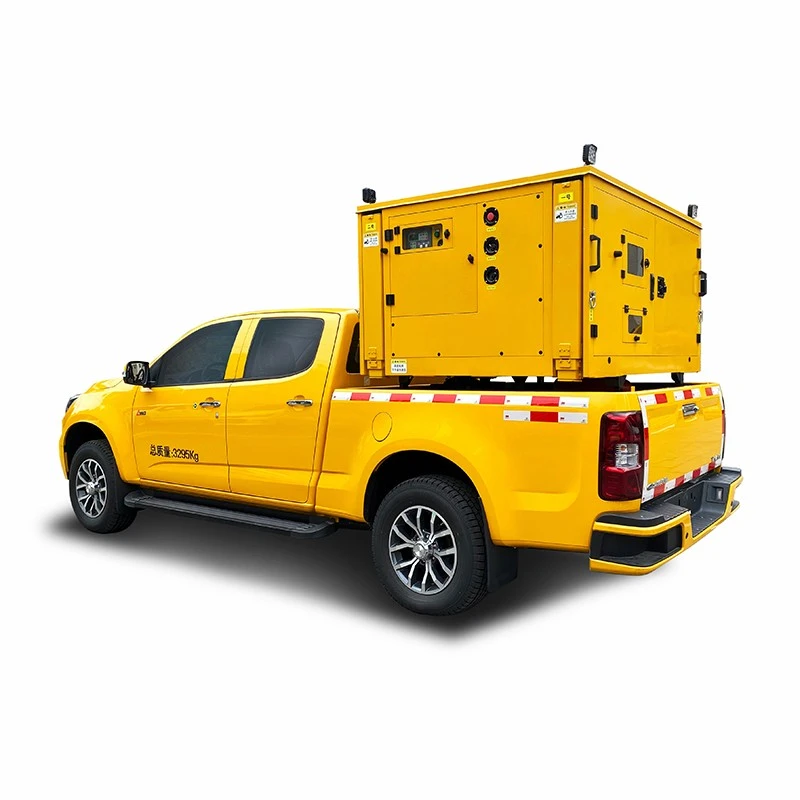
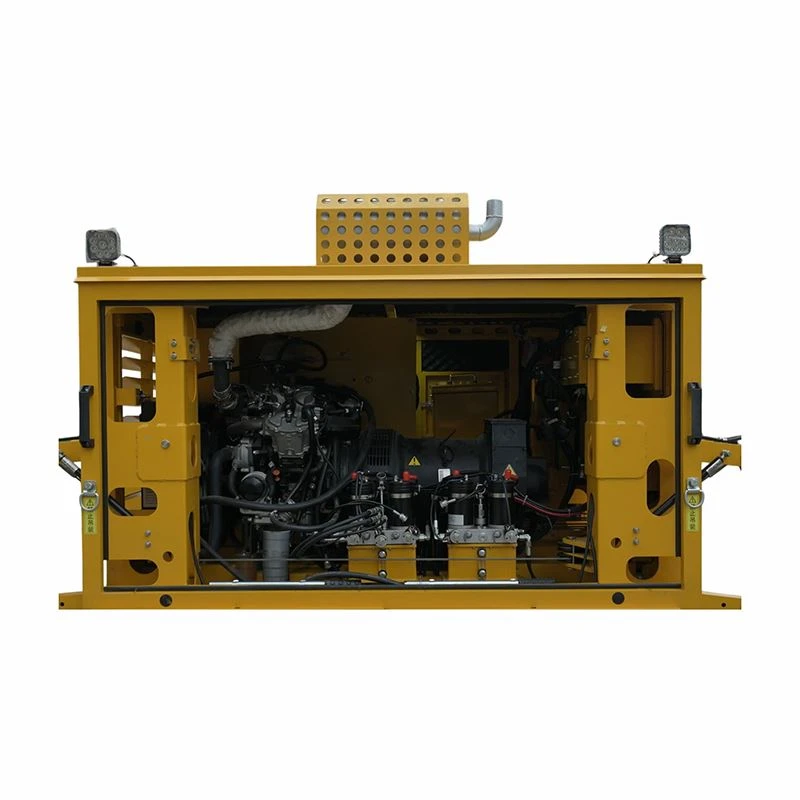
And if you need a pump for rescue operations, our Rescue Mobile Drainage Pump is the ideal choice. It's lightweight, portable, and easy to operate, making it perfect for quick response in emergency situations.
Conclusion
Measuring the flow rate of an Emergency Dewatering Pump is an important part of ensuring its proper performance. Whether you choose the simple volumetric method or a more advanced flow meter, understanding the flow rate can help you select the right pump for your needs.
If you're in the market for an Emergency Dewatering Pump or have any questions about measuring flow rates, don't hesitate to reach out. We're here to help you make the best decision for your dewatering needs.
References
- "Pump Handbook" by Igor J. Karassik et al.
- "Fluid Mechanics" by Frank M. White.