


Hey there! As a supplier of Mobile Flooding Pumps, I often get asked about how to calculate the pumping capacity needed for a specific flooding area. It's a crucial question, especially when dealing with flood situations where every second counts. In this blog, I'll break down the process step by step so you can figure out the right pumping capacity for your needs.
Understanding the Basics
First things first, let's talk about what pumping capacity actually means. Pumping capacity is usually measured in gallons per minute (GPM) or cubic meters per hour (m³/h). It tells you how much water a pump can move in a given amount of time. The higher the pumping capacity, the more water the pump can handle.
Factors Affecting Pumping Capacity
There are several factors that can affect the pumping capacity you need for a specific flooding area. Here are the main ones:
1. Flooded Area Size
The size of the flooded area is a major factor. A larger area will obviously require a higher pumping capacity to drain the water quickly. You need to measure the length, width, and depth of the flooded area to calculate its volume. For example, if you have a rectangular flooded area that's 10 meters long, 5 meters wide, and 0.5 meters deep, the volume of water would be:
Volume = Length × Width × Depth
Volume = 10 m × 5 m × 0.5 m = 25 m³
2. Water Depth
The depth of the water also matters. Deeper water will take longer to drain, so you might need a more powerful pump. If the water is very deep, you might need to consider using multiple pumps or a pump with a higher head (the height the pump can lift the water).

3. Drainage Time
How quickly you need to drain the water is another important factor. If you're dealing with a critical situation, like a flooded basement or a mine, you'll probably want to drain the water as fast as possible. In that case, you'll need a pump with a higher pumping capacity. On the other hand, if you have more time, you can use a smaller pump.
4. Pipe Diameter and Length
The diameter and length of the pipes you're using to drain the water can also affect the pumping capacity. A larger diameter pipe will allow more water to flow through, while a longer pipe will create more resistance and reduce the flow rate. You need to choose the right pipe size and length to ensure efficient drainage.
Calculating the Pumping Capacity
Now that you understand the factors that affect pumping capacity, let's talk about how to calculate it. Here's a simple formula you can use:
Pumping Capacity (m³/h) = Volume of Water (m³) / Drainage Time (h)
Let's use the example from earlier. We had a flooded area with a volume of 25 m³, and let's say we want to drain the water in 5 hours. Using the formula, we can calculate the pumping capacity:
Pumping Capacity = 25 m³ / 5 h = 5 m³/h
So, in this case, we would need a pump with a pumping capacity of at least 5 m³/h to drain the water in 5 hours.
Choosing the Right Pump
Once you've calculated the pumping capacity you need, it's time to choose the right pump. There are several types of pumps available, each with its own advantages and disadvantages. Here are some common types of pumps used for flood drainage:
1. Centrifugal Pumps
Centrifugal pumps are the most common type of pump used for flood drainage. They work by using a rotating impeller to create a centrifugal force that moves the water. Centrifugal pumps are relatively inexpensive, easy to operate, and can handle large volumes of water. However, they have a limited head and are not suitable for pumping thick or viscous liquids.
2. Submersible Pumps
Submersible pumps are designed to be submerged in water. They are often used for pumping water from wells, basements, and other flooded areas. Submersible pumps are more efficient than centrifugal pumps and can handle higher heads. However, they are more expensive and require more maintenance.
3. Trash Pumps
Trash pumps are designed to handle large solids and debris. They are often used for pumping water from construction sites, mines, and other areas where there is a lot of debris. Trash pumps have a larger impeller and a wider passageway to prevent clogging. However, they are less efficient than centrifugal pumps and have a lower head.
Our Mobile Flooding Pumps
At our company, we offer a wide range of Mobile Flooding Pumps that are designed to meet the needs of different flood situations. Our pumps are portable, easy to operate, and can handle large volumes of water. We also offer a variety of accessories, such as hoses, pipes, and fittings, to ensure efficient drainage.
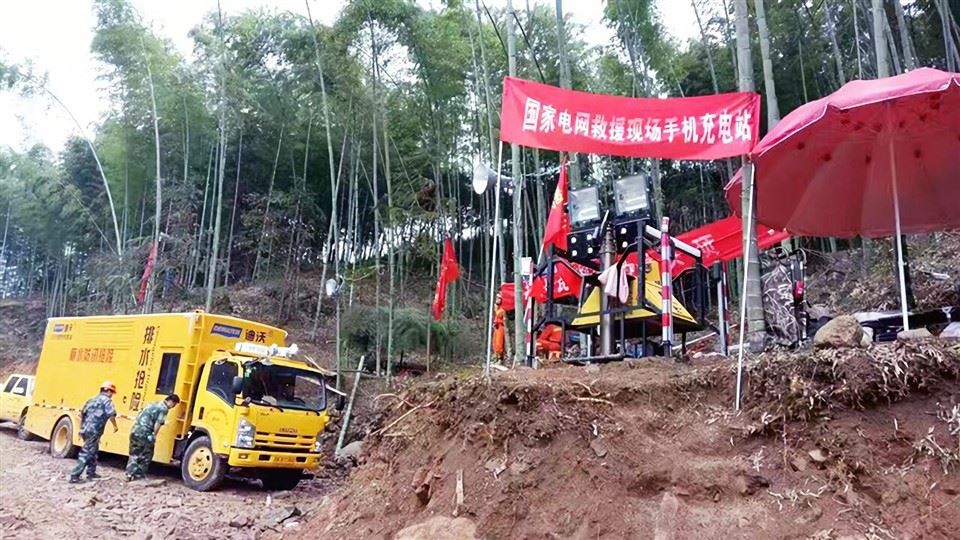
If you're dealing with a flood situation, check out our Disaster Water Drainage Equipment. These pumps are specifically designed for disaster relief and can handle even the toughest flood conditions.
For underground narrow spaces, we have Underground Narrow Space Drainage pumps that are compact and powerful. They can easily fit into tight spaces and provide efficient drainage.
And if you're dealing with a mine flood, our Mine Flooded Drainage Rescue Equipment is the perfect solution. These pumps are designed to handle the harsh conditions of mines and can quickly drain the water to prevent further damage.
Contact Us for Purchase and Consultation
If you're interested in our Mobile Flooding Pumps or need help calculating the pumping capacity for your specific flooding area, don't hesitate to contact us. Our team of experts is always ready to assist you and provide you with the best solution for your needs. Whether you're a contractor, a homeowner, or a mining company, we have the right pump for you. Let's work together to tackle those flood challenges and ensure a quick and efficient drainage process.
References
- "Pump Handbook" by Igor J. Karassik et al.
- "Fluid Mechanics" by Frank M. White.
- Industry standards and guidelines for flood drainage equipment.