


Hey there! As a supplier of trailer mounted pumps, I often get asked if these bad boys have a self-priming feature. Well, let's dive right into it and find out.
First off, let's understand what self-priming means in the context of pumps. A self-priming pump is one that can remove air from the suction line and create a vacuum to draw in the fluid (usually water in most applications) without the need for external priming methods. This is super handy because it saves time and effort, especially in emergency or remote situations.

Now, do trailer mounted pumps have this self-priming feature? The answer is: it depends. There are trailer mounted pumps out there that come with a self-priming mechanism, and there are others that don't.
Let's talk about the ones with self-priming capabilities. These pumps are designed with special features that allow them to prime themselves. For example, some have a built-in air separator that helps to remove the air from the suction line. When the pump starts up, it first pumps out the air in the line, creating a low-pressure area. As the air is expelled, the water is then drawn into the pump due to the pressure difference. This process continues until the pump is fully primed and can start pumping water efficiently.
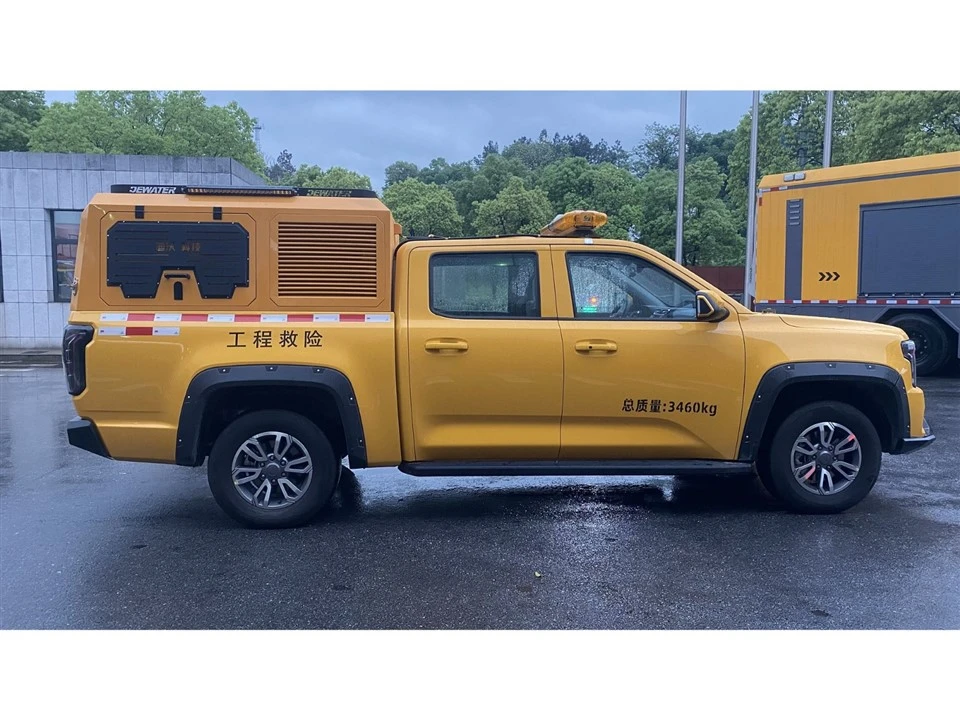
The advantage of having a self-priming trailer mounted pump is obvious. In situations like flood control, you don't have the luxury of time to manually prime the pump. With a self-priming pump, you can quickly deploy it and start removing the floodwater. For instance, our Flooding Control Pickup is a great example of a trailer mounted pump with self-priming capabilities. It can be easily towed to the flood site and within minutes, it starts sucking up the water, helping to reduce the flood damage.
Another scenario where self-priming pumps shine is in remote locations. If you're working on a construction site in the middle of nowhere, it might be difficult to find a water source to prime the pump manually. A self-priming trailer mounted pump can solve this problem. It can draw water from a nearby stream or pond, even if the water level is low, and start pumping it to where it's needed. Our Mobile Pumping Station is a versatile option that can be used in such remote applications.
However, not all trailer mounted pumps are self-priming. There are some pumps that require external priming. These pumps usually need to be filled with water before they can start working. This might involve using a separate priming pump or pouring water into the pump manually. The reason some pumps don't have a self-priming feature could be due to cost or design limitations. Non-self-priming pumps are often simpler in design and can be more affordable. But they do require more effort to set up and operate.
So, how do you decide whether you need a self-priming trailer mounted pump or not? Well, it all boils down to your specific needs. If you're dealing with emergency situations like floods or need to work in remote areas, a self-priming pump is definitely worth the investment. It will save you time and make your job a lot easier. On the other hand, if you have a stable water source and plenty of time to set up the pump, a non-self-priming pump might be a more cost-effective option.
When choosing a trailer mounted pump, there are a few other factors to consider as well. The flow rate is an important one. This refers to how much water the pump can move in a given amount of time. You'll need to choose a pump with a flow rate that matches your requirements. For example, if you're dealing with a large-scale flood, you'll need a pump with a high flow rate to remove the water quickly.
The head pressure is another crucial factor. This is the height to which the pump can lift the water. If you need to pump water up a hill or to a higher level, you'll need a pump with a high head pressure.
The durability of the pump is also important. Trailer mounted pumps are often used in tough environments, so they need to be able to withstand the wear and tear. Look for pumps made from high-quality materials and with a good reputation for reliability.
As a supplier of trailer mounted pumps, we offer a wide range of options to meet different needs. Whether you need a self-priming pump for emergency situations or a non-self-priming pump for a more budget-friendly solution, we've got you covered. Our Mobile Drainage Pump Station is a popular choice among our customers, offering a combination of performance and reliability.
If you're in the market for a trailer mounted pump, I encourage you to get in touch with us. We can help you choose the right pump for your specific needs and provide you with all the information you need to make an informed decision. Whether you're a contractor, a municipality, or an individual looking for a pump for personal use, we're here to assist you.
In conclusion, trailer mounted pumps can have a self-priming feature, but it's not a one-size-fits-all situation. You need to consider your specific requirements, the environment in which the pump will be used, and your budget when making a decision. So, don't hesitate to reach out to us if you have any questions or need further advice. We're here to make sure you get the best pump for your needs.
References
- General knowledge of pump technology and applications in the industry.
- Product specifications and features of our trailer mounted pumps.