



When it comes to portable mobile drainage pumps, one question that often comes up is whether they can be submerged in water. As a supplier of Portable Mobile Drainage Pumps, I'm here to provide a comprehensive answer to this important question.
Understanding the Basics of Portable Mobile Drainage Pumps
Portable mobile drainage pumps are essential tools in various scenarios, including flood control, construction site de - watering, and agricultural drainage. These pumps are designed to be easily moved and deployed as needed, making them highly versatile.
There are two main types of portable mobile drainage pumps in terms of water - submergence capability: submersible and non - submersible pumps.
Submersible Portable Mobile Drainage Pumps
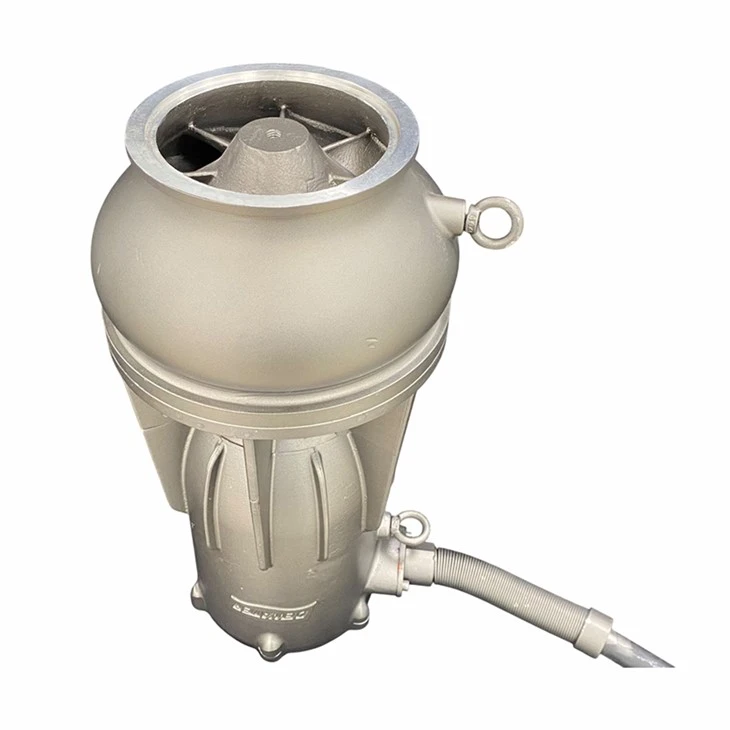
Submersible pumps are specifically engineered to operate while fully submerged in water. They are sealed to prevent water from entering the motor and other critical components. The design of submersible pumps allows them to draw water directly from their location, which can be very effective in situations where the water source is deep or the pump needs to be placed in a confined space.
The advantage of submersible pumps is their ability to self - prime. Since they are already surrounded by water, there is no need to manually fill the pump with water to start the operation, as is often required for non - submersible pumps. This feature makes them very convenient for quick deployment in emergency situations.
Our company offers high - quality submersible pumps that are suitable for a wide range of applications. For example, our Drought Emergency Water Supply Pump is a submersible option that can be used to extract water from deep wells or underground water sources during droughts. It is designed with robust materials to withstand harsh environments and long - term use.
Non - Submersible Portable Mobile Drainage Pumps
Non - submersible pumps, on the other hand, are not designed to be submerged in water. These pumps are typically placed above the water level and are connected to the water source through an intake hose. They rely on atmospheric pressure to draw water into the pump, which requires proper priming before operation.
Non - submersible pumps are generally more accessible for maintenance and repair since the motor and other components are not exposed to water. They are also often more cost - effective than submersible pumps. However, their performance may be limited in situations where the water source is deep or the pump needs to be placed in a location where it cannot be easily primed. Our Disaster Water Drainage Equipment includes non - submersible pumps that are ideal for quickly draining surface water after floods or heavy rains.
Factors to Consider When Deciding on Submergence
Motor Protection
The motor is the heart of a pump, and its protection is crucial. Submersible pumps have special seals and insulation to protect the motor from water damage. If a non - submersible pump is submerged, water can enter the motor, causing short - circuits and destroying the pump.
For example, in a flooded basement, if you use a non - submersible pump that is not designed for submergence and accidentally let it get covered by water, it can lead to immediate pump failure.
Efficiency and Performance
Submersible pumps often have better efficiency when operating underwater because there is no need to overcome the resistance of lifting water from a distance. The water around the pump also helps to cool the motor, which can improve its performance and lifespan.
In contrast, non - submersible pumps may lose efficiency if the intake hose is too long or if there are air leaks in the system, which can affect the priming process.
Application Requirements
The specific application will also determine whether a pump can or should be submerged. In some cases, such as draining a deep - pit or a well, a submersible pump is the only option. In other situations, like draining a shallow pool or a construction site with surface water, a non - submersible pump may be sufficient.
Our Mobile Water Supply Pump can be chosen based on the application. For a water supply project in a remote area with a deep water source, a submersible model would be more appropriate. While for a small - scale water transfer between two nearby tanks, a non - submersible option may be more cost - effective.
Safety Precautions
Whether using a submersible or non - submersible pump, safety should always be a top priority.
Submersible Pump Safety
When using a submersible pump, make sure it is properly grounded to prevent electrical shocks. Check the power cord for any signs of damage before each use. Also, ensure that the water level does not drop below the minimum operating level specified by the manufacturer, as this can cause the pump to overheat.
Non - Submersible Pump Safety
For non - submersible pumps, keep the motor and electrical components dry at all times. Do not operate the pump in an area where there is a risk of it being splashed or submerged. Follow the priming instructions carefully to avoid damage to the pump.
Maintenance and Long - Term Use
Submersible Pump Maintenance
Submersible pumps require regular inspection to ensure that the seals are intact. Over time, the seals can wear out, allowing water to enter the motor. The pump should also be cleaned regularly to remove any debris that may accumulate on the intake or inside the pump.

Non - Submersible Pump Maintenance
Non - submersible pumps need to have their intake hoses checked for blockages and leaks. The motor should be kept clean and lubricated according to the manufacturer's instructions. Additionally, the priming system should be inspected to ensure proper operation.
Conclusion
In conclusion, whether a portable mobile drainage pump can be submerged in water depends on its design. Submersible pumps are built to operate underwater, offering advantages such as self - priming and better efficiency. Non - submersible pumps, however, are not designed for submergence and should be kept above the water level.
As a supplier of Portable Mobile Drainage Pumps, we understand the importance of choosing the right pump for your specific needs. We offer a wide range of pumps, including both submersible and non - submersible options, to meet the diverse requirements of our customers. Whether you need a Drought Emergency Water Supply Pump, Disaster Water Drainage Equipment, or Mobile Water Supply Pump, we have the solution for you.
If you are interested in purchasing our portable mobile drainage pumps or have any questions about their selection, operation, or maintenance, please feel free to contact us for further discussions and procurement negotiations. We are committed to providing you with the best products and services.
References
- Pump Engineering Handbook, various editions.
- Manufacturer's manuals for portable mobile drainage pumps.