


Can a Mobile Flood Pump Trailer be towed by a regular vehicle?
As a supplier of Mobile Flood Pump Trailers, this is a question I often encounter from our customers. The answer isn't a straightforward yes or no; it depends on several crucial factors. In this blog, I'll break down these factors to help you understand whether a regular vehicle can tow a Mobile Flood Pump Trailer.
Understanding the Basics of Mobile Flood Pump Trailers
Before we delve into the towing aspect, let's first understand what a Mobile Flood Pump Trailer is. These trailers are equipped with powerful pumps designed to quickly remove large volumes of water during flood - related emergencies. They are a crucial asset in flood control and drainage operations. You can learn more about Trailer Mounted Pumps and Flood Control Mobile Pump Trailer on our website.
The design of Mobile Flood Pump Trailers is focused on mobility and functionality. They are built on trailers with wheels and axles, allowing them to be transported to different locations as needed. Some models are compact and lightweight, while others are larger and more heavy - duty, capable of handling greater water flow rates.
Factors Affecting Towing with a Regular Vehicle
1. Trailer Weight
The weight of the Mobile Flood Pump Trailer is one of the most significant factors. Trailers come in a wide range of weights, depending on the size and capacity of the pump. Smaller, less powerful pumps may be mounted on trailers that weigh a few hundred kilograms, while larger industrial - grade pumps can be on trailers that weigh several tons.
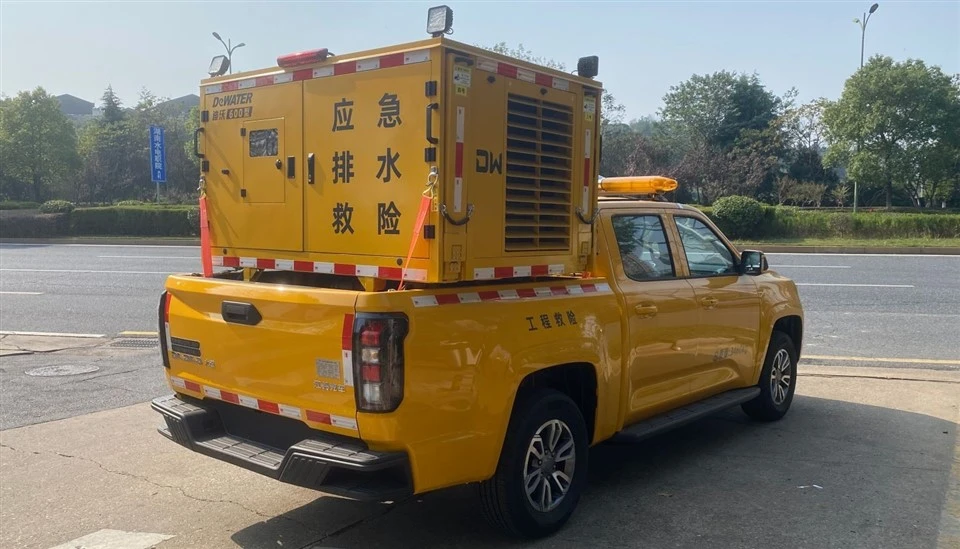

A regular vehicle, such as a passenger car or a light - duty pickup truck, has a limited towing capacity. For example, a typical mid - size sedan may have a towing capacity of around 500 - 1500 kilograms. In contrast, a heavy - duty pickup truck can tow up to 5000 kilograms or more. Before attempting to tow a Mobile Flood Pump Trailer, you must know the exact weight of the trailer, including the pump, fuel, and any additional equipment.
2. Vehicle Towing Capacity
As mentioned above, every vehicle has a specified towing capacity, which is determined by the manufacturer. This capacity takes into account factors such as the vehicle's engine power, transmission, braking system, and suspension. Exceeding the towing capacity can lead to serious safety issues, including poor vehicle handling, increased stopping distances, and potential damage to the vehicle.
To find out your vehicle's towing capacity, you can refer to the owner's manual or contact the vehicle manufacturer. It's important to note that the towing capacity may be affected by other factors, such as the number of passengers in the vehicle and the amount of cargo in the trunk.
3. Trailer Hitch Compatibility
Even if your vehicle has sufficient towing capacity, you need to ensure that the trailer hitch is compatible with the Mobile Flood Pump Trailer. There are different types of trailer hitches, such as ball hitches, fifth - wheel hitches, and gooseneck hitches. Each type is designed for a specific range of trailer weights and sizes.
The trailer hitch must be properly installed and rated to handle the weight of the trailer. A poorly installed or under - rated hitch can result in the trailer detaching from the vehicle while in motion, which is extremely dangerous.
4. Braking System
Most Mobile Flood Pump Trailers over a certain weight are required to have their own braking system. This is because the weight of the trailer can put a significant strain on the vehicle's brakes, especially when stopping or going downhill.
A regular vehicle may not be equipped to handle the additional braking load of a heavy trailer. If the trailer has its own braking system, it must be compatible with the vehicle's braking system. Some vehicles have a trailer brake controller that can be installed to synchronize the vehicle and trailer brakes.
Towing Considerations for Different Types of Regular Vehicles
Passenger Cars
In general, passenger cars are not suitable for towing large Mobile Flood Pump Trailers. Their towing capacity is usually too low, and their braking and suspension systems are not designed to handle the additional weight. However, for very small and lightweight trailers, such as those with a pump capacity of less than 500 liters per minute and a total trailer weight of less than 500 kilograms, a mid - size or large passenger car with a proper trailer hitch may be able to tow them. But even in this case, extreme caution must be exercised.
Light - Duty Pickup Trucks
Light - duty pickup trucks have a higher towing capacity compared to passenger cars. They can typically tow trailers weighing up to 2000 - 3000 kilograms, depending on the model. For medium - sized Mobile Flood Pump Trailers with a moderate pump capacity, a light - duty pickup truck may be a viable option. However, it's important to ensure that the truck is properly equipped with a suitable trailer hitch and, if necessary, a trailer brake controller.
Heavy - Duty Pickup Trucks
Heavy - duty pickup trucks are the most suitable regular vehicles for towing Mobile Flood Pump Trailers. They have high towing capacities, powerful engines, and robust braking and suspension systems. These trucks can handle large, heavy - duty trailers with ease, making them a popular choice for flood control and drainage operations.
Safety Precautions
Regardless of whether your regular vehicle can tow a Mobile Flood Pump Trailer, safety should always be the top priority. Here are some safety precautions to follow:
- Inspect the Trailer and Vehicle: Before towing, thoroughly inspect the trailer for any signs of damage, such as loose parts, worn - out tires, or malfunctioning brakes. Also, check the vehicle's towing equipment, including the hitch, wiring, and lights.
- Drive Slowly and Carefully: Towing a trailer significantly affects the vehicle's handling and stopping distance. Drive at a reduced speed, especially on curves and when going downhill. Leave extra space between your vehicle and the vehicle in front to allow for longer stopping distances.
- Be Aware of Local Regulations: Different regions may have specific regulations regarding trailer towing, such as speed limits, licensing requirements, and safety equipment. Make sure you are familiar with and comply with these regulations.
Conclusion & Call to Action
In conclusion, whether a Mobile Flood Pump Trailer can be towed by a regular vehicle depends on multiple factors, including the trailer weight, vehicle towing capacity, hitch compatibility, and braking system. While some small and lightweight trailers may be towed by certain regular vehicles, larger and heavier trailers usually require heavy - duty trucks.
If you're in the market for a Mobile Flood Pump Trailer and have questions about towing or any other aspect of our products, we're here to help. Our team of experts can provide you with detailed information and guidance to ensure you make the right choice for your needs. You can also explore our Mobile Pump Station options on our website. Contact us today to start a discussion about your flood control and drainage requirements, and let's work together to find the best solution for you.
References
- Vehicle manufacturer's owner's manuals
- Industry standards for trailer towing and flood pump design