



Can a Diesel Flood Control Pump be used in desalination plants?
As a supplier of diesel flood control pumps, I often get asked about the versatility of our products. One question that has come up more frequently lately is whether a diesel flood control pump can be used in desalination plants. In this blog post, I'll explore this question in detail, looking at the technical aspects, advantages, and potential challenges of using a diesel flood control pump in a desalination setting.
Technical Considerations
Desalination plants are complex facilities that require precise and reliable pumping systems to operate efficiently. The primary function of a pump in a desalination plant is to move large volumes of seawater through the various stages of the desalination process, which typically includes pre - treatment, reverse osmosis, and post - treatment.
Diesel flood control pumps are designed to handle large volumes of water during flood situations. They are known for their high - flow capacity and robust construction. These pumps are usually centrifugal pumps, which work by using a rotating impeller to create a centrifugal force that moves water through the pump.
In terms of flow rate, diesel flood control pumps can often meet the high - volume requirements of desalination plants. Many desalination plants need to intake thousands of cubic meters of seawater per hour, and our diesel flood control pumps can be configured to achieve flow rates that are well within this range.
However, there are some technical differences between flood control pumps and pumps specifically designed for desalination. One of the most significant differences is the material of construction. Seawater is highly corrosive, and desalination pumps are typically made from materials such as stainless steel, duplex stainless steel, or titanium to resist corrosion. While some diesel flood control pumps can be made with corrosion - resistant materials, not all are. It is crucial to ensure that the pump's wetted parts (the parts that come into contact with the seawater) are made from suitable materials to prevent premature failure.
Another technical aspect to consider is the pressure requirements. Desalination processes, especially reverse osmosis, require high - pressure pumps to force water through the semi - permeable membranes. Diesel flood control pumps are generally designed for low - to medium - pressure applications. To use a diesel flood control pump in a desalination plant, additional pressure - boosting equipment may be needed.

Advantages of Using Diesel Flood Control Pumps in Desalination Plants
Mobility and Flexibility
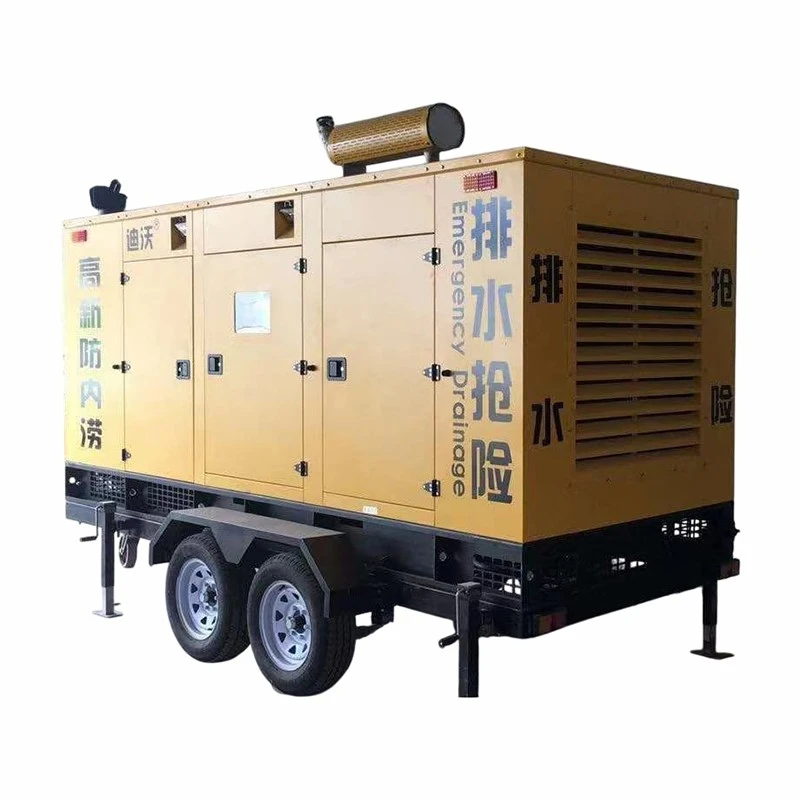
One of the main advantages of diesel flood control pumps is their mobility. Our Diesel Drainage Pump Truck and Mobile Pump Station On Wheels can be easily transported to different locations. In a desalination plant, this mobility can be beneficial during maintenance or in case of an emergency. For example, if a primary intake pump fails, a mobile diesel flood control pump can be quickly deployed to maintain the water supply to the plant.
Independence from the Power Grid
Diesel pumps are powered by diesel engines, which means they can operate independently of the power grid. This is a significant advantage in desalination plants, especially those located in remote areas or areas with an unreliable power supply. A power outage can disrupt the desalination process and lead to significant losses. With a diesel flood control pump, the plant can continue to intake seawater even during a power failure.
High - Flow Capacity
As mentioned earlier, diesel flood control pumps are capable of handling large volumes of water. This high - flow capacity can be useful in desalination plants, especially during the initial intake stage. It allows the plant to quickly fill its storage tanks and maintain a steady supply of seawater for the desalination process.
Potential Challenges
Corrosion and Maintenance
As discussed, seawater corrosion is a major challenge when using diesel flood control pumps in desalination plants. Even if the pump is made from corrosion - resistant materials, regular maintenance is still required to ensure its long - term performance. This includes inspecting the pump's wetted parts for signs of corrosion, replacing seals and gaskets, and monitoring the pump's overall condition.
Energy Efficiency
Diesel engines are generally less energy - efficient than electric motors, especially when operating continuously. In a desalination plant, energy consumption is a significant cost factor. Using a diesel flood control pump may result in higher operating costs compared to using an electric pump specifically designed for desalination. However, in some cases, the benefits of mobility and independence from the power grid may outweigh the higher energy costs.
Noise and Emissions
Diesel engines produce noise and emissions, which can be a concern in a desalination plant. Noise pollution can affect the working environment for plant employees, and emissions can have an impact on the local environment. To mitigate these issues, proper noise - reduction measures and emission - control technologies need to be implemented.
Conclusion
In conclusion, a diesel flood control pump can potentially be used in desalination plants, but it requires careful consideration of the technical aspects, advantages, and challenges. The high - flow capacity and mobility of diesel flood control pumps make them an attractive option, especially for emergency situations and in areas with unreliable power supply. However, the issues of corrosion resistance, pressure requirements, energy efficiency, and emissions need to be addressed.
If you are considering using a diesel flood control pump in your desalination plant, I encourage you to contact us for a detailed consultation. Our team of experts can help you assess your specific needs, recommend the appropriate pump configuration, and provide solutions to overcome any potential challenges. We are committed to providing high - quality pumps and excellent customer service. Whether you need a Diesel Drainage Pump Truck, a Mobile Pump Station On Wheels, or an Underground Garage Drainage Pump, we have the expertise and products to meet your requirements. Contact us today to start the conversation about how our diesel flood control pumps can benefit your desalination plant.
References
- "Pumping Handbook" by Igor J. Karassik et al.
- "Desalination Technology: Principles and Applications" by William A. Anderson.