


As a supplier of Water Drainage Pump Trucks, I often encounter inquiries from customers about the maximum head of these essential machines. The maximum head of a water drainage pump truck is a crucial parameter that determines its performance and suitability for various applications. In this blog post, I will delve into the concept of maximum head, factors affecting it, and its significance in real - world scenarios.
Understanding the Concept of Maximum Head
The maximum head of a water drainage pump truck refers to the maximum vertical distance that the pump can lift water. It is measured in meters or feet and represents the total energy that the pump can impart to the water to overcome the forces of gravity and friction. When a pump is operating, it needs to generate enough pressure to push the water upwards and through the pipes. The maximum head indicates the upper limit of this lifting capacity.
Mathematically, the head is related to the pressure generated by the pump. The pressure (P) in a fluid column of height (h) is given by the formula (P=\rho gh), where (\rho) is the density of the fluid (for water, (\rho = 1000\ kg/m^{3})), (g) is the acceleration due to gravity ((g = 9.81\ m/s^{2})), and (h) is the height of the fluid column. So, the maximum head is essentially the height of the water column that the pump can support.
Factors Affecting the Maximum Head
Several factors influence the maximum head of a water drainage pump truck:
Pump Design and Type
Different types of pumps have different capabilities in terms of maximum head. Centrifugal pumps, which are commonly used in water drainage pump trucks, work by converting the rotational energy of an impeller into kinetic energy of the water and then into pressure energy. The design of the impeller, such as its diameter, blade shape, and number of blades, can significantly affect the pump's ability to generate high pressure and thus a high maximum head.
Positive displacement pumps, on the other hand, operate by trapping a fixed volume of fluid and then forcing it into the discharge pipe. These pumps can often achieve higher heads compared to centrifugal pumps, especially in applications where a relatively small flow rate is required at high pressure.

Motor Power
The power of the motor driving the pump is directly related to the maximum head. A more powerful motor can provide more energy to the pump, allowing it to generate higher pressure and lift water to a greater height. However, it's important to note that increasing the motor power also has limitations, as other components of the pump, such as the impeller and the casing, need to be able to withstand the higher forces generated.
Pipe Friction
The friction between the water and the inner surface of the pipes through which it flows can reduce the effective head of the pump. Longer pipes, pipes with smaller diameters, and pipes with rough inner surfaces will cause more friction, resulting in a greater loss of pressure. To account for pipe friction, engineers need to calculate the total head required for a particular application, which includes both the static head (the vertical distance to be lifted) and the friction head.
Fluid Properties
The properties of the fluid being pumped, such as its viscosity and density, can also affect the maximum head. More viscous fluids require more energy to pump, which can reduce the pump's maximum head. Similarly, fluids with higher densities will require more pressure to lift, potentially limiting the maximum head achievable.
Significance in Real - World Applications
The maximum head of a water drainage pump truck is of utmost importance in various real - world applications:
Flood Control
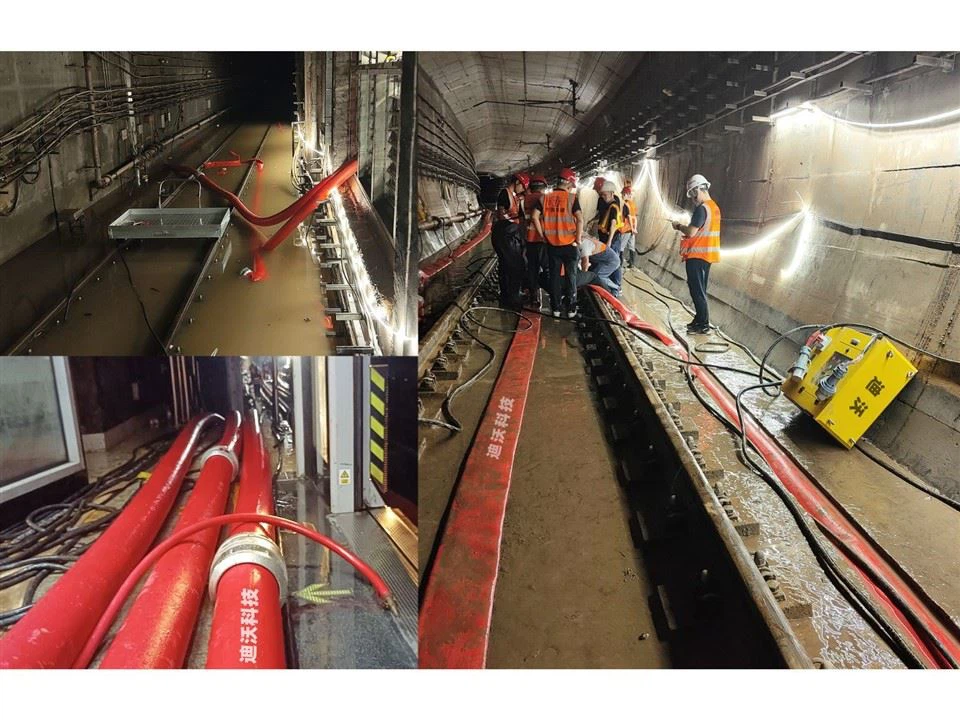
In flood control situations, water needs to be pumped out of low - lying areas and into higher - elevation drainage systems or water bodies. A pump truck with a high maximum head is essential to ensure that the water can be effectively removed, even when the difference in elevation between the flooded area and the discharge point is significant. For more information on flood control applications, you can visit our Flood Control Pump Truck page.
Construction Sites
Construction sites often need to dewater excavations to keep the work area dry. If the excavation is deep, a pump truck with a sufficient maximum head is required to lift the water to the surface and away from the site. This helps to prevent waterlogging, which can cause instability in the soil and delay construction work.
Disaster Relief
During natural disasters such as hurricanes or heavy rainfall, water drainage pump trucks are deployed to quickly remove water from affected areas. In disaster sites, the terrain may be uneven, and the water may need to be pumped over long distances and to different elevations. A pump truck with a high maximum head can be a valuable asset in these situations, ensuring that water can be efficiently drained. For more details on the use of pump trucks in disaster sites, check out our Drainage Pump Vehicles in Disaster Sites page.
Selecting the Right Pump Truck Based on Maximum Head
When selecting a water drainage pump truck, it's crucial to accurately determine the required maximum head for the specific application. This involves considering the vertical distance between the source of the water and the discharge point, as well as any additional head losses due to pipe friction and other factors.
It's also important to consult with experts or the pump truck supplier to ensure that the selected pump truck is not only capable of achieving the required maximum head but also meets other performance criteria such as flow rate, reliability, and ease of maintenance.
As a supplier of Water Drainage Pump Trucks, we have a wide range of pump trucks with different maximum head capabilities to suit various applications. Our team of experts can help you choose the right pump truck based on your specific requirements. If you are interested in learning more about our products or have any questions regarding the maximum head of our pump trucks, please don't hesitate to contact us for procurement and further discussions.
Conclusion
The maximum head of a water drainage pump truck is a critical parameter that determines its performance and suitability for different applications. Understanding the concept of maximum head, the factors that affect it, and its significance in real - world scenarios is essential for anyone involved in the selection and use of these pump trucks. Whether it's for flood control, construction site dewatering, or disaster relief, choosing a pump truck with the right maximum head can make a significant difference in the efficiency and effectiveness of water drainage operations.
References
- Cooper, P. S., & Alley, W. M. (2013). Pumping Water: A Guide to Pumps and Pumping Systems. John Wiley & Sons.
- Karassik, I. J., Messina, J. P., Cooper, P. S., & Heald, C. C. (2008). Pump Handbook. McGraw - Hill.