


As a supplier of Mobile Drainage Pump Stations, I often encounter inquiries about the impeller types of the pumps used in these stations. Understanding the different impeller types is crucial for optimizing the performance of a mobile drainage pump station, as the impeller is the heart of the pump, responsible for converting mechanical energy into hydraulic energy to move water.
Centrifugal Pump Impellers
The most common type of pump used in mobile drainage pump stations is the centrifugal pump, and it comes with several impeller designs, each with its own unique characteristics and applications.
Closed Impellers
Closed impellers are enclosed on both sides by shrouds, which direct the flow of water through the impeller vanes. This design provides high efficiency and is suitable for handling clean or slightly dirty water with low viscosity. The shrouds help to prevent leakage and ensure that the water follows a more controlled path, resulting in better performance and reduced wear on the impeller. Closed impellers are commonly used in applications where high head and high flow rates are required, such as in municipal drainage systems and industrial water supply.
Open Impellers
Open impellers do not have shrouds on either side of the vanes. This design makes them more resistant to clogging, as there are no enclosed spaces where debris can accumulate. Open impellers are ideal for handling water containing large solids, such as sewage, stormwater runoff, and industrial wastewater. However, they tend to be less efficient than closed impellers due to the lack of shrouds, which can cause some of the water to recirculate within the pump casing.
Semi - open Impellers
Semi - open impellers have a shroud on one side of the vanes. This design combines some of the advantages of both closed and open impellers. It offers better efficiency than open impellers while still being relatively resistant to clogging. Semi - open impellers are often used in applications where the water contains some solids but where a reasonable level of efficiency is also required, such as in flood control and agricultural drainage.
Axial Flow Impellers
Axial flow impellers are another type of impeller used in certain mobile drainage pump stations, especially those designed for high - flow, low - head applications. Unlike centrifugal impellers, which impart energy to the water by centrifugal force, axial flow impellers move the water axially along the shaft of the pump.
Propeller - type Axial Flow Impellers
Propeller - type axial flow impellers are similar to the propellers used in boats. They have a small number of large vanes that are designed to push the water in a straight line. These impellers are highly efficient for moving large volumes of water at low heads, making them suitable for applications such as irrigation, flood control in large open areas, and draining large bodies of water.
Mixed Flow Impellers
Mixed flow impellers combine the characteristics of both centrifugal and axial flow impellers. They impart energy to the water both radially and axially, resulting in a flow pattern that is a combination of the two. Mixed flow impellers offer a good balance between high flow rates and moderate heads, making them suitable for a wide range of applications, including drainage in urban areas and industrial sites.
Choosing the Right Impeller Type for Your Mobile Drainage Pump Station
When selecting the impeller type for a mobile drainage pump station, several factors need to be considered:
Nature of the Fluid
If the water to be pumped is clean or only slightly dirty, a closed impeller may be the best choice for maximum efficiency. However, if the water contains large solids or debris, an open or semi - open impeller would be more appropriate to prevent clogging. For applications where the fluid has a high viscosity, a different impeller design or pump type may be required.
Flow Rate and Head Requirements
The required flow rate and head of the pump are critical factors in determining the impeller type. High - flow, low - head applications are better suited for axial flow or mixed flow impellers, while high - head applications typically require centrifugal impellers.
Mobility and Portability
Since mobile drainage pump stations are designed to be easily transported and deployed, the size and weight of the pump and impeller are important considerations. Some impeller designs may be more compact and lightweight, making them more suitable for mobile applications.
Applications of Different Impeller Types in Mobile Drainage Pump Stations
Urban Drainage
In urban areas, mobile drainage pump stations are often used to handle stormwater runoff during heavy rainfall. For this application, semi - open impellers are commonly used as they can handle some debris in the water while maintaining a reasonable level of efficiency. The pumps can be quickly deployed to flood - prone areas to prevent waterlogging and protect infrastructure and property. You can learn more about our mobile pump solutions for urban drainage on our Mobile Pump Station page.

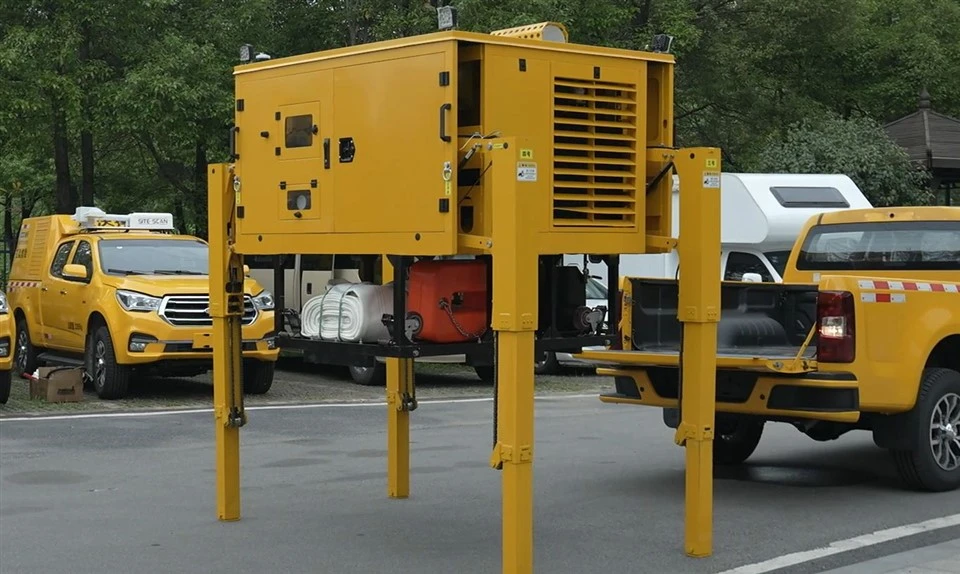
Disaster Relief
During natural disasters such as floods, mobile drainage pump stations play a crucial role in quickly removing water from affected areas. In disaster sites, pumps with open impellers are preferred as they can handle large amounts of debris and sediment carried by the floodwater. Our Drainage Pump Vehicles in Disaster Sites are specifically designed to meet the challenging requirements of disaster relief operations.
Industrial Applications
Industrial facilities often require mobile drainage pump stations to handle wastewater, cooling water, and other process fluids. Depending on the nature of the fluid, different impeller types may be used. For clean industrial water, closed impellers can provide high - efficiency pumping, while for wastewater containing solids, open or semi - open impellers are more suitable. Our Flood Control Mobile Pump Trailer can be customized to meet the specific needs of industrial applications.
Conclusion
In conclusion, the choice of impeller type for a mobile drainage pump station depends on a variety of factors, including the nature of the fluid, flow rate and head requirements, and mobility considerations. By understanding the different impeller types and their applications, you can select the most appropriate pump for your specific needs.
If you are in the market for a mobile drainage pump station and need further assistance in choosing the right impeller type or have any other questions, please do not hesitate to contact us. Our team of experts is ready to provide you with professional advice and help you find the best solution for your drainage needs.
References
- Pump Handbook, Karassik et al.
- Centrifugal Pumps: Design and Application, Stepanoff