


The flow rate of a mobile pump station is a critical parameter that determines its efficiency and effectiveness in various applications. As a supplier of mobile pump stations, I have witnessed firsthand the importance of understanding this concept for both our customers and the industry as a whole. In this blog post, I will delve into what the flow rate of a mobile pump station is, how it is measured, factors that affect it, and why it matters in real - world scenarios.
What is the Flow Rate?
The flow rate of a mobile pump station refers to the volume of fluid that the pump can move through the system in a given period. It is typically measured in units such as liters per second (L/s), cubic meters per hour (m³/h), or gallons per minute (GPM). For example, if a mobile pump station has a flow rate of 100 m³/h, it means that it can move 100 cubic meters of water or other fluid in one hour.

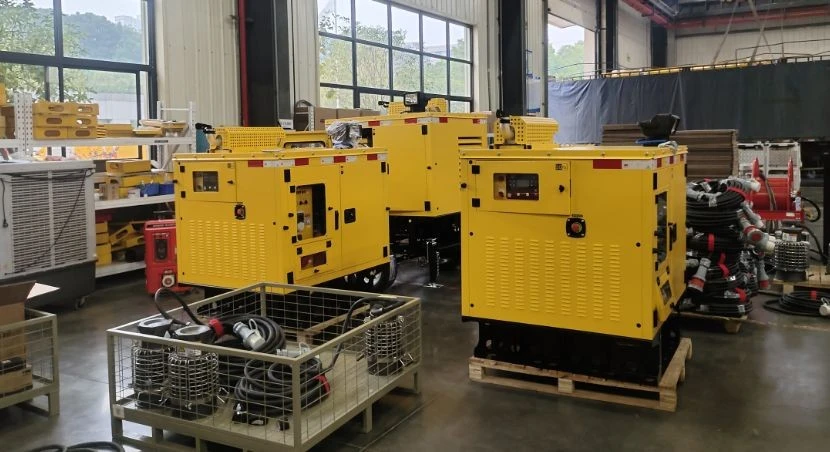
This parameter is crucial because it directly impacts the speed at which a pumping task can be completed. Whether it's draining a flooded area, dewatering a construction site, or transferring liquids in an industrial setting, a higher flow rate generally means that the job can be done more quickly.
How is the Flow Rate Measured?
There are several methods to measure the flow rate of a mobile pump station. One of the most common techniques is the use of flow meters. These devices can be installed in the pipeline connected to the pump and work on different principles such as electromagnetic, ultrasonic, or mechanical.
Electromagnetic flow meters measure the flow rate based on Faraday's law of electromagnetic induction. When a conductive fluid flows through a magnetic field, a voltage is induced, which is proportional to the flow velocity. Ultrasonic flow meters, on the other hand, use ultrasonic waves to measure the velocity of the fluid. By knowing the cross - sectional area of the pipe and the fluid velocity, the flow rate can be calculated.
Another way to estimate the flow rate is through theoretical calculations. Based on the pump's design specifications, such as the impeller diameter, rotational speed, and pump efficiency, engineers can use mathematical models to predict the flow rate under certain conditions. However, these theoretical values may need to be adjusted based on real - world factors.
Factors Affecting the Flow Rate
Several factors can influence the flow rate of a mobile pump station. One of the primary factors is the pump design. Different pump types, such as centrifugal pumps, positive displacement pumps, and axial flow pumps, have different flow - rate characteristics. Centrifugal pumps are commonly used in mobile pump stations due to their ability to handle large volumes of fluid at relatively low pressures. The size and shape of the impeller in a centrifugal pump play a significant role in determining the flow rate. A larger impeller diameter generally results in a higher flow rate.
The system head is another crucial factor. The system head includes the static head (the vertical distance the fluid needs to be lifted) and the friction head (the resistance to flow caused by the pipes, valves, and fittings). As the system head increases, the flow rate of the pump decreases. For example, if a mobile pump station needs to pump water to a higher elevation or through a long and narrow pipeline, the flow rate will be reduced compared to a situation with a lower system head.
The viscosity of the fluid being pumped also affects the flow rate. More viscous fluids, such as oils or slurries, offer more resistance to flow than water. As a result, the pump may have a lower flow rate when handling viscous fluids compared to when it is pumping water.
Importance of Flow Rate in Real - World Applications
In flood control, the flow rate of a mobile pump station is of utmost importance. During heavy rainfall or flash floods, large volumes of water need to be quickly removed from streets, basements, and other low - lying areas. A mobile pump station with a high flow rate can significantly reduce the time it takes to drain the flooded areas, minimizing property damage and the risk of water - borne diseases. Our Mobile Flood Pump Trailer is specifically designed for such applications, with a high - capacity pump that can handle large flow rates.
In construction sites, dewatering is a common requirement. Excavations can fill with water due to groundwater seepage or rainfall. A mobile pump station with an appropriate flow rate can keep the construction site dry, allowing work to proceed safely and efficiently. Our Dewatering Pump Trailer is a reliable solution for construction dewatering, offering a range of flow rates to meet different project needs.
In industrial settings, the transfer of liquids such as chemicals, fuels, and wastewater is a regular operation. The flow rate of the mobile pump station determines how quickly these liquids can be moved from one location to another. For large - scale industrial operations, a Large Mobile Drainage Pump Station with a high flow rate is essential to ensure smooth production processes.
Selecting the Right Flow Rate
When selecting a mobile pump station, it is crucial to choose the right flow rate for the specific application. An undersized pump with a low flow rate will take a long time to complete the pumping task, while an oversized pump may be more expensive to operate and maintain.
To determine the appropriate flow rate, it is necessary to consider the volume of fluid that needs to be moved, the time available to complete the task, and the system head. For example, if you need to drain a swimming pool with a volume of 50 cubic meters in 2 hours, you would need a pump with a flow rate of at least 25 m³/h. However, you also need to account for the height the water needs to be lifted and the friction in the pipes.
Conclusion
The flow rate of a mobile pump station is a key factor that determines its performance in various applications. Understanding what flow rate is, how it is measured, and the factors that affect it is essential for both pump suppliers and end - users. As a mobile pump station supplier, we are committed to providing our customers with pumps that offer the right flow rate for their specific needs.
If you are in the market for a mobile pump station and need help in selecting the appropriate flow rate or have any other questions, please feel free to contact us for a detailed consultation. Our team of experts is ready to assist you in making the best decision for your pumping requirements.
References
- Pumps and Pumping Systems Handbook. McGraw - Hill.
- Fluid Mechanics textbooks for principles related to flow rate calculations.
- Manufacturer's specifications for mobile pump stations for detailed design and performance data.