



In the realm of water management and flood control, water drainage pump trucks play a crucial role. As a supplier of water drainage pump trucks, I often encounter inquiries about the differences between self - priming and non - self - priming water drainage pump trucks. Understanding these differences is essential for customers to make informed decisions when purchasing the right equipment for their specific needs.
Self - Priming Water Drainage Pump Trucks
Self - priming water drainage pump trucks are designed with a unique feature that allows them to automatically remove air from the suction line and prime themselves without the need for external assistance. This makes them highly convenient and efficient, especially in emergency situations.
One of the key advantages of self - priming pump trucks is their ease of use. They can be quickly deployed and put into operation, even in areas where the water source is not immediately accessible or where the pump needs to be started from a dry state. For example, during flood rescue operations, self - priming pump trucks can be rapidly set up near flooded areas and start pumping water without the time - consuming process of manual priming.
Another significant benefit is their adaptability. Self - priming pumps can handle a wide range of fluids, including water with debris and solids. This makes them suitable for various applications, such as industrial wastewater drainage, construction site dewatering, and agricultural irrigation. The ability to handle dirty water without clogging easily is a major advantage in real - world scenarios where water quality may not be ideal.
Self - priming pump trucks also offer better suction performance compared to non - self - priming pumps. They can create a strong vacuum in the suction line, allowing them to draw water from deeper sources. This is particularly useful in situations where the water level is low, such as in basements or wells.
However, self - priming pump trucks do have some limitations. They tend to be more expensive than non - self - priming pump trucks due to their complex design and additional features. The self - priming mechanism also requires regular maintenance to ensure its proper functioning. Over time, the components of the self - priming system may wear out, leading to reduced performance or even failure.
Non - Self - Priming Water Drainage Pump Trucks
Non - self - priming water drainage pump trucks, on the other hand, rely on external means to prime the pump before it can start pumping water. This typically involves filling the suction line and the pump casing with water manually or using a separate priming device.
One of the main advantages of non - self - priming pump trucks is their simplicity. They have a more straightforward design and fewer components compared to self - priming pump trucks. This makes them more reliable in the long run and easier to maintain. With fewer parts that can malfunction, the risk of breakdowns is generally lower.
Non - self - priming pump trucks are also more energy - efficient in some cases. Since they do not have the additional self - priming mechanism, they can operate with less power consumption. This can result in cost savings over time, especially for applications that require continuous pumping.
In terms of performance, non - self - priming pumps can often achieve higher flow rates and pressures compared to self - priming pumps. They are better suited for large - scale water transfer projects, such as municipal water supply systems and large - volume industrial drainage.
However, the need for external priming can be a significant drawback. It adds an extra step to the startup process, which can be time - consuming and inconvenient, especially in emergency situations. If the priming is not done correctly, the pump may not operate efficiently or may even fail to start. Additionally, non - self - priming pumps are more sensitive to air in the suction line. Any air leakage can cause the pump to lose its prime and stop working.
Comparison in Different Applications
Emergency Rescue
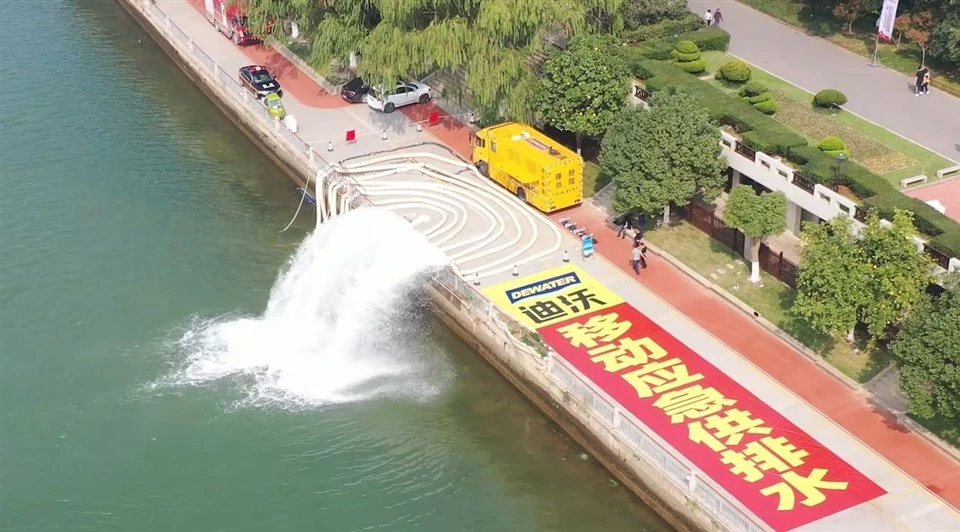
In emergency rescue situations, such as flood relief, self - priming water drainage pump trucks are often the preferred choice. Their ability to start quickly and operate without the need for manual priming is crucial when time is of the essence. For example, during a sudden flood, a self - priming pump truck can be on the scene within minutes and start pumping water immediately, helping to reduce the flood damage. You can learn more about our Emergency Rescue Drainage Pump Trucks for such critical applications.
Construction Sites
On construction sites, both types of pump trucks have their uses. Self - priming pump trucks are useful for dewatering excavation sites where the water level may fluctuate. They can handle the dirty water with debris commonly found on construction sites. Non - self - priming pump trucks, on the other hand, may be more suitable for large - scale water transfer tasks, such as pumping water from a construction site to a nearby water treatment facility. Our Water Drainage Pump Truck options can meet the diverse needs of construction projects.
Industrial Applications
In industrial settings, the choice between self - priming and non - self - priming pump trucks depends on the specific requirements of the process. For applications that involve continuous pumping of clean water, non - self - priming pumps may be more cost - effective and efficient. However, if the water contains solids or if the pump needs to be started frequently, a self - priming pump truck would be a better choice. Our Mobile Pumping Station solutions offer flexibility for different industrial applications.
Conclusion
In conclusion, the difference between self - priming and non - self - priming water drainage pump trucks lies in their priming mechanism, performance, and suitability for different applications. Self - priming pump trucks offer convenience, adaptability, and good suction performance, but they are more expensive and require more maintenance. Non - self - priming pump trucks are simpler, more energy - efficient, and can achieve higher flow rates and pressures, but they need external priming, which can be a drawback in some situations.
As a supplier of water drainage pump trucks, we understand the importance of providing the right equipment for our customers' needs. Whether you need a self - priming pump truck for emergency rescue or a non - self - priming pump truck for large - scale industrial applications, we have a wide range of products to choose from. If you are interested in learning more about our water drainage pump trucks or would like to discuss your specific requirements, please feel free to contact us for procurement and negotiation.

References
- Pump Handbook, Karassik, I. J., Messina, J. P., Cooper, P. T., & Heald, C. C. (2008).
- Principles of Pumping Machinery, Stepanoff, A. J. (1957).