


Hey there! As a supplier of Light Duty Rescue Pump Trucks, I often get asked about the battery capacity of these bad boys. It's a crucial aspect, especially when you're out in the field, relying on these trucks to get the job done. So, let's dive right into it.
First off, it's important to understand that the battery capacity of light - duty rescue pump trucks can vary quite a bit. There are several factors that influence this, like the size of the truck, the type of pumps it's equipped with, and the additional features it has.
Smaller light - duty rescue pump trucks usually come with batteries that have a capacity in the range of 60 - 100 amp - hours (Ah). These are suitable for trucks that have basic pumping functions and don't have a whole bunch of extra electrical components. For instance, if the pump truck is mainly used for simple water drainage tasks in small - scale emergencies, a 60 - Ah battery might be sufficient. It can power the pump for a decent amount of time, say around 1 - 2 hours of continuous operation, depending on the pump's power consumption.
On the other hand, larger light - duty rescue pump trucks, those with more advanced features and bigger pumps, might have battery capacities of 120 - 200 Ah or even more. These trucks are often used in more demanding situations, like flood control in larger areas or in disaster - relief operations where they need to run for longer periods. A 150 - Ah battery, for example, can keep the pump running for 2 - 3 hours non - stop, which is a huge advantage when time is of the essence.
The type of battery also plays a big role in determining the capacity. Most light - duty rescue pump trucks use lead - acid batteries. They're relatively cheap, reliable, and have been around for a long time. However, they do have some drawbacks. They're heavy, and their performance can be affected by temperature. Lithium - ion batteries, on the other hand, are becoming more popular. They're lighter, have a longer lifespan, and can handle a wider range of temperatures. But they're also more expensive.
When it comes to our Light Duty Rescue Pump Trucks, we offer a variety of battery options to suit different needs. Whether you're looking for a cost - effective lead - acid battery for occasional use or a high - performance lithium - ion battery for heavy - duty operations, we've got you covered.
Now, let's talk about how the battery capacity impacts the performance of the pump truck. A higher - capacity battery means more power is available to the pump. This allows the pump to operate at a higher flow rate and pressure. For example, a pump truck with a large battery can quickly drain a flooded basement, pushing out water at a faster pace compared to a truck with a smaller battery.
But it's not just about the pumping performance. The battery also powers other important components in the truck, like the lights, the control panel, and the communication systems. In a disaster situation, having reliable lighting and communication is just as important as the pumping function. A battery with enough capacity ensures that all these systems work properly throughout the operation.
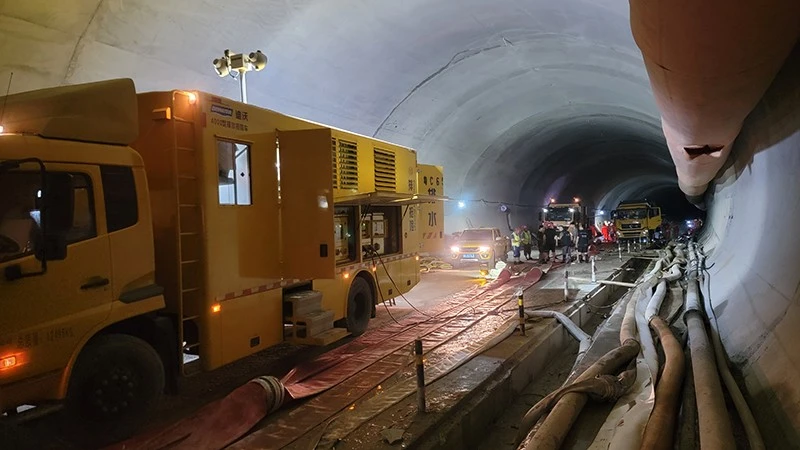

If you're interested in learning more about our range of Light Duty Rescue Pump Trucks, we have some great resources on our website. Check out our Mobile Pumping Station for a comprehensive overview of our mobile pumping solutions. The Trailer Mounted Pumps are also worth a look if you need a more portable option. And for those interested in how our trucks perform in disaster sites, head over to Drainage Pump Vehicles in Disaster Sites.
When choosing a light - duty rescue pump truck, it's essential to consider your specific requirements. Think about the type of jobs you'll be doing, the duration of the operations, and the environmental conditions. If you're mainly working in urban areas with easy access to power sources for recharging, a smaller - capacity battery might be okay. But if you're going to be in remote locations for extended periods, a larger - capacity battery is a must.
We also offer customization options for the battery systems in our pump trucks. If you have special needs, like a longer runtime or a specific type of battery, we can work with you to find the best solution. Our team of experts is always on hand to answer your questions and provide advice.
In conclusion, the battery capacity of light - duty rescue pump trucks is a key factor that can significantly impact their performance. By understanding your needs and choosing the right battery, you can ensure that your pump truck is ready to handle any emergency situation.
If you're in the market for a Light Duty Rescue Pump Truck, or if you just have more questions about battery capacity and our products, don't hesitate to get in touch. We're here to help you make the best choice for your operations. Let's start a conversation and see how we can meet your requirements.
References
- General knowledge about light - duty rescue pump trucks from industry experience
- Technical specifications of battery systems used in pump trucks