


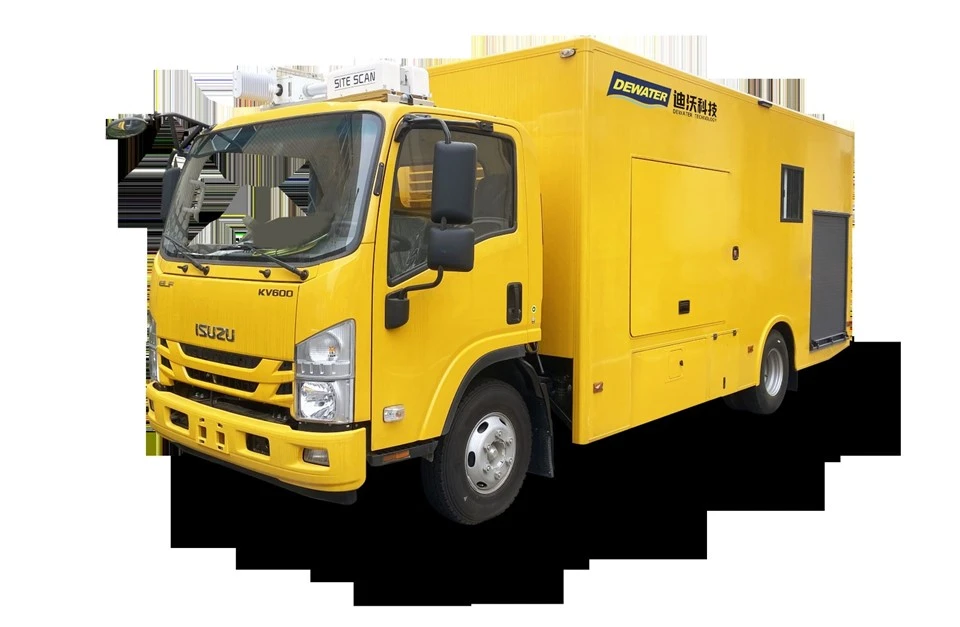
As a supplier of mobile pump stations, I often get asked about the simulation analysis methods for these nifty pieces of equipment. Mobile pump stations are super handy in various situations, like dewatering, flood control, and drought relief. They come in different forms, such as Dewatering Pump Trailer, Flooding Control Pickup, and Drought Relief Drainage Pump Truck.
Why Simulation Analysis?
Before we dive into the methods, let's talk about why simulation analysis is so important. A mobile pump station is a complex system. You've got the pump itself, the power source, the control system, and the connection to the pipeline or whatever it's pumping into or out of. Simulation analysis helps us understand how all these parts work together under different conditions. It can predict the performance of the pump station, identify potential problems, and optimize the design before we actually build and test the physical model. This saves time, money, and a whole lot of headaches.
Computational Fluid Dynamics (CFD)
One of the most popular simulation analysis methods for mobile pump stations is Computational Fluid Dynamics, or CFD for short. CFD uses numerical methods and algorithms to solve and analyze problems involving fluid flows. In the context of a mobile pump station, CFD can be used to simulate the flow of water through the pump and the pipeline.
How it works
CFD divides the fluid domain (the area where the fluid is flowing) into a large number of small cells. Then, it applies mathematical equations, mainly the Navier - Stokes equations, to each cell to calculate the fluid properties like velocity, pressure, and temperature at each point in the domain. By repeating these calculations over a series of time steps, CFD can simulate the dynamic behavior of the fluid flow.
Benefits for mobile pump stations
- Performance prediction: CFD can accurately predict the pump's head, flow rate, and efficiency under different operating conditions. This helps us select the right pump for a specific application and ensure that the pump station can meet the required performance targets.
- Design optimization: We can use CFD to test different pump and pipeline designs. For example, we can change the shape of the impeller in the pump or the diameter of the pipeline to see how it affects the flow. This allows us to optimize the design for maximum efficiency and minimum energy consumption.
- Problem identification: CFD can also help us identify potential problems in the pump station, such as cavitation. Cavitation occurs when the pressure in the fluid drops below the vapor pressure, causing the formation of vapor bubbles. These bubbles can collapse and damage the pump components. By simulating the flow with CFD, we can detect areas where cavitation is likely to occur and take measures to prevent it.
System Dynamics Modeling
Another useful simulation analysis method is system dynamics modeling. This approach focuses on understanding the behavior of the entire pump station system as a whole, taking into account the interactions between different components and the external environment.
How it works
System dynamics modeling uses a set of differential equations to describe the relationships between the variables in the system. For a mobile pump station, these variables could include the pump speed, the water level in the source and destination, the power consumption, and the pressure in the pipeline. By solving these equations over time, we can simulate how the system responds to changes in the input variables.
Benefits for mobile pump stations
- Overall system performance: System dynamics modeling can give us a holistic view of the pump station's performance. It can show us how the pump station behaves under different load conditions, such as changes in the flow rate demand or the water level. This helps us design a pump station that is robust and can adapt to various operating scenarios.
- Control system design: The model can be used to design and optimize the control system of the pump station. We can simulate different control strategies, such as adjusting the pump speed based on the water level or the pressure, and see how they affect the system performance. This ensures that the pump station can operate efficiently and safely.
- Sensitivity analysis: System dynamics modeling allows us to perform sensitivity analysis. We can vary the input parameters one by one and see how much they affect the output variables. This helps us identify the most critical factors that influence the pump station's performance and focus our design efforts on these areas.
Finite Element Analysis (FEA)
Finite Element Analysis, or FEA, is a method that is mainly used to analyze the structural integrity of the mobile pump station components. While CFD focuses on the fluid flow, FEA deals with the mechanical behavior of the solid parts.
How it works
FEA divides the solid structure (like the pump housing, the pipeline, or the trailer frame) into a finite number of small elements. Then, it applies the principles of mechanics, such as Newton's laws and the theory of elasticity, to each element to calculate the stress, strain, and displacement of the structure under different loads. Similar to CFD, FEA solves a set of equations to obtain the solution for the entire structure.
Benefits for mobile pump stations
- Structural design: FEA can help us design the pump station components to withstand the mechanical loads they will encounter during operation. For example, it can ensure that the pump housing can handle the pressure generated by the fluid flow without deforming or breaking.
- Material selection: By analyzing the stress distribution in the structure, FEA can help us select the appropriate materials for each component. We can choose materials with the right strength, stiffness, and durability to ensure the long - term reliability of the pump station.
- Failure prediction: FEA can predict where and how a component is likely to fail under extreme loads. This allows us to take preventive measures, such as adding reinforcement or changing the design, to avoid potential failures.
Multi - physics Simulation
In many cases, a mobile pump station is subject to multiple physical phenomena simultaneously. For example, the pump is not only affected by the fluid flow but also by the mechanical forces and the heat generated during operation. Multi - physics simulation combines different simulation methods, such as CFD, FEA, and system dynamics modeling, to analyze the coupled effects of these physical phenomena.

How it works
Multi - physics simulation uses specialized software that can handle multiple types of physical equations simultaneously. It couples the different models together by exchanging data between them at each time step. For example, the CFD model can provide the pressure and velocity data of the fluid flow to the FEA model, which can then calculate the mechanical stress on the pump components.
Benefits for mobile pump stations
- Comprehensive analysis: Multi - physics simulation can provide a more comprehensive and accurate analysis of the mobile pump station's performance. It can take into account the interactions between different physical phenomena, which may have a significant impact on the overall performance of the pump station.
- Real - world simulation: Since real - world situations often involve multiple physical effects, multi - physics simulation can better represent the actual operating conditions of the pump station. This leads to more reliable design and performance predictions.
Conclusion
Simulation analysis methods play a crucial role in the design, development, and optimization of mobile pump stations. Computational Fluid Dynamics, System Dynamics Modeling, Finite Element Analysis, and Multi - physics Simulation each have their own strengths and can provide valuable insights into different aspects of the pump station's performance. By using these methods, we can ensure that our mobile pump stations are efficient, reliable, and cost - effective.
If you're in the market for a mobile pump station, whether it's a Dewatering Pump Trailer, a Flooding Control Pickup, or a Drought Relief Drainage Pump Truck, we'd love to have a chat with you. Our team of experts can use these simulation analysis methods to customize a pump station that meets your specific needs. Don't hesitate to reach out for a consultation and start the procurement process.
References
- Anderson, D. A., Tannehill, J. C., & Pletcher, R. H. (1984). Computational Fluid Mechanics and Heat Transfer. McGraw - Hill.
- Astrom, K. J., & Murray, R. M. (2008). Feedback Systems: An Introduction for Scientists and Engineers. Princeton University Press.
- Bathe, K. J. (1996). Finite Element Procedures. Prentice Hall.