


Hey there! As a supplier of Drought Relief Drainage Pumps, I've had my fair share of dealing with these nifty machines. One of the most crucial things you need to understand when working with these pumps is how to read their performance curves. It might seem a bit daunting at first, but trust me, once you get the hang of it, it'll be a piece of cake.
What is a Performance Curve?
First off, let's talk about what a performance curve actually is. A performance curve is like a map for your pump. It shows you how the pump is going to perform under different conditions. It's basically a graph that plots two main things: the flow rate and the head.
The flow rate is how much water the pump can move in a given amount of time. It's usually measured in gallons per minute (GPM) or cubic meters per hour (m³/h). The head, on the other hand, is the height that the pump can lift the water. It's measured in feet or meters. So, when you look at a performance curve, you're seeing how the flow rate changes as the head changes.
The Basics of Reading the Curve
Let's start with the axes of the graph. The horizontal axis (the x-axis) usually represents the flow rate. As you move from left to right, the flow rate increases. The vertical axis (the y-axis) represents the head. As you move up the axis, the head increases.
The curve itself is a line that shows the relationship between the flow rate and the head. If the curve is steep, it means that as the head increases, the flow rate drops quickly. If the curve is flatter, it means that the flow rate doesn't change as much as the head increases.
For example, let's say you have a pump with a performance curve that starts at a high flow rate and low head. As you increase the head (say, by lifting the water to a higher level), the flow rate will start to decrease. You can use the curve to figure out what the flow rate will be at a certain head.
Efficiency and Power
But the performance curve isn't just about flow rate and head. It also tells you about the pump's efficiency and power requirements. Efficiency is how well the pump converts energy into pumping water. It's usually shown as a percentage. The higher the efficiency, the less energy the pump uses to move the water.
On the performance curve, efficiency is often shown as a series of curved lines. These lines show the efficiency at different points on the curve. You want to operate your pump at or near the point of maximum efficiency. This will save you money on energy costs in the long run.
Power is another important factor. It's how much energy the pump needs to operate. It's usually measured in horsepower (HP) or kilowatts (kW). The performance curve will show you how the power requirements change as the flow rate and head change.
Selecting the Right Pump
Now that you know how to read the performance curve, you can use it to select the right pump for your needs. Let's say you're dealing with a drought situation and you need to pump water from a low-lying area to a higher elevation. You'll need to know the head (the height you need to lift the water) and the flow rate (how much water you need to move).
Look at the performance curves of different pumps. Find the pump that can provide the required flow rate at the required head. Also, consider the efficiency and power requirements. You want a pump that is efficient and doesn't use too much power.
For example, if you need to pump a large amount of water at a low head, you might want a pump with a flat performance curve. This type of pump will maintain a relatively high flow rate even as the head increases slightly.
Real-World Applications
In real-world situations, there are other factors that can affect the pump's performance. For example, the type of water you're pumping can make a difference. If the water is dirty or has a lot of solids in it, it can reduce the pump's efficiency. The temperature of the water can also affect performance.
Also, the piping system can have an impact. If the pipes are too small or have a lot of bends, it can increase the head and reduce the flow rate. You need to take these factors into account when reading the performance curve and selecting a pump.
Our Product Range
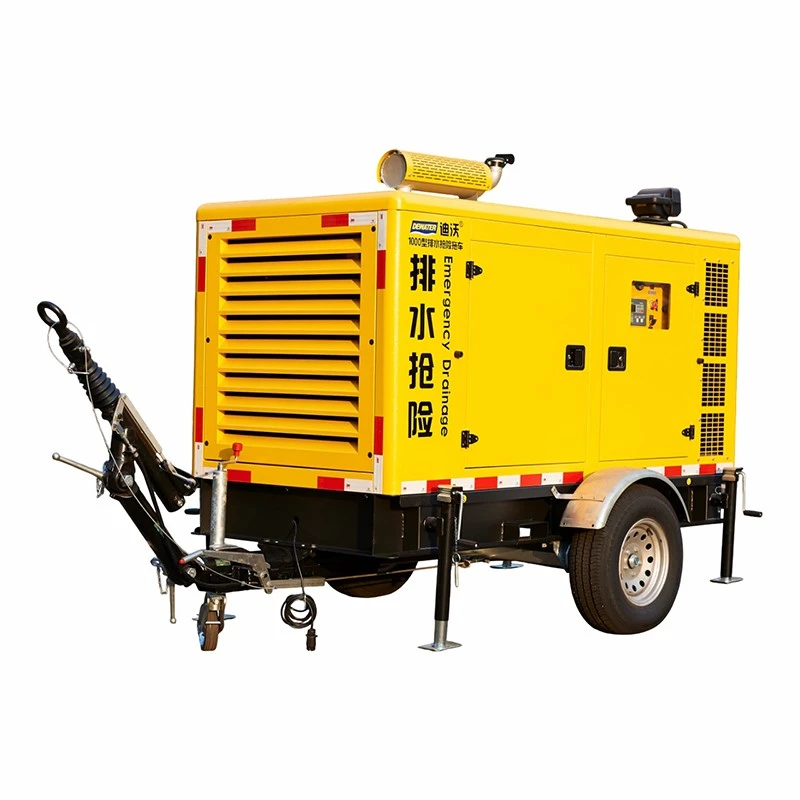
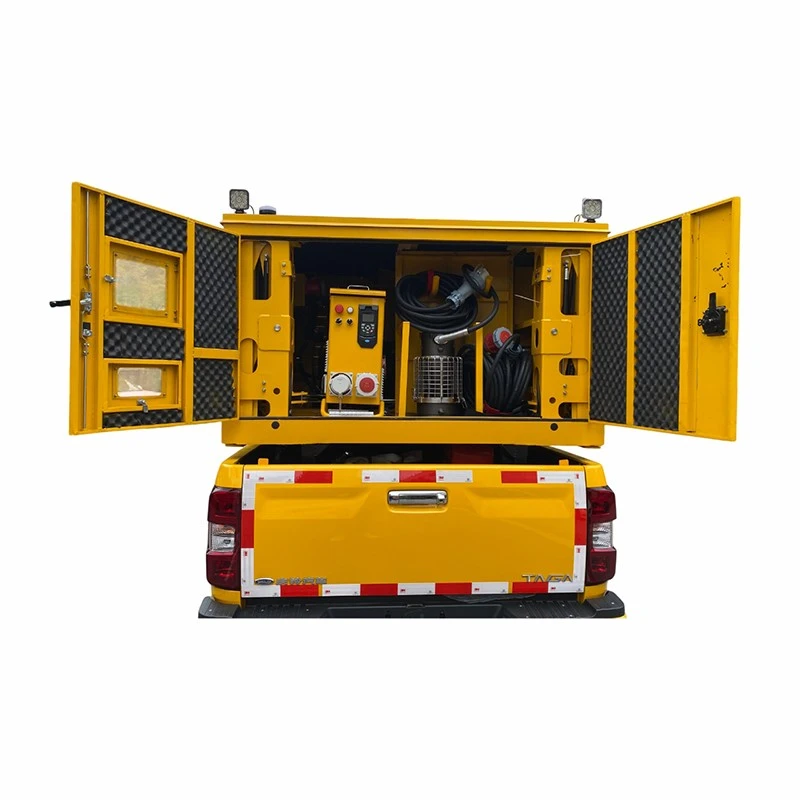
At our company, we offer a wide range of Drought Relief Drainage Pumps. We also have some other great products like the Flood Control Mobile Pump Truck, the Trailer Mounted Drainage Pump, and the Mobile Flooding Pump. These products are designed to handle different types of water pumping situations, whether it's drought relief or flood control.
Contact Us for Purchase
If you're in the market for a Drought Relief Drainage Pump or any of our other products, we'd love to hear from you. We can help you select the right pump based on your specific needs. Just reach out to us, and our team of experts will be happy to assist you with your purchase and answer any questions you might have.
References
- "Pump Handbook" by Igor J. Karassik et al.
- "Fluid Mechanics and Hydraulics" by Jack B. Evett and Carl S. Liu.