



Hey there! I'm a supplier of water drainage pump trucks, and I've seen firsthand how crucial it is to pick the right one. Whether you're dealing with flood control, emergency drainage, or industrial water removal, the right pump truck can make all the difference. In this blog, I'll share some tips on how to compare different models of water drainage pump trucks.
1. Flow Rate
The flow rate is one of the most important factors to consider when comparing pump trucks. It's measured in gallons per minute (GPM) or cubic meters per hour (m³/h). A higher flow rate means the pump can move more water in a shorter amount of time.
For small - scale jobs like draining a basement after a heavy rain, a pump with a flow rate of 500 - 1000 GPM might be sufficient. But for large - scale flood control or industrial applications, you'll probably need a pump with a flow rate of 2000 GPM or more.
Let's say you're comparing two models. Model A has a flow rate of 1500 GPM, and Model B has a flow rate of 2500 GPM. If you have a large area to drain quickly, Model B is likely the better choice. However, keep in mind that a higher flow rate often means higher energy consumption and potentially a larger, more expensive pump.
2. Head Pressure
Head pressure refers to the height that the pump can lift water. It's measured in feet or meters. If you need to pump water uphill or over a long distance, you'll need a pump with a high head pressure.
For example, if you're draining water from a flooded area to a nearby river that's at a higher elevation, you'll need a pump that can overcome the vertical distance. A pump with a low head pressure might not be able to move the water effectively.
When comparing models, check the head pressure specifications. Some pumps are designed for low - head applications, where the water only needs to be moved a short distance vertically. Others are built for high - head situations, like pumping water from a deep well or up to a storage tank on a tall building.
3. Pump Type
There are several types of pumps used in water drainage pump trucks, and each has its own advantages and disadvantages.
Centrifugal Pumps: These are the most common type. They work by using a rotating impeller to create a centrifugal force that moves the water. Centrifugal pumps are great for high - flow, low - head applications. They're relatively simple and inexpensive, but they might not be as efficient for pumping thick or viscous liquids.
Positive Displacement Pumps: These pumps work by trapping a fixed amount of water and then forcing it out. They're better suited for pumping thick liquids, slurries, or in applications where a constant flow rate is required. However, they're usually more expensive and more complex than centrifugal pumps.
Submersible Pumps: As the name suggests, these pumps are designed to be submerged in water. They're often used in applications where the water source is deep or where a compact pump is needed. Submersible pumps can be either centrifugal or positive displacement types.
When comparing models, think about the type of liquid you'll be pumping and the specific requirements of your job. For example, if you're dealing with sewage or industrial waste, a positive displacement pump might be a better option.
4. Power Source
Water drainage pump trucks can be powered by different sources, including diesel engines, electric motors, or gasoline engines.
Diesel Engines: Diesel - powered pumps are popular because they're powerful and can operate independently of an electrical grid. They're often used in remote areas or during emergency situations. However, diesel engines require regular maintenance, and they produce emissions.
Electric Motors: Electric pumps are clean, quiet, and relatively inexpensive to operate. They're a good choice for indoor or urban applications where noise and emissions are a concern. But they rely on a stable electrical supply, which might not be available in all situations.
Gasoline Engines: Gasoline - powered pumps are lightweight and easy to start. They're suitable for small - scale, intermittent use. However, they have a lower power output compared to diesel engines and might not be as fuel - efficient.
When comparing models, consider the availability of power sources at your job site. If you're working in a remote area, a diesel - powered pump might be the best option. But if you're in an urban area with easy access to electricity, an electric pump could save you money in the long run.

5. Mobility and Size
The mobility and size of the pump truck are also important factors.
Trailer - Mounted Pumps: These are easy to transport and can be towed to different job sites. They're a good option if you need to move the pump frequently. However, you'll need a vehicle with the appropriate towing capacity.
Truck - Mounted Pumps: These are integrated into a truck chassis, providing a more permanent and stable setup. They're often used for large - scale, long - term projects. Truck - mounted pumps are usually more powerful and can carry larger pumps and fuel supplies.
Compact Pumps: For jobs in tight spaces or where a small footprint is required, compact pumps are a great choice. They might have a lower flow rate but can be more maneuverable.
When comparing models, think about how you'll need to move the pump and where you'll be using it. If you have to access narrow alleys or small construction sites, a compact or trailer - mounted pump might be more suitable.
6. Durability and Maintenance
You want a pump truck that can withstand the rigors of your job and requires minimal maintenance.
Look at the materials used in the construction of the pump and the truck. Pumps made from high - quality materials like stainless steel or cast iron are more likely to last longer and resist corrosion.
Also, check the maintenance requirements of the pump. Some pumps require frequent oil changes, filter replacements, or other maintenance tasks. A pump with a simple design and easy - to - access parts will be easier and cheaper to maintain over time.
7. Additional Features
Some water drainage pump trucks come with additional features that can make your job easier.
Auto - Start and Stop: This feature allows the pump to start automatically when the water level rises and stop when it drops. It's great for unattended operation and can save energy.
Remote Monitoring: With remote monitoring, you can check the status of the pump, including its flow rate, pressure, and temperature, from a distance. This is especially useful for large - scale or remote projects.
Self - Priming: A self - priming pump can start pumping water without the need for manual priming. This can save time and effort, especially in emergency situations.
When comparing models, look for these additional features and consider how they might benefit your specific job.
Emergency and Specialized Applications
If you're in the market for a pump truck for emergency situations, you might be interested in our Emergency Drainage Rescue Vehicle. It's designed to quickly respond to floods and other water - related emergencies, with high - performance pumps and rapid deployment capabilities.
For fire - fighting and water supply needs, our Mobile Fire Water Supply Pump Trailer is a great option. It can provide a reliable source of water for fire - fighting operations.
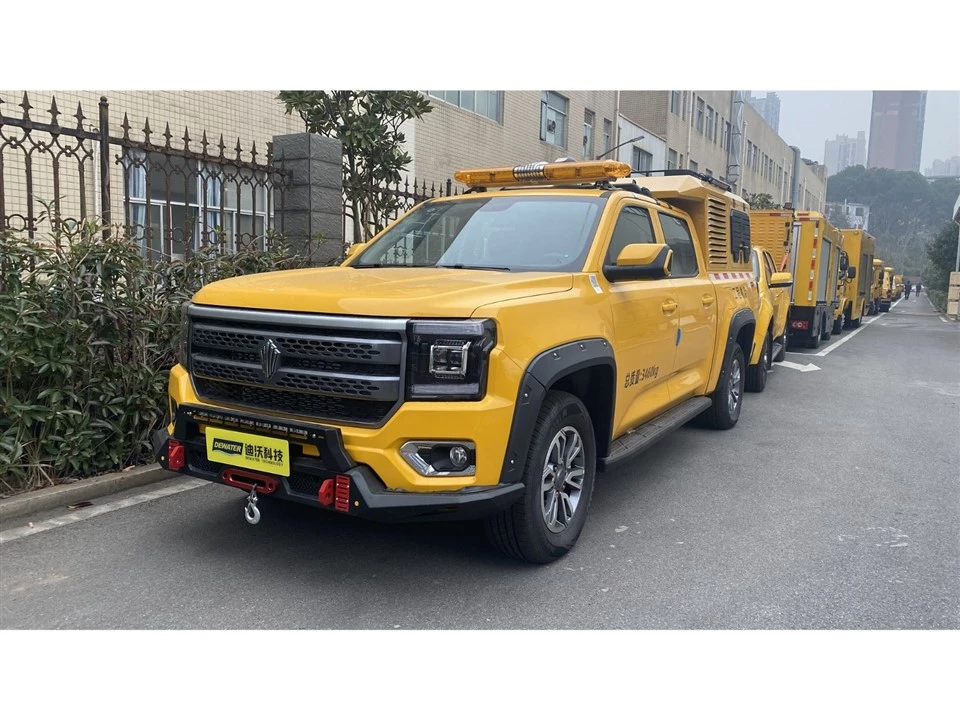
And if you're dealing with smaller - scale flooding control, our Flooding Control Pickup offers a compact and efficient solution.
Conclusion
Comparing different models of water drainage pump trucks can seem overwhelming, but by considering factors like flow rate, head pressure, pump type, power source, mobility, durability, and additional features, you can make an informed decision.
At the end of the day, the right pump truck for you will depend on your specific needs and budget. If you're still not sure which model is best for your job, don't hesitate to reach out. We're here to help you find the perfect water drainage pump truck for your requirements. Whether it's for a one - time emergency or a long - term industrial project, we've got the expertise and the products to get the job done right. So, if you're interested in purchasing a water drainage pump truck, let's start a conversation and discuss your options!
References
- "Pump Handbook" by Igor Karassik
- Industry standards and guidelines for water drainage pump trucks
- Manufacturer specifications and product brochures