


Hey there! As a supplier of Mobile Flood Pump Trailers, I've had my fair share of discussions about how these bad boys stack up against stationary pumps. So, let's dive right in and break down the performance aspects of Mobile Flood Pump Trailers compared to their stationary counterparts.
Mobility: The Game - Changer
One of the most obvious differences between Mobile Flood Pump Trailers and stationary pumps is mobility. Stationary pumps are, well, stationary. They're installed in a fixed location and are designed to handle water drainage or pumping tasks in that specific area. This can be great for long - term, consistent applications like draining a large industrial site or a permanent flood - prone area.
But here's where Mobile Flood Pump Trailers shine. They can be easily transported to different locations. Whether it's a sudden flood in a neighborhood, a construction site that needs quick water removal, or an agricultural field that's waterlogged after heavy rain, these trailers can be on the scene in no time. You can think of them as the superheroes of the pumping world, ready to save the day wherever there's a water problem. For more info on our mobile options, check out Mobile Pump Station.
Installation and Setup
Setting up a stationary pump can be a real hassle. It often requires a significant amount of infrastructure work, like building a pump house, laying pipes, and ensuring proper electrical connections. This not only takes a lot of time but also a considerable amount of money. And once it's installed, it's not easy to move or modify.
On the other hand, Mobile Flood Pump Trailers are a breeze to set up. They come pre - assembled on a trailer, so all you need to do is tow it to the site, position it, and connect the hoses. In many cases, you can have the pump up and running within minutes. This quick setup is crucial during emergency situations when every second counts. If you're interested in a more truck - based solution, take a look at Flooding and Dainage Pump Truck.
Flexibility in Operation
Stationary pumps are usually designed for a specific flow rate and head. While they can be very efficient within their designed parameters, they lack flexibility. If the water conditions change, like an increase in the water level or a change in the distance the water needs to be pumped, the performance of the stationary pump may suffer.
Mobile Flood Pump Trailers, however, offer more flexibility. You can choose different types of pumps for different applications. For example, if you need to pump a large volume of water over a short distance, you can use a high - flow pump. If you need to pump water to a higher elevation, you can opt for a high - head pump. And since these trailers can be moved around, you can use them in a variety of scenarios, from small - scale residential flooding to large - scale industrial water management. Check out Trailer Mounted Pumps for more details on our trailer - based solutions.
Maintenance and Serviceability
Maintenance is an important aspect of any pumping system. Stationary pumps are often in a fixed location, which can make it difficult to access certain parts for maintenance. In some cases, you may need to shut down the entire system and have specialized equipment to perform maintenance tasks.
Mobile Flood Pump Trailers are designed with maintenance in mind. They are more accessible, and most parts can be easily reached and replaced. Additionally, since they can be moved to a service center if needed, it's easier to get them serviced. This means less downtime and lower maintenance costs in the long run.
Cost - Effectiveness
When it comes to cost, stationary pumps may seem cheaper upfront. However, when you factor in the installation costs, infrastructure requirements, and the lack of flexibility, the overall cost can be quite high. Mobile Flood Pump Trailers, while they may have a higher initial purchase price, offer better value for money in the long term. You can use them in multiple locations, and their quick setup and flexibility mean you can respond to different pumping needs without having to invest in multiple stationary pumps.

Performance in Different Environments
Stationary pumps are usually installed in a controlled environment. They are designed to operate under specific conditions and may not perform well in harsh or changing environments. For example, if there's a power outage, a stationary pump that relies on electricity may stop working.
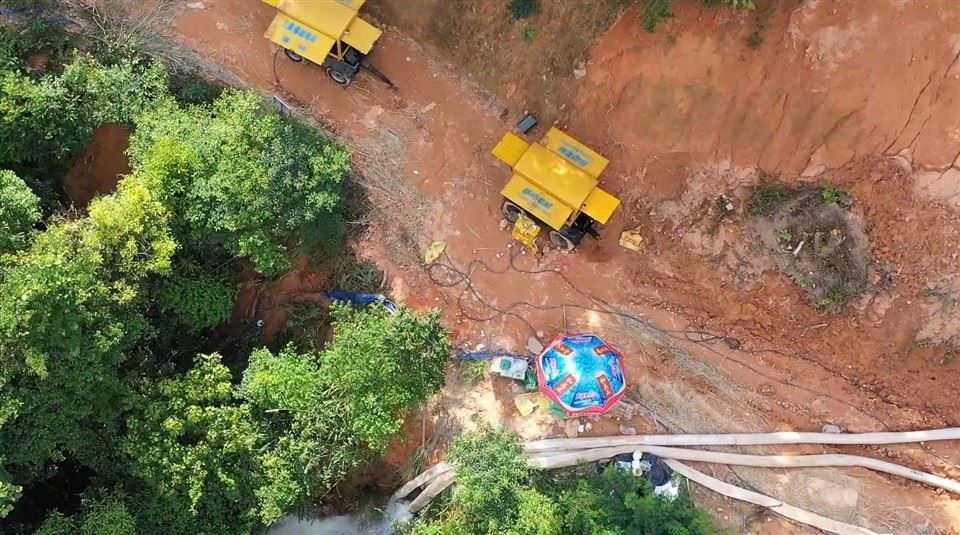
Mobile Flood Pump Trailers can be powered by different sources, such as diesel engines. This means they can operate even in areas without a reliable power supply. They are also more adaptable to different weather conditions and terrains. Whether it's a muddy field or a flooded street, these trailers can get the job done.
Scalability
If you need to increase your pumping capacity, adding a stationary pump can be a complex and expensive process. You may need to expand the infrastructure, upgrade the electrical system, and make other modifications.
With Mobile Flood Pump Trailers, scalability is much easier. You can simply add more trailers to your fleet as needed. This allows you to quickly increase your pumping capacity during peak demand periods, like during the rainy season or after a major flood event.
In conclusion, Mobile Flood Pump Trailers offer many advantages over stationary pumps in terms of mobility, installation, flexibility, maintenance, cost - effectiveness, performance in different environments, and scalability. If you're in the market for a pumping solution that can handle a variety of water management tasks, especially in emergency situations, a Mobile Flood Pump Trailer is definitely worth considering.
If you're interested in learning more about our Mobile Flood Pump Trailers or want to discuss your specific pumping needs, feel free to reach out. We're here to help you find the best solution for your water management challenges.
References
- Pump Handbook, Karassik et al.
- Water and Wastewater Engineering, Metcalf & Eddy