


As a supplier of Mobile Flood Pump Trailers, I've witnessed firsthand the critical role these machines play in flood control and water management. One of the most important factors that can significantly impact the performance of a Mobile Flood Pump Trailer is the flow rate. In this blog post, I'll delve into how the efficiency of a Mobile Flood Pump Trailer varies with different flow rates and why it matters for effective flood management.
Understanding Flow Rate and Efficiency
Flow rate refers to the volume of water that a pump can move in a given period, typically measured in liters per second (L/s) or cubic meters per hour (m³/h). Efficiency, on the other hand, is a measure of how effectively the pump converts input power into useful work, such as moving water. A more efficient pump will use less energy to move the same amount of water, which is not only cost - effective but also reduces environmental impact.
The Relationship between Flow Rate and Efficiency
The efficiency of a Mobile Flood Pump Trailer is not a constant value; it varies with the flow rate. Generally, a pump has an optimal flow rate at which it operates most efficiently. This is often referred to as the Best Efficiency Point (BEP).
At flow rates below the BEP, the pump may experience issues such as recirculation and cavitation. Recirculation occurs when the water inside the pump starts to flow in the opposite direction, which can lead to increased energy consumption and reduced efficiency. Cavitation, on the other hand, happens when the pressure inside the pump drops below the vapor pressure of the water, causing the formation of vapor bubbles. When these bubbles collapse, they can damage the pump impeller and reduce its overall performance.
Conversely, at flow rates above the BEP, the pump has to work harder to move the increased volume of water. This can result in higher energy consumption and increased wear and tear on the pump components. The pump may also become less stable, leading to vibrations and potential mechanical failures.
Impact on Flood Management
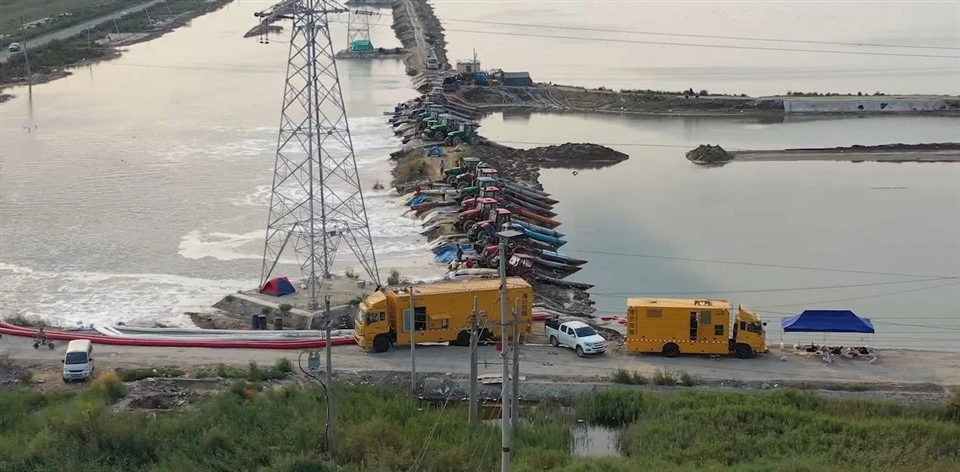
The variation in efficiency with flow rate has significant implications for flood management. During a flood event, the water level and flow conditions can change rapidly. A Mobile Flood Pump Trailer needs to be able to adapt to these changing conditions to effectively drain water and prevent further flooding.
If the flow rate is too low, the pump may not be able to keep up with the incoming water, leading to water accumulation and potential damage to properties and infrastructure. On the other hand, if the flow rate is too high, the pump may operate inefficiently, consuming more energy and potentially experiencing mechanical problems.
Engineering Water Drainage Rescue Vehicles
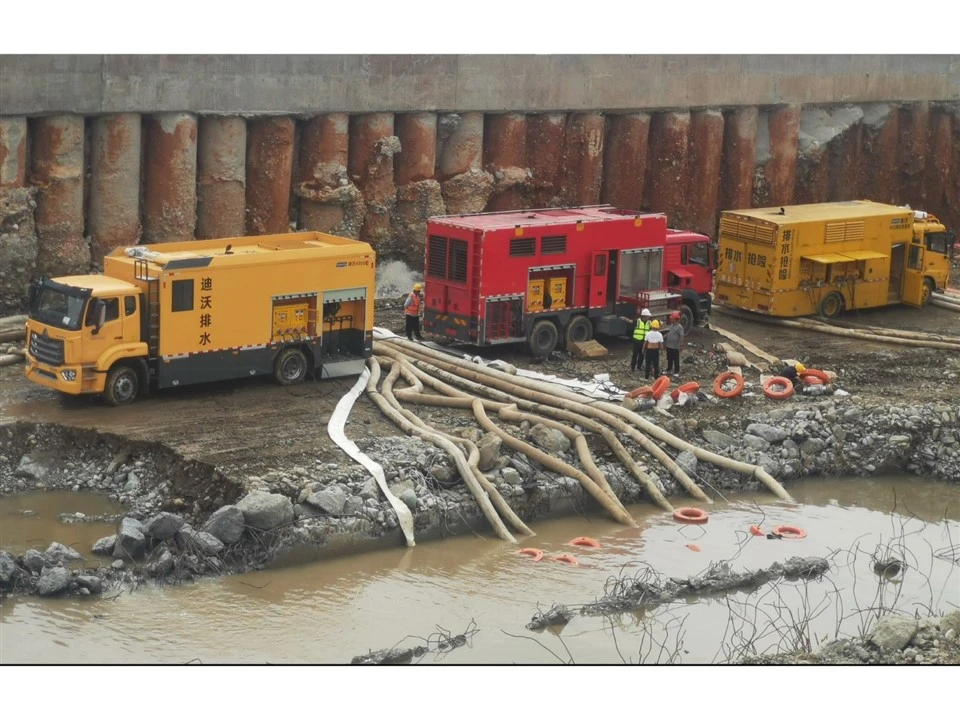
To address these challenges, our company offers a range of Engineering Water Drainage Rescue Vehicles. These vehicles are designed to provide reliable and efficient water drainage solutions in various flood scenarios. They are equipped with advanced pumps that can adjust to different flow rates, ensuring optimal performance and efficiency.
Dewatering Pump Truck
Our Dewatering Pump Truck is another product that demonstrates the importance of flow rate and efficiency. These trucks are capable of handling large volumes of water at different flow rates, making them ideal for flood control and dewatering applications. They are designed with high - efficiency pumps that can operate at their BEP for extended periods, reducing energy consumption and maintenance costs.
Flooding Control Pickup
In addition to larger vehicles, we also offer Flooding Control Pickup solutions. These pickups are more compact and versatile, making them suitable for smaller - scale flood control and water management tasks. They are equipped with pumps that can be adjusted to different flow rates, allowing for efficient operation in various situations.
Choosing the Right Flow Rate
When selecting a Mobile Flood Pump Trailer, it's essential to consider the specific requirements of the flood management task. Factors such as the volume of water to be drained, the distance the water needs to be pumped, and the available power source all play a role in determining the appropriate flow rate.
For example, in a large - scale flood situation where a significant amount of water needs to be drained quickly, a higher flow rate may be required. However, it's important to ensure that the pump can operate efficiently at this flow rate to avoid energy waste and mechanical problems.
Monitoring and Adjusting Flow Rate
Once a Mobile Flood Pump Trailer is in operation, it's crucial to monitor the flow rate and adjust it as needed. This can be done using flow meters and other monitoring devices. By regularly checking the flow rate, operators can ensure that the pump is operating at its optimal efficiency and make any necessary adjustments to improve performance.
Conclusion
The efficiency of a Mobile Flood Pump Trailer varies significantly with different flow rates. Understanding this relationship is crucial for effective flood management and water drainage. By choosing the right flow rate and ensuring that the pump operates at its BEP, we can improve the performance of the pump, reduce energy consumption, and extend its lifespan.
If you're in the market for a Mobile Flood Pump Trailer or other flood control equipment, we'd love to hear from you. Our team of experts can help you select the right product for your specific needs and provide you with the support and guidance you need to ensure successful flood management. Contact us today to start a conversation about your flood control requirements.
References
- "Pump Handbook" by Igor Karassik et al.
- "Fluid Mechanics" by Frank M. White.
- "Flood Risk Management: Principles and Practice" by David Penning - Rowsell and John Chadderton.